
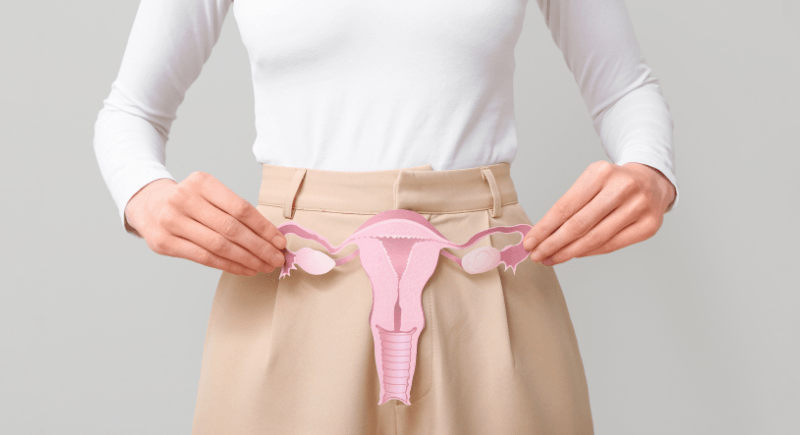
A Systems-Based Guide to the Three Key Hormones of Midlife
When most people think about hormones, they think about reproduction.
Periods.
Pregnancy.
Fertility.
Menopause.
Yet estrogen, progesterone and testosterone influence far more than the reproductive system.
These hormones affect the brain, bones, muscles, metabolism, cardiovascular system, sleep, mood, energy production, immune function, and many other aspects of health.
For decades, they rise and fall in carefully coordinated patterns. They fluctuate throughout the month, interact with one another, and send signals that help coordinate multiple body systems.
Perimenopause and menopause are often described as a decline in hormones. While this is true, it is only part of the story.
The transition is not simply about lower hormone levels. It also involves changing hormone patterns, altered communication between body systems, and the gradual loss of rhythms that have been present since puberty. This is a normal process as the body adapts to biological changes throughout ageing.
Understanding these changes can help explain why menopause symptoms extend far beyond hot flushes and why two women with similar hormone levels may experience menopause very differently. To explore this concept further, read my guide to understanding menopause as a whole-body transition.
Before exploring what happens during perimenopause and menopause, it helps to understand the three key hormones involved and the roles they play throughout the body.
Meet the Three Key Hormones
Estrogen: More Than One Hormone
Many people talk about estrogen as though it were a single hormone. In reality, estrogen is a family of hormones.
Estradiol (E2)
Estradiol is the dominant estrogen during the reproductive years and the most biologically active form. It influences:
- Menstrual cycles
- Bone health
- Cardiovascular function
- Cognitive function
- Skin integrity
- Vaginal health
- Metabolic regulation
Estrone (E1)
Estrone becomes the dominant circulating estrogen after menopause. Unlike estradiol, which is produced primarily by the ovaries, estrone is largely produced in adipose tissue and other peripheral tissues.
Estriol (E3)
Estriol is the weakest of the three estrogens and is most prominent during pregnancy.
Although estrogen is often associated with reproductive health, its influence extends far beyond the ovaries. Estrogen receptors are found throughout the body, including the brain, blood vessels, bones, skin, muscles, bladder, and gastrointestinal tract.
This widespread distribution helps explain why changing estrogen levels can affect so many different aspects of health and wellbeing.
Where is estrogen produced?
Before menopause, estrogen is primarily produced in the ovaries (specifically estradiol), with smaller amounts produced in adipose tissue, bones, skin, the liver, and adrenal glands.
After menopause, estrogen production drops significantly because the ovaries stop working with levels remaining low for the rest of life. Some estrogen (i.e. estrone) continues to be produced by adrenal glands, fatty tissue and a less known process called intracrinology (briefly described further down); however, it is not enough to match premenopausal levels.
Progesterone: The First Hormone Shift Most Women Never Hear About
While often associated with fertility and pregnancy, progesterone has important effects throughout the body. It helps:
- Support healthy sleep
- Help regulate the nervous system and calms the brain
- Balance many of estrogen’s effects
- Support bone health
- Protect breast tissue
- Help regulate the uterine lining
One of the earliest hormonal changes of perimenopause is often a decline in progesterone production.
As women move through their 40s, ovulation may become less consistent. Some cycles produce less progesterone than before, even while menstrual periods continue to occur regularly. This means hormone patterns can begin changing years before menopause itself.
What Does Declining Progesterone Feel Like?
Many women are surprised when symptoms appear despite still having regular periods. Common experiences may include:
- Waking during the night and struggling to return to sleep
- Increased anxiety or nervous system sensitivity
- Worsening PMS symptoms
- Heavier or longer periods
- Breast tenderness
- Fluid retention
- Feeling less resilient to stress
- Mood swings
Where is progesterone produced?
Before menopause, progesterone is primarily produced in the ovaries by the corpus luteum during the second half of the menstrual cycle, after ovulation. It is also produced in smaller amounts by the adrenal glands.
After menopause, progesterone is produced in very low amounts primarily by the adrenal glands, as the ovaries no longer produce significant levels of this hormone. The decline occurs because ovulation ceases once the ovarian follicle supply is exhausted.
For a much deeper explanation, including progesterone’s role beyond fertility, changing ovulation, sleep, circadian biology and natural support strategies:
- Read our complete guide to Understanding Progesterone During Perimenopause.
- To understand your progesterone testing options read our comprehensive guide: Progesterone Testing: Looking Beyond a Single Number.
- Explore natural ways to support health progesterone levels in this guide: How to Support Progesterone After 40.
- Discover natural ways to support healthy progesterone levels in our The Naturimedica Guide to Progesterone eBook.
Practitioner Insight
Many women assume menopause begins when estrogen starts falling. In reality, one of the earliest hormonal shifts often involves less consistent ovulation, resulting in lower progesterone production. A woman may continue having regular menstrual periods while producing significantly less progesterone during the second half of her cycle. Because periods are still occurring, these changes can easily be overlooked. This may help explain why some women begin experiencing sleep disturbances, anxiety, heavier periods, worsening PMS, or mood changes years before menopause itself.
Testosterone: The Often Forgotten Hormone
Although commonly considered a male hormone, women also produce testosterone throughout life. Testosterone contributes to:
- Libido and sexual wellbeing
- Motivation and drive
- Confidence
- Muscle maintenance
- Physical performance
- Recovery
- Vitality
Testosterone levels generally decline gradually with age rather than dropping abruptly at menopause. Because testosterone receives less attention than estrogen and progesterone, its contribution to strength, resilience, energy, and quality of life is often underestimated.
Where is testosterone produced?
Before menopause, testosterone is produced in the ovaries and adrenal glands, but in much smaller quantities than in men.
After menopause, testosterone is produced primarily through adrenal hormone production and local conversion within peripheral tissues, including adipose tissue.
Although each hormone has distinct functions, they do not operate independently. Throughout life, estrogen, progesterone, and testosterone interact continuously, influencing one another and helping coordinate multiple body systems.
Hormones Follow Patterns, Not Straight Lines
One of the most important concepts in hormone health is that hormones are designed to fluctuate.
During the reproductive years, estrogen and progesterone rise and fall in predictable patterns across the menstrual cycle. These fluctuations are not random.
They act as biological signals that help coordinate reproductive function, metabolism, sleep, mood, immune function, and many other physiological processes throughout the body.
This relationship helps explain why factors such as sleep quality, circadian disruption, shift work, chronic stress, and insufficient daylight exposure may influence hormonal health. It also highlights why menopause symptoms are often connected to broader changes in sleep, energy, mood, and metabolic function.
Researchers are increasingly exploring how hormonal rhythms interact with the body’s circadian clocks. While many questions remain unanswered, this emerging field reinforces an important principle: hormones are not simply chemical messengers. They are biological signals operating within larger systems and rhythms that help regulate health and healthy ageing.
Hormones and the Body’s Internal Clock
Hormonal rhythms do not occur in isolation. They are influenced by the body’s circadian biology, a master regulatory system that helps coordinate physiological processes across the 24-hour day.
Exposure to natural morning light plays an important role in synchronising this internal clock. Through a complex network involving the brain, nervous system, and endocrine system, light helps regulate many of the signals that influence hormone production, hormone responsiveness, metabolism, sleep, and overall health.
While estrogen, progesterone, and testosterone are often discussed in terms of monthly cycles and life-stage changes, they also exist within a broader circadian framework that helps coordinate biological function throughout the body. For decades, these hormonal rhythms have operated alongside circadian rhythms, helping synchronise biological processes throughout the body.
These hormonal rhythms can be seen clearly throughout the menstrual cycle. In the first half of the cycle, estrogen gradually rises. Around ovulation, estrogen reaches a peak.
After ovulation, progesterone rises significantly while estrogen follows a second, smaller increase.
If pregnancy does not occur, both hormones decline and a new cycle begins.
For decades, this repeating rhythm provides important signals that influence far more than fertility alone.
What Happens During Perimenopause?
Perimenopause is the transition leading up to menopause and may begin several years before the final menstrual period.
Rather than declining steadily, hormone levels often fluctuate considerably.
Ovulation becomes less consistent and progesterone production frequently declines first.
Estrogen levels may rise, fall, or fluctuate dramatically from month to month.
Perimenopause is therefore not a single hormonal event. It is a gradual transition involving changing patterns of progesterone, estrogen, testosterone, and communication between the ovaries, brain, and other body systems.
This hormonal variability helps explain why symptoms can appear suddenly, disappear, and then return again. Common experiences include:
- Irregular periods
- Hot flushes
- Night sweats
- Sleep disturbances
- Mood changes
- Anxiety
- Brain fog
- Fatigue
- Changes in body composition
The unpredictability of hormone patterns often creates more symptoms than the eventual low-hormone state of menopause itself.
What Happens After Menopause?
Menopause is reached when twelve consecutive months have passed since the last menstrual period.
At this stage, ovarian production of estrogen and progesterone declines substantially. However, rather than simply shutting down, the body increasingly relies on a range of adaptive mechanisms involving the adrenal glands, peripheral tissues, local hormone production, metabolism, and circadian biology to help maintain function.
This does not mean the body becomes completely hormone-free. Small amounts of hormones continue to be produced by the adrenal glands, adipose tissue, skin, brain, and other tissues.
Hormone Production Does Not Stop Completely
An important concept known as intracrinology helps explain part of what happens after menopause.
First described by endocrinologist Fernand Labrie in 1991, intracrinology describes the local production of hormones within individual tissues.
The adrenal glands continue producing precursor hormones such as DHEA and androstenedione. These precursors can then be converted into active hormones within tissues such as the brain, bones, adipose tissue, skin, and breast tissue. Unlike hormones released into the bloodstream, these locally produced hormones are often made, used, and inactivated within the same tissue.
This complementary model helps explain why hormone health after menopause may involve more than the hormone concentrations measured in a blood test alone, and why women with similar laboratory results may experience menopause differently.
Research into intracrinology continues to evolve, but it is contributing to a more nuanced understanding of hormone health during ageing and menopause.
The Gut and Liver Connection
Hormones must not only be produced. They must also be metabolised and eliminated appropriately.
The Liver Helps Process Hormones
The liver plays a central role in hormone metabolism. After hormones such as estrogen have been used by the body, the liver helps transform them into forms that can be safely eliminated. The pathways used by the liver to process estrogen may influence overall hormone balance and are increasingly recognised as an important aspect of women’s health.
The Gut Helps Eliminate Hormones
The gut also plays an important role in hormone regulation.
After estrogen has been processed by the liver, it is transported into the digestive tract for elimination. However, certain gut bacteria can reactivate some of this estrogen, increasing the likelihood that it will be reabsorbed rather than eliminated.
This process is influenced by a collection of gut microbes known as the estrobolome. Some of these bacteria produce an enzyme called beta-glucuronidase, which can reactivate estrogen that was previously prepared for elimination.
Emerging research suggests that alterations in gut microbial balance may influence how effectively estrogen is metabolised and cleared from the body. From a holistic perspective, hormone balance depends not only on hormone production but also on effective metabolism, elimination, and communication between body systems.
Practitioner Insight
Many women assume hormone symptoms are caused solely by producing too much or too little estrogen. In reality, hormone health also depends on how effectively hormones are metabolised and eliminated. The liver and gut play important roles in this process, which may help explain why digestive health and hormone symptoms are often closely connected.
Hormones Are Part of a Bigger System
Hormones do not operate in isolation.
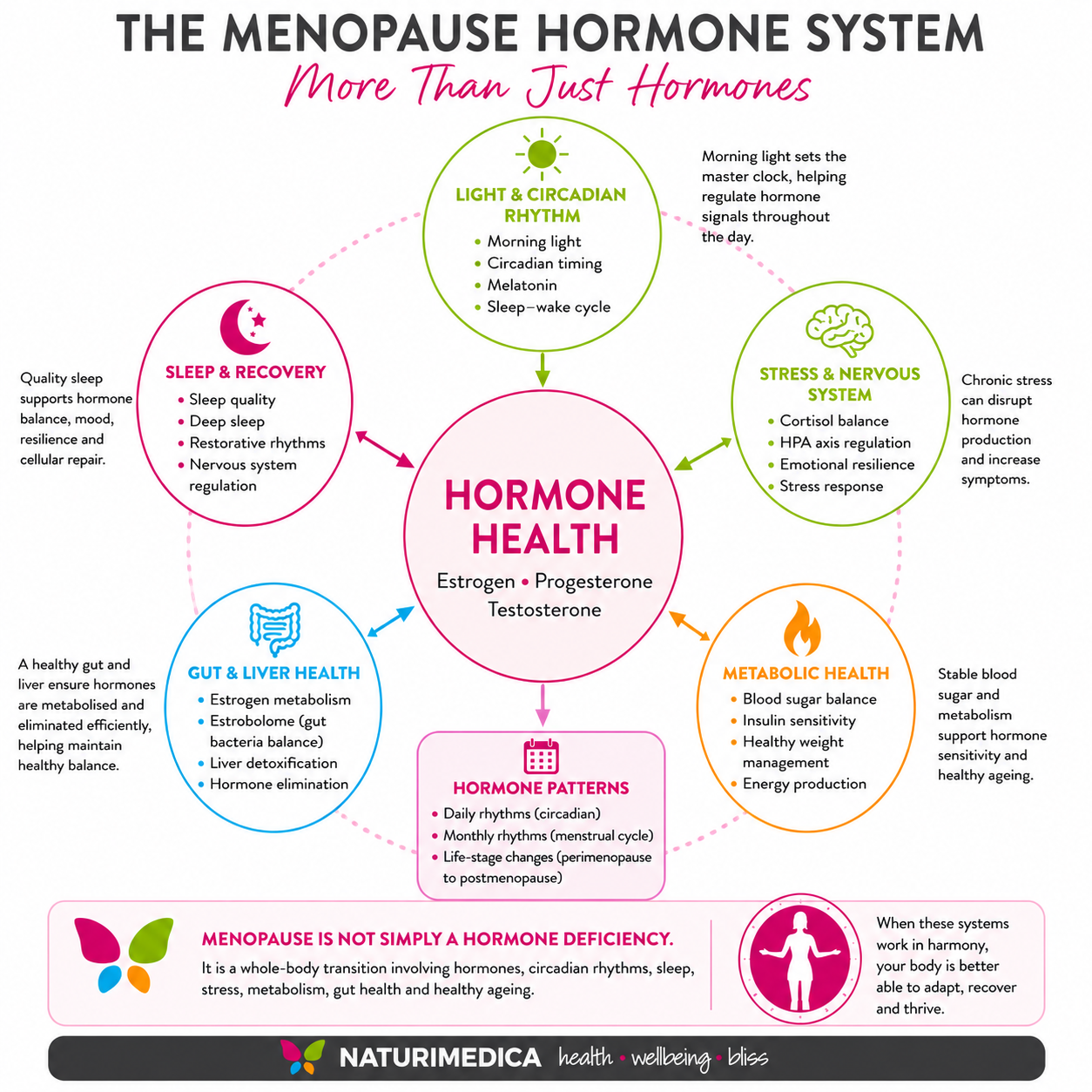
Their effects are shaped by sleep, circadian biology, light exposure, nutrition, stress physiology, metabolic health, gut function, physical activity, and healthy ageing. This helps explain why two women with similar hormone levels can experience menopause very differently.
Practitioner Insight
Many women spend years searching for “the hormone” responsible for their symptoms. In reality, menopause symptoms often emerge from the interaction between changing hormones, sleep quality, stress physiology, circadian rhythms, metabolic health, gut function, and nutrition. For this reason, a systems-based approach to menopause looks beyond hormones alone and considers the broader physiological landscape in which those hormones operate.
The diagram below illustrates how hormone health is influenced by multiple interconnected systems throughout the body.
Key Takeaways
- Estrogen, progesterone and testosterone influence far more than reproduction.
- Progesterone often begins declining before significant estrogen decline occurs.
- Hormone patterns may be just as important as hormone levels.
- Perimenopause is a transition involving multiple hormones and body systems.
- Hormones must be produced, metabolised, and eliminated appropriately.
- The gut and liver play important roles in hormone metabolism.
- Intracrinology suggests that hormone activity within tissues may not always be fully reflected by blood hormone levels.
- Menopause is not simply a hormone transition. It involves hormones, sleep, circadian rhythms, metabolism, gut health, stress, nutrition, and healthy ageing.
- It is a whole-body transition that reflects the body’s remarkable ability to adapt through different stages of life.
Final Thoughts
Our bodies are exquisite adaptation machines. Many hormones in the body, including estrogen, progesterone, testosterone, cortisol and DHEA, ultimately originate from cholesterol. Through a series of enzymatic conversions, the body can transform these hormone precursors into different compounds depending on physiological needs. This remarkable flexibility is one of the reasons the body is so adaptive. Nature has made it so that, with very few exceptions, hormones precursors can be converted along different pathways depending on physiological requirements.
Although in this article we discussed mostly physiological processes and changes happening during the menopause transition, there are also significant psychological considerations that are important to take into account. These will be discussed in another article.
Practitioner Insight
As women move through puberty, their reproductive years, perimenopause and menopause, the body undergoes a series of remarkable biological transitions. Each stage brings different hormonal patterns, physiological priorities, and opportunities for growth and adaptation. From a wholistic health perspective, menopause is not simply an ending. It is another stage of transformation. Just as a caterpillar and butterfly represent different expressions of the same living organism, women continue to evolve throughout life. While the hormonal landscape changes, the body’s remarkable capacity for adaptation, resilience, and renewal remains.
Next Steps: Personalised Support with Hormone Health
Many symptoms are influenced by a combination of hormonal patterns, nutrition, stress physiology, circadian disruption, gut health, and metabolic function. Understanding these interactions is often key to making meaningful progress. A structured review can help bring clarity and focus.
If you are experiencing ongoing or complex symptoms, a personalised approach can help identify the underlying factors that may be contributing to your health challenges.
Work with Me
If you would like tailored, evidence-based guidance, you are welcome to book a consultation. Together we will:
- Explore your symptoms and health history in detail
- Identify the most likely underlying drivers
- Prioritise the changes that will have the greatest impact
- Create a realistic and personalised plan you can follow
👉 Please note that I consult with Australian-based clients only at present and I’m unable to assist individuals based elsewhere. I offer a free 20-minute initial discussion to review your circumstances and how I can help. Book a consultation below.
Book Consultation Online
Learn about our wholistic, systems-based approach to care in The Naturimedica Way and about Online Consultations.
If You’re Still Exploring
If you are still exploring, these menopause guides and resources were created to help you understand your symptoms and begin making meaningful changes at your own pace. A good place to start is the free Menopause Systems Check guide, followed by The Menopause Symptoms and Systems Guide.
I hope you found this guide informative, practical, and empowering, and that it has given you a clearer understanding of the key menopausal hormones, their interconnected nature and importance for overall wellbeing.
I look forward to supporting you in achieving greater balance, energy and wellbeing.
Best of Health
Joanna Sochan
Wholistic Health and Lifestyle Therapist
Integrative health support combining clinical evidence, systems-based thinking and traditional naturopathic wisdom for lasting health and wellbeing
References and Sources
Where applicable, content is informed by peer-reviewed research, clinical literature, and traditional naturopathic practice knowledge.
- Cleveland Clinic: Estriol: Function, Hormone Levels & Testing
- Labrie, F. (1991) Intracrinology. Molecular and Cellular Endocrinology, 78, C113-C118.
- PubMed: Interplay between endocrine disorders and liver dysfunction: Mechanisms of damage and therapeutic approaches; PMID: 40900772
- Science Direct: Estrogen–gut microbiome axis: Physiological and clinical implications
- Springer Nature Link: Pre-menopause, Menopause and Beyond
Related Articles and Resources
- The HRT Decision Guide
- The Menopause Symptoms and Systems Guide
- The Menopause Knowledge Hub
- The Naturimedica Guide to Progesterone eBook
- Melatonin, Circadian Biology and Hormones
- Gut Health, Microbiome and Hormones
- Sleep and Circadian biology Resources
Disclaimer: This content is for informational and educational purposes only and is not intended to diagnose, treat, cure, or prevent any disease. It is not a substitute for professional medical advice, diagnosis, or treatment. Always consult a qualified healthcare provider before making any changes to your health regimen, particularly if you are taking prescription or over-the-counter medications or have a medical condition.
Bio: Joanna Sochan is a Wholistic Natural Therapist and founder of Naturimedica Wholistic Wellcare. She has over 15 years of clinical experience working with complex health presentations, with a focus on gut health, food sensitivities, hormone balance (including menopause), metabolic health, weight regulation, and senior health. She works with clients Australia-wide and online, and also develops therapeutic programs, eCourses, and educational resources designed to support long-term, sustainable wellbeing. View full bio.
Leave A Comment