
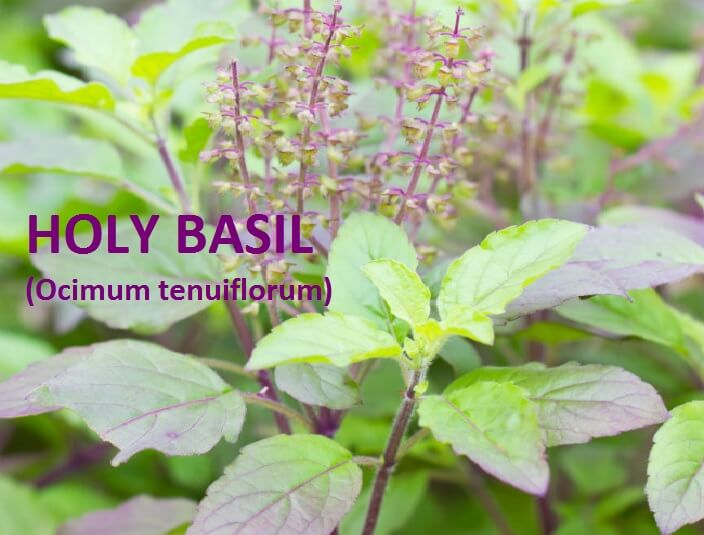
Holy basil is one of my favourite medicinal herbs for people experiencing chronic stress, anxiety, nervous tension, fatigue and stress-related sleep problems.
Also known as Tulsi, holy basil has been used for thousands of years in Ayurveda and has earned an extraordinary reputation as the “Queen of Herbs”. Modern research is now investigating many of the actions for which this herb has traditionally been valued.
In clinical practice, I particularly consider holy basil when stress and anxiety occur alongside fatigue, feeling overwhelmed, disrupted sleep or other signs that a person’s resilience is being challenged. But like all medicinal herbs, holy basil is not appropriate for everyone.
In this article we’ll look at its traditional uses, what modern research tells us about holy basil for stress, anxiety and sleep, how I use it within herbal medicine, and important information about dosage, safety and potential interactions.
Originally published: 2022 | Updated: September 2026
Quick Answer: What Is Holy Basil Good For?
Holy basil (Ocimum tenuiflorum, also widely referenced in older research as Ocimum sanctum), or Tulsi, is an important Ayurvedic medicinal herb traditionally used to support resilience, vitality and wellbeing. Today it is commonly described as an adaptogenic herb, meaning that it may help the body adapt and respond more effectively to physical and emotional stress.
Its most relevant applications include:
- Stress and reduced resilience
- Anxiety and nervous tension
- Fatigue and exhaustion
- Stress-related sleep disturbance
- Broader metabolic and inflammatory support
Modern human research into holy basil remains relatively limited, but clinical studies provide promising support for several of its traditional uses, particularly stress management.
Holy Basil: The Ayurvedic “Queen of Herbs”
Holy basil has a long and respected history in traditional Indian medicine. Known as Tulsi, meaning the “Incomparable One”, it is one of Ayurveda’s most highly regarded medicinal plants and also holds important cultural and spiritual significance in India. Tulsi is traditionally described as a rasayana, a group of rejuvenating herbs and practices used to promote vitality, resilience and healthy ageing. Its reputation became so significant that it became known as the “Queen of Herbs” and sometimes the “Elixir of Life”.
Holy basil is also used in other traditional systems of medicine, including Siddha and Unani, reflecting a long history of medicinal use extending beyond Ayurveda. Its traditional applications are broad, which has contributed to modern scientific interest in its many naturally occurring phytochemicals and potential therapeutic actions.
Traditional applications extend well beyond stress and anxiety and include support for respiratory and digestive health, energy, vitality and general wellbeing.
My own introduction to holy basil came through exploring herbal traditions beyond my original Western herbal medicine training. Western herbal medicine draws heavily on European and North American materia medica, but other sophisticated systems of herbal medicine, including Ayurveda and Traditional Chinese Medicine, provide us with different perspectives on medicinal plants and their therapeutic use.
When I began investigating Ayurvedic approaches to stress, fatigue and anxiety, holy basil particularly caught my attention. I subsequently began incorporating it into individualised herbal formulas and found it a very useful addition to my dispensary.
This is also where traditional knowledge and modern science need to be viewed together rather than as competing ideas:
- Traditional medicine tells us how the herb has been understood and used
- Clinical herbal practice tells us how practitioners apply that knowledge to individuals
- Modern research helps us investigate mechanisms, safety and therapeutic effects
Each contributes something valuable to our understanding of medicinal herbs.
Holy Basil for Stress and Stress Resilience
Stress is probably the area in which holy basil has attracted the greatest modern interest.
Holy basil is regarded as an adaptogenic herb. Adaptogens are traditionally used to increase resilience to physical and psychological stress and help support the body’s ability to adapt when demands are increased. This fits very well with how I use holy basil clinically. Rather than thinking simply in terms of “lowering cortisol”, I consider the broader pattern:
- Is the person under sustained stress?
- Are they anxious or feeling wired?
- Are they simultaneously exhausted?
- Is sleep deteriorating?
- Has their ability to cope with everyday demands changed?
Modern research provides some support for this traditional use. A randomised, double-blind, placebo-controlled study published in 2012 investigated holy basil extract in adults experiencing general stress. The researchers reported greater improvements in several stress-related symptoms in the holy basil group than with placebo.
More recently, a 2022 Australian randomised controlled trial studied 100 adults experiencing stress. Participants received either a standardised holy basil extract or placebo for eight weeks. Those taking holy basil experienced greater improvements in perceived stress. Researchers also found lower hair cortisol, a measure that can provide an indication of longer-term cortisol exposure, as well as a more buffered physiological response to an acute laboratory stress test.
This doesn’t mean holy basil simply “reduces cortisol”. Cortisol is an essential hormone with a normal daily rhythm and many important functions. A more useful interpretation is that holy basil may help modulate aspects of the stress response and support stress resilience, potentially including effects on the hypothalamic-pituitary-adrenal (HPA) axis.
Holy Basil for Anxiety and Nervous System Support
Anxiety is another important indication for holy basil in herbal practice, particularly when it occurs as part of a broader stress-related presentation. I find it especially useful to consider when anxiety occurs alongside nervous tension, chronic stress, fatigue, feeling overwhelmed or disturbed sleep.
Holy basil has traditionally been regarded as both an adaptogenic and calming herb. This combination can make it particularly interesting for someone who feels simultaneously tired and stressed, rather than simply requiring a strongly sedating approach. Modern clinical evidence specifically investigating anxiety is much smaller than the traditional and clinical history of use.
A small human study involving people with generalised anxiety disorder reported improvements in anxiety, stress and related symptoms after 60 days of holy basil supplementation. While this study is encouraging, larger controlled studies are still needed.
This is an important distinction in evidence-informed herbal medicine. Limited modern clinical research does not erase centuries of traditional use or accumulated clinical experience. Equally, traditional use does not mean that every therapeutic claim has been proven by modern research. Understanding the difference allows us to respect both.
Holy basil has even acquired the modern nickname “liquid yoga”, reflecting its reputation as a calming yet non-sedating herb. I think the description captures something interesting about Tulsi: it may support calm and resilience without necessarily making a person feel sleepy or dulled.
Holy Basil and Sleep
Holy basil is not primarily a sedative herb, yet it can be useful when stress and anxiety are contributing to poor sleep. This distinction matters. Sometimes the problem isn’t simply an inability to sleep. A person may be tired but unable to switch off, wake frequently during the night, or notice that sleep becomes considerably worse during periods of sustained stress. In these situations, supporting the stress response and nervous system may form part of a broader sleep strategy.
The 2022 Australian trial also assessed sleep. Participants taking holy basil reported greater improvements in subjective insomnia measures than those taking placebo. However, objective sleep measurements using activity trackers were less convincing. This means the research is promising, but we should not describe holy basil as a proven treatment for insomnia.
Clinically, I think of it differently: when stress or anxiety are factors disrupting sleep, holy basil may be one of the herbs worth considering. Sleep itself remains one of our most important foundations for stress resilience, metabolic health, hormonal regulation and healthy ageing.
Holy Basil During Perimenopause and Menopause
Holy basil may also have a useful place during the menopause transition, particularly when stress, nervous system dysregulation, fatigue, anxiety or disrupted sleep are part of the individual presentation. Perimenopause and menopause involve much more than changing reproductive hormones. Sleep, mood, stress resilience, energy and metabolic health can all be affected.
I don’t think of holy basil primarily as a “menopause herb”. Instead, I consider the presentation of the woman in front of me. If stress, anxiety, nervous system load, fatigue or sleep disturbance are prominent, holy basil may be one of the herbs I consider within a broader individualised formula.
This is a good example of the wholistic approach to herbal medicine: we choose herbs for the person and their pattern of symptoms, rather than simply matching a herb to a diagnosis or life stage.
Other Potential Benefits of Holy Basil
One of the fascinating things about holy basil is the breadth of its traditional applications and biological actions. Its many naturally occurring phytochemicals have attracted research across a wide range of potential therapeutic actions. These include:
- Antioxidant and anti-inflammatory activity
- Metabolic effects
- Digestive and gastroprotective activity
- Cardiovascular support
- Blood-glucose regulation
- Neuroprotective effects and cognition
- Physical endurance
The strength of evidence differs considerably between these areas, so these potential actions should not all be interpreted as established clinical benefits.
Small human studies have reported improvements in some measures of blood glucose and metabolic health. This is particularly interesting because chronic stress, sleep, glucose regulation and metabolic health are closely interconnected.
Holy basil has also demonstrated interesting gastroprotective and anti-ulcer activity in experimental studies, including effects on gastric mucus protection, acid and pepsin secretion, and ulcer healing. Most of this evidence comes from animal studies, however, so it should not be interpreted as evidence that holy basil is an established treatment for peptic ulcers in humans.
Rather than viewing holy basil as a herb that “treats everything”, its broad range of actions helps explain why it has been valued both as an everyday herb and as a medicinal plant, as well as why it can be useful within a carefully designed herbal prescription.
Practitioner Insight
Herbal Medicine Is Both an Art and a Science
In clinical practice, I rarely think of a herb simply as “a herb for anxiety” or “a herb for sleep”. I look at the whole person and the pattern of symptoms they are experiencing.
A carefully designed herbal formula may contain six to eight herbs, each selected for particular actions but chosen to work together. This allows a formula to address several interconnected aspects of a person’s presentation, such as stress and nervous system regulation, fatigue, digestion, blood-sugar balance and sleep, rather than treating each complaint as though it exists in isolation.
This is one of the things I value most about herbal medicine. It allows us to See the Whole Person and connect the dots, while tailoring the prescription to the individual. Holy basil is particularly interesting because its traditional uses and broad actions can make it a useful part of such a formula when it matches the individual presentation.
Growing Holy Basil at Home
Tulsi is traditionally grown around many Indian homes and has cultural and spiritual significance as well as medicinal value. You don’t need to live in India to grow it. I grow holy basil at home in Sydney, Australia, where it has thrived in a sunny position.
Growing medicinal herbs is also a lovely way to develop a different relationship with herbal medicine. Instead of seeing herbs only as capsules or bottles on a shelf, you begin to appreciate them as living plants that have been used as food and medicine for generations.
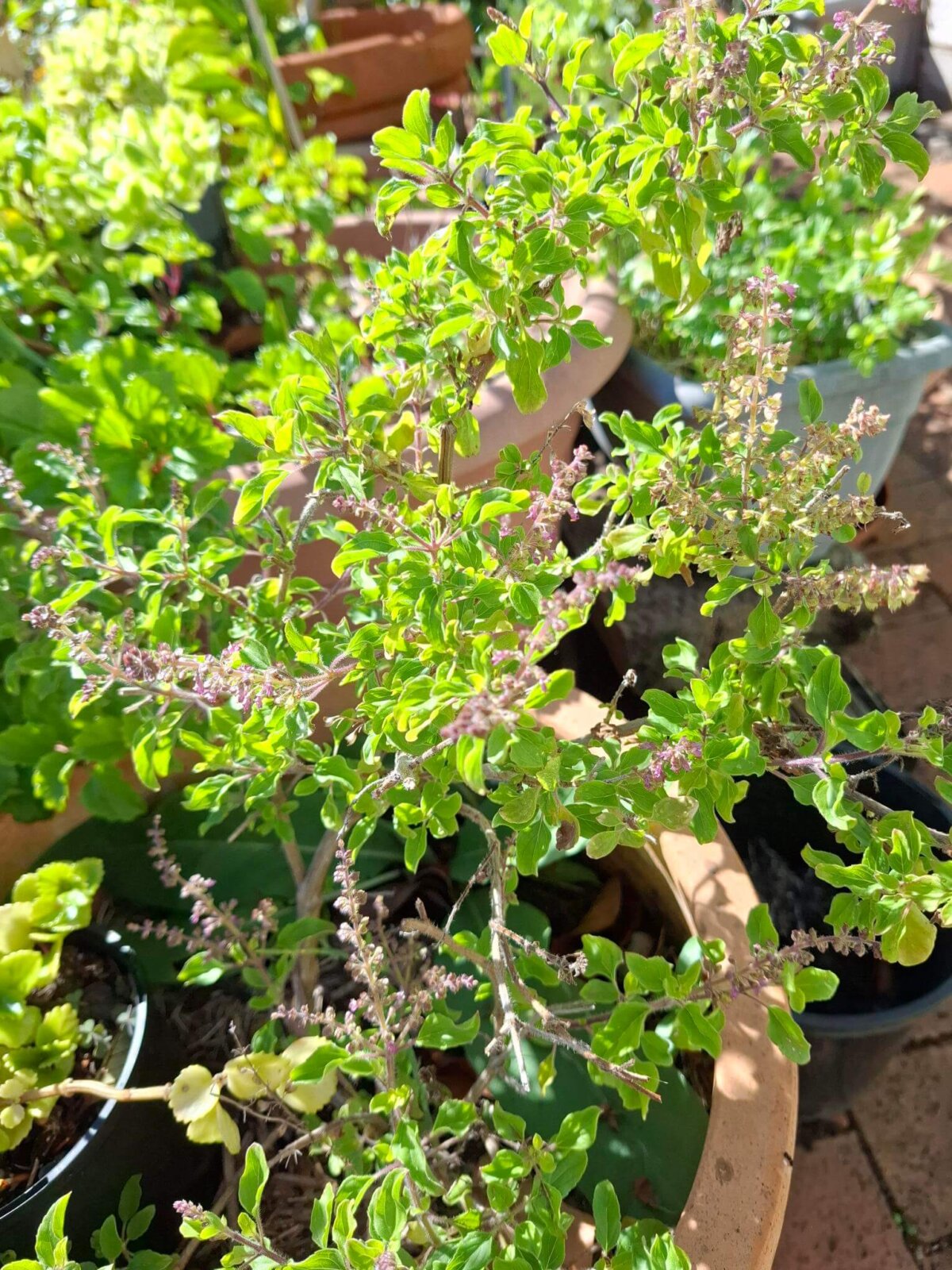
Holy basil growing in my garden in Sydney, Australia
I use the fresh leaves and flowers in herbal teas, eat a few leaves fresh or add them to salads.
Holy basil can be propagated from seed or cuttings and prefers warmth and plenty of sunlight – it won’t grow in shade. It’s an attractive perennial plant in warm climates.
How Is Holy Basil Used?
Holy basil is available in several different forms, including:
- Dried holy basil or Tulsi tea
- Dried herb
- Liquid herbal extracts and tinctures
- Capsules and tablets
- Standardised extracts
These preparations are not necessarily equivalent. A concentrated extract cannot automatically be compared milligram-for-milligram with dried herb, tea or another extract. Different products may also contain different plant parts and extraction ratios. This is one reason dosage information found online can be confusing.
Holy Basil Dosage and the Best Time to Take It
There is no single evidence-based dose of holy basil that is appropriate for everyone.
Human clinical studies have used different preparations and widely varying doses. For example, one recent stress trial used 125 mg of a particular standardised extract twice daily, while earlier studies have used substantially larger amounts of other preparations.
This doesn’t mean that one study found a “better” dose. It means that the preparation matters. The appropriate amount depends on the form of holy basil, its concentration, why it is being used, other herbs or medicines being taken and the individual person.
There is also insufficient evidence to say that holy basil has one universally “best” time of day. In practice, timing may depend on why it is being prescribed, how the individual responds and what other herbs are included in the formula. Follow the directions for a reputable product or, when using holy basil therapeutically, seek advice from a qualified herbal practitioner.
Is Holy Basil Safe?
Holy basil has generally been well tolerated in the human clinical studies conducted so far, but that doesn’t mean it is appropriate for everybody or that unlimited long-term use has been proven safe. Reported adverse effects in clinical research have generally been uncommon and mild, but comprehensive long-term human safety data remain limited.
Pregnancy and breastfeeding require particular caution because adequate human safety information is lacking. Because holy basil may influence blood glucose, people taking glucose-lowering medication should also seek professional advice before using therapeutic amounts.
Holy Basil Interactions and Precautions
Potential interactions are another reason to treat medicinal herbs with the same respect we give other biologically active medicines. Particular caution may be appropriate for people taking:
- Anticoagulant or antiplatelet medication
- Blood-glucose-lowering medication
- Sedative medication including barbiturates
- Other regular prescription medicines where a potential herbal interaction has not been assessed
As a precaution, holy basil is generally best discontinued before elective surgery. Discuss timing with your surgeon, doctor or herbal practitioner, particularly because of its potential effects on blood clotting and blood glucose. Some reported interactions remain theoretical or are based primarily on laboratory or animal research rather than demonstrated clinical interactions in humans.
That uncertainty doesn’t mean we should assume there is no risk. If you take regular medication, have a medical condition, are pregnant or breastfeeding, or are considering therapeutic doses of holy basil, discuss its suitability with your doctor, pharmacist or appropriately qualified herbal practitioner.
Key Takeaways
Holy basil, or Tulsi, is a highly regarded Ayurvedic medicinal herb with a long traditional history and growing modern research interest.
Modern clinical research is strongest for its role in stress and stress resilience, while anxiety remains an important traditional and clinical indication when the person’s overall presentation is appropriate. Holy basil may also be useful when stress contributes to fatigue or disrupted sleep, and it can have a place during perimenopause and menopause when these patterns are present.
Modern clinical research is promising, but still developing. It should complement rather than replace the accumulated knowledge of traditional medicine and thoughtful clinical herbal practice. Most importantly, medicinal herbs are not simply products matched to symptoms.
The right herb, dose, preparation and combination depend on the person.
Continue Exploring Herbal Medicine
If you’d like to learn more about medicinal herbs, their traditional uses and what modern research is discovering about them, visit the Naturimedica Herbal Medicine Resources Hub.
You may also find these resources helpful:
- Nutrition for Good Mental Health
- Sleep and Circadian Health Knowledge Hub
- Menopause Knowledge Hub
- The Naturimedica Way
If you would like individual support with stress, anxiety, sleep, fatigue, menopause or other interconnected health concerns, you can also learn more about Online Naturopathic Consultations Australia. Naturimedica consultations are available online Australia-wide.
Please note that this article is for educational purposes only and is not intended as a substitute for individual medical advice, diagnosis or treatment. Medicinal herbs can have physiological effects and may interact with medicines. Seek appropriate professional advice for your individual circumstances.
Best of Health
Joanna Sochan
Wholistic Health and Lifestyle Therapist
Integrative health support combining clinical evidence, systems-based thinking and traditional naturopathic wisdom for lasting health and wellbeing
Additional Resources
- Metabolic Health After 40
- Stress and Cortisol articles
- Lemon Balm For Insomnia, Memory, Anxiety and Skin
- Metabolic Health Reset Guide & Workbook
References
Bhattacharyya D, Sur TK, Jana U, Debnath PK. Controlled programmed trial of Ocimum sanctum leaf on generalized anxiety disorders. Nepal Medical College Journal. 2008;10(3):176–179.
https://pubmed.ncbi.nlm.nih.gov/19253862/
Dharmani P, Kuchibhotla VK, Maurya R, Srivastava S, Sharma S, Palit G. Evaluation of anti-ulcerogenic and ulcer-healing properties of Ocimum sanctum Linn. Journal of Ethnopharmacology. 2004;93(2–3):197–206.
https://pubmed.ncbi.nlm.nih.gov/15234753/
Goel RK, Sairam K, Dorababu M, Prabha T, Rao CV. Effect of standardized extract of Ocimum sanctum Linn. on gastric mucosal offensive and defensive factors. Indian Journal of Experimental Biology. 2005;43(8):715–721.
https://pubmed.ncbi.nlm.nih.gov/16121713/
Jamshidi N, Cohen MM. The clinical efficacy and safety of Tulsi in humans: a systematic review of the literature. Evidence-Based Complementary and Alternative Medicine. 2017;2017:9217567.
https://pubmed.ncbi.nlm.nih.gov/28400848/
Lopresti AL, Smith SJ, Metse AP, Drummond PD. A randomized, double-blind, placebo-controlled trial investigating the effects of an Ocimum tenuiflorum (Holy Basil) extract on stress, mood, and sleep in adults experiencing stress. Frontiers in Nutrition. 2022;9:965130.
https://pubmed.ncbi.nlm.nih.gov/36185698/
Plants For A Future. Ocimum tenuiflorum L. Plants For A Future. c. 2010–2022.
https://pfaf.org/user/Plant.aspx?LatinName=Ocimum+tenuiflorum
Richard EJ, Illuri R, Bethapudi B, Anandhakumar S, Bhaskar A, Chinampudur Velusami C, Mundkinajeddu D, Agarwal A. Anti-stress activity of Ocimum sanctum: possible effects on hypothalamic-pituitary-adrenal axis. Phytotherapy Research. 2016. doi:10.1002/ptr.5584.
https://pubmed.ncbi.nlm.nih.gov/26899341/
Saxena RC, Singh R, Kumar P, Negi MPS, Saxena VS, Geetharani P, Allan JJ, Venkateshwarlu K. Efficacy of an extract of Ocimum tenuiflorum (OciBest) in the management of general stress: a double-blind, placebo-controlled study. Evidence-Based Complementary and Alternative Medicine. 2012;2012:894509.
https://pubmed.ncbi.nlm.nih.gov/21977056/
Singh S, Majumdar DK. Evaluation of the gastric antiulcer activity of fixed oil of Ocimum sanctum (Holy Basil). Journal of Ethnopharmacology. 1999;65(1):13–19.
https://pubmed.ncbi.nlm.nih.gov/10350365/
Disclaimer: This content is for informational and educational purposes only and is not intended to diagnose, treat, cure, or prevent any disease. It is not a substitute for professional medical advice, diagnosis, or treatment. Always consult a qualified healthcare provider before making any changes to your health regimen, particularly if you are taking prescription or over-the-counter medications or have a medical condition.
Bio: Joanna Sochan is a Wholistic Natural Therapist and founder of Naturimedica Wholistic Wellcare. She has over 15 years of clinical experience working with complex health presentations, with a focus on gut health, women’s hormone health (including perimenopause and menopause), metabolic health, weight regulation, and circadian biology. She works with clients Australia-wide and online, and also develops therapeutic programs, eCourses, and educational resources designed to support long-term, sustainable wellbeing. View full bio.
Hello,
How would you take Holy Basil for sleep? Should I start with morning dose first? I suffer from very high cortisol per DUTCH test. Trouble falling and staying asleep
Yes, take holy basil throughout the day either 2xday or 3xday depending on the supplement/ dose appropriate for you.
[…] Holy basil: a key herb for stress, anxiety, depression and fatigue […]
I was having Holy Basil tea daily but on reading your comment about it lowering an already low cortisol level I have ceased using it.
I had previously suspected this could be a possibility so nice to have it confirmed.
I am taking an ashwaganda rhodiola and siberian ginseng supplement but haven’t noticed much benefit from it! Could you recommend another supplement that would be better to improve cortisol levels?
I’m not able to suggest specific supplements pnline, as I don’t know your circumstances and health status.
Generally speaking herbs such as licorice (not if high blood pressure), rhodiola and rehmannia support cortisol production, as well as maca (I find it works for some people but not others). I don’t recommend self-medicating with herbs as they are powerful medicines that need to be taken under a guidance of a knowledgeable practitioner to get best and safe results – dose, form of the herb and combinations with other herbs/ supplements need to be taken into account and assessed for each person.
I bought turmeric today at the advice of three doctors to possibly help bleeding issues I have from arterial malformations throughout my digestive tract. In addition to Whole Foods, pepper and a variety of fruit extracts the turmeric I bought contains holy basil. I take Zonisamide every night for a seizure I had almost 5 years ago. Will the holy basil cause any potential for seizures?
I’m afraid I couldn’t find any data on how Zonisamide and holy basil could potentially interact.
Hello! I was wondering if you could offer me some advice! I suffer from hair loss, acne and unwanted facial hair on my throat, side burns and stomach. Was told I have PCOS but was told by another that my adrenals are producing androgens….. I was told that taking an adrenal tonic and drinking holy basil tea will eventually resolve that. Do you have any other recommendations? I tried posting another comment but I didn’t see it come up. Any advice would be greatly appreciated.
From the symptoms you listed: hair loss, acne and unwanted facial hair on my throat, side burns and stomach they are linked to PCOS. Did you have it diagnosed by the Dr backed by testing? There are some adrenal glands disorders that can produce similar symptoms, so it may be worth to investigate and exclude them to arrive at the correct conclusion.
How many drops holy basil essential oil would you need / day?
I don’t recommend ingesting essential oils as they are very potent substances that can cause serious damage to the gut and digestive track.
You could take holy basil as herbal extract with a guidance of a herbalist.
Hi Joanna, Thank you for this well-detailed information about Holy Basil. I’ve learned more about the herb. Continue the good work!
You’re welcome! Thank you for your feedback:)
I enjoyed reading! Takes me back to my internship in India where I first encountered tulsi. Later on, I found out about its common name in the western world and its amazing health benefits. And now I know even more about it, thanks to this comprehensive article.
Thanks a lot and keep up the great work, Joanna! :)
Glad you found it useful! Thank you for commenting:)
I always have chronic flu and sneeze every month after ovulation and this always make me to take loratidine tablet or I won’t be able to teach as am a teacher and I think this has affected conception for seven years. Now am thinking of trying holy basil is it safe since am trying to conceive.
I strongly suggest you consult with a qualified herbalist before taking any herbs if you’re planning to get pregnant. Caution is required especially in the first trimester and as many women don’t know that they are pregnant for weeks or months, it’s not advisable to take any herbs or medications that may have a negative impact on he baby. Safety first!
This is soooo true. I was drinking holy basil tea every single day for at least 3 months to help me with my anxiety and stress at work. I didn’t know but I was pregnant during the third month I was using holy basil. Once I found out I was pregnant I quit holy basil but I believe the damage was already done. I had a missed miscarriage, the fetus stopped developing…
I’m very sorry for your loss. I don’t know your circumstances but in my experience there likely were other factors contributing to the miscarriage.
I am taking Effexor for depression and Paxil for stress and would like to know if I can take holy basil 500 mg as well for anxiety which I read is suppose to help with. Thank you.
I’m not able to answer this question for you as I have no knowledge of your current and past health history and what other drugs, supplements or herbs you may be taking.
As I mentioned in my post there are a few known drug/ holy basil interactions: with blood thinners and the sedative pentobarbital. The possibility of experiencing interactions increases with the number of drugs taken e.g. two in your case (that you mentioned) as we really don’t know what are the COMBINED effects of the drugs and possibly other supplements/medications.
There are also other factors to consider when taking holy basil – overall it lowers cortisol so if you have adrenal fatigue and your cortisol is already lower, this may exacerbate your symptoms.
Therefore I strongly suggest you seek advice from a health practitioner who can assess your current situation and needs.
Will do! Thank you so much.
Does a dose of holy basil have an immediate effect, i.e., induces calm or sleepiness? Or is it the kind of thing that has to build up in the bloodstream over a few days/weeks before an effect will be noticed? Thanks.
From my experience with prescribing holy basil it usually takes at least a week to 3 weeks to experience its effects. However, some people most commonly with advanced adrenal fatigue can react to it (either negative – too stimulating, or positive) faster – over a few days – from starting supplementation. Most studies on holy basil were conducted over 4-8 weeks and the results were measured at the end of the study. Needless to say, the dose will also will impact on the effect/outcome.
Thank you for your reply! I’m considering it for insomnia and trying to figure out when to take it so that it doesn’t a) keep me awake, if that’s one possible effect; b) helps me sleep better; and c) doesn’t make me groggy through the day. BTW, I appreciate your site.
I suggest you consider other nutrients first such as inositol (good for racing mind) or/and l-theanine. I wrote a post about these two nutrients, read it here: https://www.naturimedica.com/top-sleep-enhancing-nutrients-inositol-and-l-theanine/
Also, have a look at my other sleep blogs for more ideas on dealing with insomnia – here’s the link: https://www.naturimedica.com/category/sleep-and-relaxation/
Would you suggest drinking one cup of tea in the am and one in pm for adrenal stress. And also would it apply to do this one month on and one month off? Or is that just for the capsules. Thanks so much this has been very informative.
One month on/ one month off applies to all forms of this herb including tea.
Joanna,
Thank you! that helps!
tami
You’re welcome Tami!
Hi Joanna,
Thank you for all the information contained here. it is very helpful.
I am experimenting with growing and using medicinal herbs. Dosages are given here in mg. How do you determine an equivalent dosage when making tea from fresh leaves? In otherwords, am I getting enough of the herb in tea form?
thank you , tami
Hi Tami, I haven’t used fresh holy basil leaves so I’m not able to comment on this. For the dried herb daily dose would be between 5-10 grams (1-2 teaspoons of the herb steeped in water 2xday).
Hi Joanna!
Thank you so much for the detailed information on Holy Basil. I own a small skin care spa and I had been feeling very rundown with many adrenal fatigue symptoms. I take probiotics, 5000 iu vitamin D, 200mg magnesium, and have the Skyla IUD. I did some research on adaptogens and decided to try Holy Basil. I started drinking the tea on February 21st with about 2-3 cups daily. I was feeling absolutely lovely within the first couple of weeks which lasted up until a week ago. My head was clear, much less anxiety, dealt with stress easily, and had less headaches.
Just a few days ago I started feeling aggravated frustrated. I am not due for my period for 2 weeks so I can’t relate my mood to that.
I was reading that Holy Basil can actually increase testosterone levels. Could this be the cause of my anger? Should I stop use for a month then continue? Thank you so much!
Decrease the dose to 1 cup per day for a few weeks and see how you feel. If OK try 2 cups per day which generally is a good dose for adrenal fatigue symptoms.
I’ve read that in order to maintain its effectiveness, we should cycle off holy basil every so often. I can’t find any substantive information on this, but have heard anecdotally “one week on, one week off” and “four weeks on, one week off.”
Most resources say it’s OK for long-term use, but “long-term” seems to mean 28 days, and “OK” may mean that it’s safe, but do we develop resistance long-term?
Any advice for a long-term regimen?
Thank you for this important question. Generally I think it’s important to rotate most herbs and supplements periodically to maintain their desired impact as the body adjusts to a certain dose after a while and modifies its response to them. With holy basil I usually use 1 month on/ 1 month off as I prescribe a bottle of herbs per month for 1-6 months. You’d need to consider each supplement on its own taking into account amount of holy basil in a pill/capsule/liquid extract. It would be best to consult a herbalist close to you.
Is this safe for people with low blood pressure?
Thabks
Yes, holy basil is an adrenal adaptogen that supports blood pressure.
Hi i have read a few articles that say that holy basil can be used to treat acne. Do you know if holy basil is good for acne and in which form is best to take it? (topically?)
As I mentioned, holy basil is highly regarded in traditional medicine, particularly in the Ayurvedic system where fresh leaf juice is used in particular for skin diseases and for removing impurities/ toxins in the blood that can manifest as acne. As it’s difficult to get fresh holly basil leaves in the West, you can try topical applications of dried holly basil plus taking it internally as tea or herbal extract which enhance liver detoxification, thus supporting the skin and blood quality indirectly.
Hi Joanne, I have holy basil capsules. Can I open them and cook with the herb inside of the capsule?
I can’t see why not, if they contain pure dried/ powdered holy basil.
Hi Joanna
Can you take inositol and Holy Basil together, also I like to have a couple of drinks on Saturday nights but find it increases my anxiety considerably for a day or two. Apart from cutting out the alcohol would there be any interaction with inositol or Holy Basil with aclohol and which would be best to take inositol or Holy Basil if I continue to have a couple of drinks on a Saturday. Thank you.
I’m not aware of any adverse interactions between holy basil and inositol and they should be fine taken together, if desired. You may want to experiment a bit by taking holy basil first for a few weeks, then adding inositol and see how you feel. There is no official RDA for inositol and it is also difficult to list recommended daily intakes, as it is made in the body and is present in many foods (Whole grains, citrus fruits, seeds, rockmelon, brewers yeast, wheat germ, navy beans and oats. Animal sources include eggs, and organ meats such as liver). As a rough guide however, 1,000 mg for adults is a recommended dose.Higher doses are used for therapeutic purposes.
Hi Joanna
Can you take inositol and Holy Basil together, also I like to have a couple of drinks on Saturday nights but find it increases my anxiety considerably for a day or two. Apart from cutting out the alcohol would there be any interaction with inositol or Holy Basil with aclohol and which would be best to take inositol or Holy Basil if I continue to have a couple of drinks on a Saturday. Thank you.
Hi Joanna
I suffer badly with anxiety Monday to Friday ( work/financial pressures ) generally on the weekends I am fine. I also ruminate a lot and occasionally feel depressed. I was given a benzodiazpine and anti depressant drug which I took for about two months with bad side effects so stopped but had bad withdraw symptoms for about 6 months ( this was about two years ago ) I recently tried a small dose ( half a capsule 250mg ) in the morning and found that by about midday my anxiety had eased considerably and my sore leg muscle feeling had also gone, this lasted until going to bed, however I also felt almost like I had had a drink or taken some form of drug that would make you high ( very talkative and sort of disconnected ) the next day I when for coffee with my wife and she commented that I was acting as if I was a bit drunk. Should I reduce the dose further or take it at night ?
I have also tried inositol which made me very relaxed and stopped the racing thoughts and rumination but gave me a headace and made me fell quite foggy/depressed in the morning ( this was also a low dose 500mg. What would you recommend I try to continue with inositol or holy basil ? or what else would you suggest, I sem to be very sensitive to any type of meds/herbs since withdrawing from the benzodiazapines. Your comments would be appreciated. The only advice I get from the medical profession is that I need to take an anti depressant and a benzo which I am very reluctant to do.
I’m afraid I can’t offer specific advice via the blog. However, I suggest you continues to experiment with the dose of holy basil to see if you can find the right dose for you (if possible) to alleviate symptoms. Overall though I suggest you thoroughly investigate natural medicines options for anxiety before considering going back on drugs. Needless to say, you need to discover what is the cause(s) of your anxiety. Work stress could be just one factor and there may be other causes such as nutritional deficiencies – if they exist and are not corrected it’s unlikely you’ll get better.
All the best!
Hi Joanna,
thanks for this website.
I’m on synthroid (1g) for about 3 years now. i knew i needed to supplement it with some herbal benefits. I’m taking holy basil for about 6 months now and what a difference (taking 2 tablets per day 300mg each; not a very big dose). However, i still notice to get moody and easily stressed and depressed at times. i was reading about ashwaganda and now I’m wondering if i should replace the evening dose of tulsi with one pill of ashwaganda for a better result? how do these three interact together? that’s my biggest question.
thanks so much for your response.
Holy basil and ashwaganda (withania) are both adaptogens, meaning they have the ability to support and rebalance the body from either hypo or hyper states. From my experience withania gently stimulates the thyroid gland by increasing T4 so it can be beneficial for hypothyroid. So if you decide to try withania together with holy basil make sure that you keep an eye on the medication as it may need adjustment after a while.
Hi, is it safe to take holy basil with desfax ? Exhausted, overwhelmed & stressed…..retaining weight no matter what great efforts I am putting in :( :(
Sue, please check my updated post regarding the drug interactions for holy basil.
I have found an astonishing difference in my mental and physical health since recently taking holy basil once a day. Should a person cycle off it at some point in time?
I really feel like a new person in relation to dealing with stress.
Holy basil has a good record of safety for long-term use. In vivo studies have investigated acute single doses of 2,000mg/kg and long-term doses of 5, 50, and 300mg/kg/day for 28 days with no morbidity and mortality or pathological changes observed. You’ll find nformation re studies on holy basil here https://www.ncbi.nlm.nih.gov/pmc/articles/PMC4296439/
Hi Joanna,
I’ve been living in PC games when I was a kid, later drug addiction then alcohol addiction. I was always escaping from the “real world”. A year ago dramatically changed my life. Working and living with my fiance. Since I quit alcohol and drugs I got GAD. Unfortunately excercise is not enought. A month ago started taking Gaia herb’s Ashwagandha and Rhodiola with nice result. Decreased anxiety, less brain fog, increased concentration. I’d say 20% less GAD. I’m taking rhodiola before breakfast and lunch, ashwagandha before breakfast and before sleep. Is it a good idea to take holy basil as well?
Hi there! Thank you for your comment. Yes, these two herbs should be really helpful for you. Ashwaganda (withania) is especially good for the anxiety of withdrawal (of any substance) in higher doses, same with Rhodiola which is also great for brain fog, memory and brain function in general plus it helps to restore the adrenal glands. Holy basil should be a great addition for you and Gaia herbs brand is very good. FYI there is a great guy here in Australia who has an interesting perspective on drugs and withdrawal methods. His name is Jost Sauer and he has a great website and articles – http://jostsauer.com/. Check it out!
All the best
Hello, I’ve been taking Holly Basil for about a week for high anxiety and insomnia. I’ve been taking 500 mg in the morning and it makes me feel too relaxed, tired and hard to think and I still feel very drugged even 24 hours later. I believe I am bordline diabetic and have been dealing with huge life stressors, a child with autism with extrodenary behaviors and a mom who is during of brain cancer. It feels nice to not be tied up in a bundle of knotted muscles and nerves but I need to be able to function… I have continued to take the holy basil because I am concerned how the stress is effecting my heath, hoping I will get used to it, but it feels I’m dropping the ball on everything else… Any suggestions ?
Hello Rebecca
If you feel that holy basil has these effects on you I suggest you look at other options to deal with stress by consulting with your health care practitioner. If you have hypoglyceamia (low blood sugar) and take holy basil, which lowers blood sugar, it may have an adverse effect in some people.
Hello Joanna,
I have chronic hypoglycaemia. You mention holy basil lowers blood sugar levels in diabetics. Will it lower those of a hypoglycaemic even further?
Should I avoid it for that reason, or does it work differently on hypoglyceamic people?
Thank you for your advice,
Dora
Hello Dora
Thank you for your question. Yes, I would be cautious using holy basil in hypoglycaemia especially of you are also taking any medications for it. Have you noticed any symptoms after taking holy basil under the circumstances?
Hi Joanna. Really nice information about the herb.
Will taking basil 150mg in an empty stomach (morning) causes excess stomach acid production throughout the day?
I have been taking it with food (with breakfast and dinner), with no notable differences to my anxiety. So I tried having it in empty stomach. But taking it in an empty stomach gives me gas (may be due to excess stomach acid) throughout the day.
Hi Vicky
Thank you for your feedback. I generally recommend taking herbs with food as they are better absorbed and utilised, and are less likely to cause other symptoms.
You have done your homework Joanna ! I have been on one of the finest quality liquid capsules of holy basil (Gaia herbs) for 18 months .
I own a manufacturing firm and have seven kids -so say no more ????
One capsule at breakfast of 500 mg and one capsule at 4 PM with food keeps me sharp and handling the stress . Really noticed a big difference after two weeks originally. It is helpful to reduce or go off it for two weeks at a time and then resume.
This herb will cause you to vividly dream as you will find many on it saying this one commenting on this herb and manufacture at Amazon .
Thank you for doing your homework .
Hi Chris! Thank you for your comment. Holy basil is one of my favourite herbs for the adrenal and nervous system health. Thank you for sharing your experience with it, and doses that work for you. Gaia herbs are very good, clean products containing high quality herbs which work.
Hello, thanks for your in depth info on Holy Basil. I just started taking it. I do have some symptoms of adrenal fatigue although, I am never tired during the day. I have trouble falling asleep and calming my “racing mind”. I read holy basil can work to calm the mind. You suggested taking it after dinner with food.
My bottle says to take between meals. Have you seen success with clients by taking holy basil without food and right before bed? I am looking for natural ways to calm my mind at night and also heal adrenals.
Thanks!
Hi Maria
I prescribe holy basil in a liquid form in an alcohol base (which is a typical liquid herbal extract form used by herbalists) which is best absorbed when taken with food. I’m not sure what type of preparation you have and why the bottle says to take the herb between meals. I suggest you contact the manufacturer to enquire. Good product companies will be happy to explain their rationale, ingredients etc.
I found that Holy Basil made me sleepy. Don’t know if that’s just me. I thought it was supposed to help fatigue.
It happens with some people. Holy basil helps with adrenal fatigue and tiredness acting as an adaptogen – it corrects imbalances (up or down) as required by the individual. So if you you are sleepy after taking it it suggests you need to rest = sleep to rebalance your body. Herbs are so multi-layered and sophisticated the ways they’re interact with the body!
Is there anything that you recommend for insomnia that works. I have been on sleeping pills for years and tried almost everything. I would to know if there is something that you know truly works as this is my underlying health issues that have caused so much more.
Dana
To effectively deal with your insomnia you, together with your therapist. need to find the cause(s) of it and then apply suitable treatment and/or lifestyle adjustments. There are so many possible causes of not sleeping well at night: blood sugar imbalances, disruption of circadian (day/night) rhythms, food intolerances, adrenal fatigue, stress, diet etc etc. I hope you’ll find a practitioner who can work with you on solving this issue.
Hello I have server anxiety and panic attacks that have made me very shaky through out my day for the pass week. I stop taking my medication the doctors gave me which I only have been taking for a week. Today was my first time taking holy basil I took two in the morning. Do you know how fast this product starts to work? I really want to stop feeling like these it’s interfering with my everyday life style… Please help.. Thanks
Hi Yadira
From what you wrote it looks like you have symptoms that require a close attention of an experienced naturopath or functional medicine practitioner in order to identify possible cause(s) and then develop a treatment plan tailored for you. Holy basil may be a component of your treatment, again depending on what is happening, but may not help sufficiently taken on its own at this stage. So I suggest you find a practitioner you can work with to address your complaints.
All the best
Joanna
Hi,
I’ve been suffering from panic attacks and anxiety. I was prescribed Lorazepam and took it for 8 years 0.5 mg. I just started taking holy basil and ashwanghada together. Is it true that ashwanghada has the same effect as Ativan? How would you recommend me taking these two herbs?
Hi there
Are you still taking Lorazepam now? I don’t know anything about the background of your complaints but have you ever tried to investigate the cause(s) of your anxiety and panic attacks? I see many clients in my practice with similar issues and test them further, often for pyroluria and/or MTFHR status (there are tests to measure both) which cause the symptoms you’re mentioned. These can be addressed with appropriate supplementation and diet only, no drug will help on a permanent basis.
Therefore I suggest you see a functional medicine practitioner or a naturopath who will assess your needs.
All the best
Joanna
I have been suffering from extreme anxiety and some panic attacks . I do not do well with pharmaceutical drugs and prefer all natural.. I research and came up with a combination of holy basil and ashwaghanda . I take 2 holy basil in the morning upon rising where one does not seem to do much and mid morning i take the ashwaghanda what i want to know is it safe to take one or 2 more holy basil laster in the afternoon as taking it in the morning does not see me through the day.. thanks so much for you help, Kathy
Hi Kathy
Thank you for your message. I’m afraid I’m not able to comment online any further without knowing more about your condition plus I don’t know what brand of holy basil you are using or how much of it (dose) is in 1 capsule. According to some studies, when taken for nervous system disorders such as anxiety and depression, the dose of holy basil leaf extract (dried/ capsules) is between 1,000mg-1,200mg per day in divided doses (twice per day) for at least 60 days.
Hope this helps
All the best
Joanna
What dose do you recommend for the treatment of generalized anxiety / mild depression? Thank you!
Doses are best tailored to each individual. On the whole for anxiety and/or depression, the approximate dose of holy basil leaf extract (dried/ capsules) is between 1,000mg-1,200mg per day in divided doses (twice per day) for at least 60 days.
All the best
Joanna
When taking holy basil for anxiety and depression, is it best to take it in the morning or at night before bed?
Thank you for your time!
Hello Ellie
I suggest you divide the dose into two and take holy basil in the morning and evening with food, if taking the herbal liquid or capsules.
All the best
Joanna
I take holy basil I’m Inax was on colrazapam for 15 years doesn’t work no more so they put me on the the Inax can I take both to get off the Xanax or what?
Diane
You need to work with your doctor and a naturopath to adjust/ reduce your medication whilst increasing/ adjusting herbs/ other supplements to replace the medication(s), if appropriate and possible.
All the best
Joanna
Hello, Joanna. Can you tell me anything about diffusing Holy Basil? I was diffusing it for several nights in my bedroom and now am having some really bad feelings. I don’t know if it’s a coincidence or not. I rather feel like I’m sick or detoxing. Headache, slight dizziness, coughing like from the bottom of my lungs. I’ve done several dextoxes and wouldn’t have thought I have that much going on anymore. The brand is Rocky Mountain, so I’m confident of the purity.
I can’t find anything on this. Any suggestions are most welcome. Just wondering if these symptoms are known in relation to Holy Basil essential oil.
Many thanks!
Hello there
I don’t use holy basil essential oil in practice and therefore I’m unable to comment on this. Essential oils are very concentrated extracts and have high potency, perhaps your reaction is related to using too much of it for too long?
All the best
Joanna
Hi there! I wanted to know if taking holy basil and ashwaganda can they be taken together in the evening or should I take them at different times of the day? I just ordered both and heard they both can make you tired.
thanks,
Heather
Hi Heather
I often prescribe holy basil and withania (ashwaganda) together in herbal mixes for relevant conditions as they complement each other. However, therapeutic actions of herbs also depend on the dose(s) and your individual response to them (including your overall constitution and your state of health). If you take too much of them, the herbs can be overstimulating, can make you feel tired or trigger various detox reactions such as headaches, aches and pains, muscle pains etc). Therefore I always recommend seeking advice of a qualified herbalist before taking herbal supplements, especially when you also combine them with medications and/or other self-prescribed supplements.
All the best
Joanna
Do you have any recomendations for healing adrenals while nursing?
Hi Stacey
I don’t recommend taking adrenal supplements during pregnancy and nursing as they are potent herbs and/or hormones not suitable for the baby. What you can do is to focus on adrenal-supporting nutrition and practice stress relief including as much sleep as possible, under the circumstances!
All the best
Joanna
Are there any dangers of taking Holy Basil while working out? I found online that you are not supposed to do strenuous workouts while taking holy basil.
Hi Tommy
Thank your for your comment. I would be interested to know the online source(s) you’re referring to. What was the dose you’re talking about?
Holy basil is an adaptogen i.e. it supports the body during all types of stress. It significantly supports cardiovascular system and improves exercise endurance, it actually helps to exercise more effectively – it protects muscles from exercise-induced injury, reduces level of lactic acid. So the research I know of supports taking holy basil when exercising.
Also, please remember that herb doses are important and should be tailored to each individual. Depending on the dose, some herbs can act as either stimulants or calming, so across the board prescriptions are not likely to help or address health issues.
All the best
Joanna
Could you please tell me where I can find a reputable seller of Holy Basil supplement in Australia at a reasonable price.
Looking around the internet it is difficult to decide what is good value for money.
Thank you
Kaye Bond
Hi Kaye
I recommend the herbal liquid of holy basil by OptimalRx – a herbal manufacturer that produces it in Australia. I suggest you get in touch with them and ask about any practitioners in your area who can prescribe it for you.
All the best
Joanna