
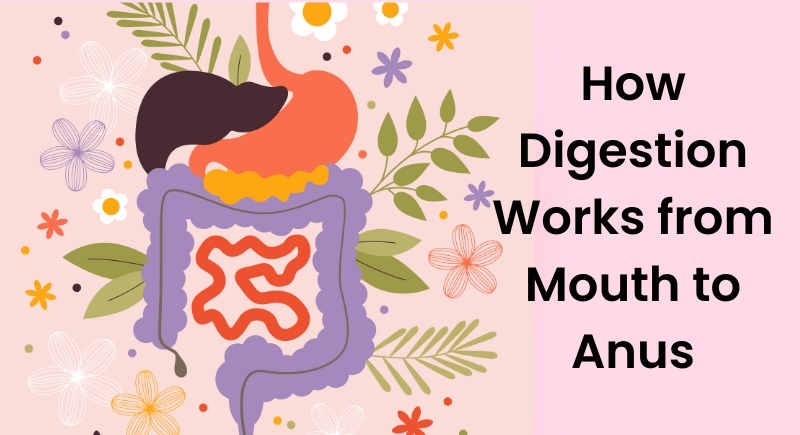
Digestion is something most of us barely think about when it is working well. We eat a meal, nutrients are absorbed and what we do not need is eventually eliminated.
Behind this apparently simple process, however, is a remarkable sequence involving the brain and nervous system, digestive organs, hormones, enzymes, stomach acid, bile, the intestinal lining and gut microbes.
Importantly, each stage influences what happens next.
How well food is prepared in the mouth affects what arrives in the stomach. Stomach digestion influences what enters the small intestine, where food meets bile from the liver and gallbladder and digestive enzymes from the pancreas. What remains eventually reaches the large intestine and its vast microbial community.
This is why digestive health is best understood as a connected process rather than a collection of separate organs. In clinical practice, problems that appear downstream often have their origins much earlier in the digestive journey.
Rather than asking only, “What can I take for this symptom?”, a more useful question may be: “What should be happening at this stage of digestion, and what might be interfering with it?”
In this article, we will follow food through the digestive tract, with particular attention to the often-overlooked work of the stomach, duodenum, liver and gallbladder, and pancreas. The aim is not to turn you into an expert in digestive physiology. It is to help you connect the dots and understand why supporting digestion often means looking at the whole digestive journey.
What Do We Mean by “The Gut”?
When we talk about “the gut,” we mean much more than the stomach or belly.
The gut, also called the gastrointestinal (GI) tract or digestive tract, is a long, continuous muscular tube that begins at the mouth and travels through the oesophagus, stomach, small intestine and large intestine before ending at the anus.
The wider digestive system also includes the liver, gallbladder and pancreas, which contribute bile, enzymes and other digestive secretions even though food does not pass directly through them. Altogether, the digestive tract extends for several metres through the body, and the complete journey of food from eating to elimination commonly takes around 24–72 hours, although this varies considerably between individuals. Its job sounds simple:
digest food → absorb what the body needs → eliminate what it does not
As we are about to see, accomplishing that requires remarkable coordination between every stage of the journey.
Quick Answers
Before eating and in the mouth, where sensory signals, chewing and saliva begin preparing food for digestion.
Much of the chemical digestion of food occurs in the stomach and small intestine, particularly the duodenum.
Mostly in the small intestine.
Each digestive stage prepares food for the next, so problems earlier in the process can influence digestion and symptoms further downstream.
Explore gut health and microbiome articles, guides and eBooks in our Gut Health and The Microbiome Hub.
Before the First Bite: Digestion Starts Before You Eat
Digestion begins before you swallow your first mouthful.
The sight, smell, taste and even anticipation of food activate the cephalic phase of digestion. Signals from the brain, particularly through the parasympathetic nervous system and vagus nerve, begin preparing the digestive tract for the meal ahead.
Saliva starts to flow, the stomach prepares its gastric secretions and digestive organs further along the gastrointestinal tract are readied for their part in the process. This brain-gut communication helps explain why how we eat can matter alongside what we eat.
Eating while rushing, working or highly stressed is different from giving the body time to recognise and respond to a meal. The autonomic nervous system helps regulate digestive secretion, motility and blood flow, so our physiological state can influence digestive function.
This does not mean every meal needs to become a mindfulness exercise. A few simple habits can help the body make the transition into eating.
Support digestion before you begin
- Pause and sit down to eat where possible. Look at and smell your food to give your body a clear signal that it is mealtime.
- Allow enough time to eat and chew properly. Constantly rushing meals works against the early stages of digestion.
- Reduce distractions where practical. Shifting attention from work, screens and stress towards your meal can help you engage with the digestive process.
Good digestion does not begin with a supplement. It begins with giving the body the opportunity to prepare for food. Once that first bite is taken, the mouth becomes the first physical processing station in the digestive journey.
The Mouth: Where Food Begins to Become Digestible
Once you take the first bite, digestion becomes both mechanical and chemical.
Your teeth break food into smaller pieces, increasing the surface area available for digestive enzymes further along the gastrointestinal tract. At the same time, food mixes with saliva, which moistens it and begins carbohydrate digestion through the enzyme salivary amylase. The tongue then forms the chewed food into a soft mass called a bolus, ready for swallowing.
Support digestion in the mouth
- Chew thoroughly. Rather than counting every chew, aim for food to be well broken down before swallowing.
- Slow the pace of your meal. This supports mechanical breakdown and normal digestive signalling.
- Support oral health. Healthy teeth, gums and adequate saliva are part of digestive health, not separate from it.
The Oesophagus: Moving Food in the Right Direction
After swallowing, the bolus travels through the oesophagus towards the stomach.
Coordinated muscular contractions called peristalsis propel food downwards. At the lower end of the oesophagus, the lower oesophageal sphincter (LES) acts as an important gateway. It relaxes to allow food into the stomach and normally closes again, helping prevent stomach contents from travelling back upwards.
When this barrier does not function effectively, gastric contents can move into the oesophagus and contribute to reflux and heartburn. The reasons are more complex than simply having “too much stomach acid”, so we will explore reflux separately in our article.
When stomach contents repeatedly move in the opposite direction, acid reflux can occur. Learn more about why acid reflux happens.
Food has now been prepared, chewed and transported. In the stomach, the nature of digestion changes considerably.
The Stomach: A Major Upstream Digestive Checkpoint
The stomach is much more than a temporary storage pouch. Its muscular walls mix and churn food while gastric secretions create the conditions needed to break it down chemically. Over several hours, the meal is gradually transformed into a semi-liquid mixture called chyme, ready to be released in controlled amounts into the small intestine.
Stomach acid does several important jobs
Specialised parietal cells in the stomach lining produce hydrochloric acid (HCl), creating the strongly acidic environment required for normal gastric digestion. This acidity is particularly important for protein digestion. It helps unfold dietary proteins and activates pepsin, the major protein-digesting enzyme in the stomach.
Importantly, the acidity and composition of chyme entering the duodenum help trigger the coordinated digestive processes needed further downstream. What happens in the stomach influences the work required of the small intestine, pancreas, liver and gallbladder.
The stomach controls the pace of the journey
At the lower end of the stomach, the pyloric sphincter regulates the movement of chyme into the duodenum so that it arrives in manageable amounts.
The type and size of a meal influence gastric emptying. Liquids generally leave more quickly, while larger meals and meals containing substantial amounts of fat tend to empty more slowly. This controlled release matters because acidic chyme must next be neutralised and mixed with bile and pancreatic secretions before digestion can continue effectively.
When stomach function is disrupted
Changes in gastric acid production, motility, stomach-lining health or gastric emptying can influence digestion beyond the stomach itself. Stomach acid deserves particular attention because both inadequate gastric acidity and inappropriate acid exposure can create problems, and symptoms alone do not necessarily reveal what is happening physiologically.
We will explore low stomach acid, possible causes, assessment and appropriate support in a separate article rather than oversimplifying this important subject here.
Three ways to support normal stomach digestion
- Chew well and avoid rushing meals. The stomach works with food that has already undergone its first stage of mechanical digestion.
- Support the conditions for normal digestive signalling. Nervous-system activity helps coordinate gastric secretion and motility. Slow down and aim to relax while eating.
- Investigate persistent upper-digestive symptoms. Regular reflux, pain, marked fullness, nausea or difficulty tolerating meals should not simply be accepted as “poor digestion”.
The stomach has completed its first major processing job, but the chyme leaving it is still far from ready for absorption. It now enters one of the most important and often overlooked parts of the digestive system: the duodenum, where the stomach, pancreas, liver and gallbladder begin working as a team.
The Duodenum: Where the Major Digestive Players Meet
The duodenum is the first and shortest section of the small intestine, but its role in digestion is disproportionately important.
As acidic chyme leaves the stomach, it enters the duodenum in small amounts, regulated by the pyloric sphincter. Here, digestion shifts again. Much of the chemical breakdown of food still needs to happen, and the duodenum brings together three major components:
- Bicarbonate, primarily from the pancreas, helps neutralise acidic chyme arriving from the stomach.
- Pancreatic enzymes continue the digestion of proteins, carbohydrates and fats.
- Bile, produced by the liver and delivered through the biliary system, helps prepare dietary fats for digestion and subsequent absorption.
This change in acidity is essential. The highly acidic environment that was useful in the stomach is not appropriate for the small intestine. Neutralising the chyme helps protect the duodenal lining while creating conditions in which pancreatic digestive enzymes can work effectively.
A sophisticated signalling centre
The duodenum does not simply wait for digestive juices to arrive. It helps coordinate their release according to the contents of the meal. When acidic chyme and nutrients enter the duodenum, intestinal hormones and nerve signals communicate with the pancreas, liver, gallbladder and stomach. These signals help regulate bicarbonate and pancreatic enzyme secretion, bile delivery and the rate of gastric emptying.
This illustrates an important principle:
Healthy digestion depends on producing and delivering the right substances, in the right place, at the right time.
Why upstream digestion matters here
What arrives in the duodenum has already been influenced by chewing, stomach acid, gastric enzymes and gastric emptying. It must now be coordinated with bile, bicarbonate and pancreatic enzymes before nutrients can be broken down sufficiently for absorption. If one part of this sequence is disrupted, the digestive workload changes further downstream.
Three ways to support this stage of digestion
- Support the stages that come before it. Eating calmly, chewing thoroughly and supporting normal stomach function help prepare food before it reaches the duodenum.
- Include good-quality fats as part of a balanced diet. Dietary fat provides a normal physiological stimulus for bile and pancreatic digestive activity.
- Investigate persistent upper-abdominal symptoms. Ongoing pain, nausea or unexplained digestive changes may require investigation rather than simply adding digestive supplements.
The duodenum is therefore an important meeting point between the digestive tract and its major accessory organs. Two of those organs now deserve a closer look: the liver and gallbladder, which provide bile for fat digestion and the absorption of fat-soluble nutrients.
Liver and Gallbladder: Making and Delivering Bile
The liver has hundreds of functions, but for our digestive journey, one deserves particular attention: the liver makes bile.
Bile is a digestive fluid containing bile acids and other components. Once produced by the liver, bile can flow towards the small intestine or be diverted into the gallbladder, a small organ beneath the liver. The gallbladder does not make bile. It stores and concentrates bile between meals and releases it when needed.
When a meal containing fat reaches the duodenum, hormonal signals, particularly cholecystokinin (CCK), stimulate the gallbladder to contract. Bile travels through the bile ducts into the duodenum.
Why bile matters for fat digestion
Fat does not mix readily with the watery environment of the gastrointestinal tract.
Bile acids help emulsify fat, breaking large fat droplets into much smaller ones and increasing the surface area available to pancreatic lipase, the major enzyme involved in digesting dietary triglycerides. Bile therefore works in partnership with pancreatic enzymes rather than digesting fats on its own.
Effective bile secretion and fat digestion are also important for absorbing fatty acids and the fat-soluble vitamins A, D, E and K. Very low-fat eating patterns may reduce normal gallbladder stimulation and can make it more difficult to obtain and absorb adequate amounts of fat and fat-soluble nutrients.
This highlights an important distinction:
Eating a nutrient does not necessarily mean we will assimilate it effectively. Digestion must first make nutrients available for absorption.
Bile also supports elimination and microbial control
Bile does more than assist fat digestion. It is also one route through which the body eliminates substances processed by the liver, including bilirubin, excess cholesterol and some metabolites and xenobiotics, by carrying them into the intestinal tract for eventual excretion.
Bile acids also contribute to microbial control in the small intestine. Together with stomach acid, intestinal motility and immune defences, their antimicrobial effects help limit excessive bacterial growth in a part of the gut where microbial numbers normally remain much lower than in the colon.
Most bile acids are then reabsorbed in the final part of the small intestine and returned to the liver for reuse through a recycling system known as enterohepatic circulation. Bile therefore sits at an interesting crossroads between digestion, absorption, microbial control and elimination.
When bile delivery is disrupted
Healthy fat digestion depends not only on producing bile but on delivering it to the small intestine when required.
Gallstones, bile-duct obstruction, impaired gallbladder emptying or conditions affecting the liver and biliary system can interfere with this process and affect the digestion and absorption of fats and fat-soluble vitamins. Persistent upper-right abdominal pain, particularly after meals, jaundice, unusually pale stools or dark urine require medical assessment rather than self-treatment.
Three ways to support healthy bile function
- Include appropriate amounts of healthy fats. Fat entering the duodenum provides an important physiological signal for gallbladder contraction and bile release.
- Eat a varied, plant-rich diet. Fibre and plant foods support intestinal health and normal elimination.
- Support the whole digestive sequence. Stomach emptying, duodenal signalling, pancreatic enzymes and intestinal motility all contribute to effective fat digestion and absorption.
Learn More: For a deeper look at bile flow, gallbladder problems, symptoms and nutritional support, see Gallbladder Function: Problems, Symptoms and Natural Treatment.
The Journey So Far
Chewing prepares food → stomach acid and enzymes begin gastric digestion → acidic chyme enters the duodenum → acidity is neutralised → bile emulsifies fats → pancreatic enzymes break them down further → nutrients become ready for absorption
The next member of this digestive team is the pancreas. Although widely known for its role in blood glucose regulation, its digestive function is just as important.
The Pancreas: A Digestive Powerhouse
The pancreas is often associated with insulin, blood glucose and diabetes, but this is only one part of its work.
Its endocrine function produces hormones such as insulin and glucagon. Its exocrine function has a very different role: producing and delivering pancreatic juice into the duodenum to help digest food. Pancreatic juice provides two things that are particularly important at this stage: digestive enzymes and bicarbonate.
Enzymes for all three macronutrients
The pancreas produces enzymes that continue the digestion of the major components of a meal:
- Proteases break proteins and peptides into progressively smaller components
- Pancreatic amylase continues carbohydrate digestion
- Pancreatic lipase, working alongside bile, is central to fat digestion
Many pancreatic protein-digesting enzymes are released in inactive forms and activated once they reach the small intestine, helping protect pancreatic tissue from the powerful enzymes it produces. The partnership with bile is particularly important:
Bile emulsifies dietary fat → pancreatic lipase gains better access to it → fat can be broken down into forms that can ultimately be absorbed
Bicarbonate changes the environment
The pancreas also secretes bicarbonate-rich fluid. The chyme arriving from the stomach is acidic. As it enters the duodenum, bicarbonate helps neutralise that acidity, protect the intestinal environment and create the more suitable pH needed for pancreatic digestive enzymes to work effectively.
This brings us back to our central principle: Digestion depends on the right substances, in the right place, at the right time.
When pancreatic digestion is impaired
If insufficient pancreatic enzymes are produced or delivered to the small intestine, food may not be digested adequately for normal absorption. Significant pancreatic exocrine insufficiency can therefore lead to maldigestion, nutrient deficiencies and malnutrition.
Persistent abdominal pain, diarrhoea, oily or difficult-to-flush stools, unexplained weight loss or signs of nutrient deficiency warrant investigation rather than simply adding digestive enzymes.
Three ways to support pancreatic digestion
- Support the digestive sequence upstream. Stomach emptying and duodenal signalling help coordinate pancreatic secretion with the arrival of food.
- Eat balanced, minimally processed meals. Pancreatic digestive secretions respond to the nutrients entering the digestive tract.
- Do not assume digestive enzymes are always the answer. Persistent signs of poor digestion or malabsorption deserve investigation.
The Journey So Far
Chewing prepares food → the stomach acidifies, mixes and begins digestion → acidic chyme enters the duodenum → bicarbonate changes the pH → bile emulsifies fats → pancreatic enzymes break down proteins, fats and carbohydrates → nutrients are transformed into forms the body can absorb
And that brings us to the small intestine, where most nutrient absorption takes place.
The Small Intestine: Where Nutrients Enter the Body
Beyond the duodenum lie the jejunum and ileum. By this stage, proteins, carbohydrates and fats have been progressively broken down into smaller components ready for absorption.
The inner surface of the small intestine is specially designed for this job. Millions of tiny finger-like projections called villi, covered with even smaller microvilli, dramatically increase the surface area available for absorption. Amino acids and small peptides from protein, simple sugars from carbohydrates, fatty acids and other products of fat digestion, vitamins, minerals and water can now cross the intestinal lining and enter the circulation or lymphatic system.
The final section, the ileum, has specialised roles that include absorption of vitamin B12 and reabsorption of bile acids for return to the liver and reuse.
More than an absorptive surface
The small-intestinal lining must perform a remarkable balancing act. It needs to allow digested nutrients to cross while maintaining a selective intestinal barrier between the contents of the gut and the body’s internal environment.
When regulation or integrity of this barrier is disrupted, intestinal permeability can increase, sometimes referred to as “leaky gut.” This is considerably more complex than simply having “holes” in the intestine and deserves its own explanation.
The small intestine is not sterile, but microbial numbers are normally much lower here than in the colon, particularly in its upper sections. Keeping this microbial population appropriately controlled is important for normal digestion and absorption. Excessive bacterial growth, as can occur in small intestinal bacterial overgrowth (SIBO), can interfere with these processes, including bile-acid handling and nutrient absorption.
Three ways to support the small intestine
- Feed it well. A varied whole-food diet provides nutrients needed by the intestinal lining and supports the wider gut environment.
- Look upstream. Effective small-intestinal digestion depends partly on stomach function and appropriate bile and pancreatic secretions.
- Investigate persistent signs of malabsorption. Ongoing diarrhoea, unexplained weight loss, nutrient deficiencies or other significant digestive changes deserve proper assessment.
The Journey So Far
Food is prepared in the mouth → processed and acidified in the stomach → coordinated with bicarbonate, bile and pancreatic enzymes in the duodenum → broken down into absorbable components → nutrients cross the small-intestinal wall and enter the body
What remains now continues into the large intestine, where the microbiome becomes much more prominent and stool formation and elimination complete our journey.
The Large Intestine: Where the Microbiome Takes Centre Stage
By the time intestinal contents pass through the ileocecal valve into the large intestine, most digestible nutrients have already been absorbed.
The job now changes again. The large intestine, or colon, recovers water and electrolytes, gradually transforming the liquid contents arriving from the small intestine into formed stool. Its other major functions include microbial fermentation and moving stool towards the rectum for elimination. Unlike the upper small intestine, the colon contains a very dense microbial population.
These microorganisms ferment some fibres and other carbohydrates that escape digestion and absorption higher in the gastrointestinal tract. This produces metabolites including the short-chain fatty acids (SCFAs) acetate, propionate and butyrate, which influence the colonic environment and have important local and wider physiological roles. Butyrate, for example, is an important energy source for cells lining the colon.
The microbiome is a complex ecosystem that deserves its own discussion. For our digestive journey, the important principle is: What reaches the colon has been shaped by everything that happened upstream.
Chewing, stomach digestion, bile, pancreatic enzymes and small-intestinal digestion and absorption all influence the material eventually presented to the colonic microbiome.
Completing the journey
As stool forms, coordinated muscular contractions move it through the colon towards the rectum, where it is stored until the body signals that it is time for defecation. Regular elimination depends on more than fibre alone. Hydration, movement, food intake, intestinal motility, nervous-system signalling and responding to the urge to defecate can all influence bowel regularity.
Three ways to support healthy bowel function
- Eat a diverse, plant-rich diet with appropriate sources of dietary fibre to provide substrates for the colonic microbiome.
- Support normal motility with adequate hydration and regular physical movement.
- Respect your body’s signals. Regularly suppressing the urge to open the bowels can interfere with normal elimination patterns.
The Complete Digestive Journey
Prepare → chew → acidify and mix → neutralise → add bile and pancreatic enzymes → digest → absorb → ferment what remains → recover water → form stool → eliminate
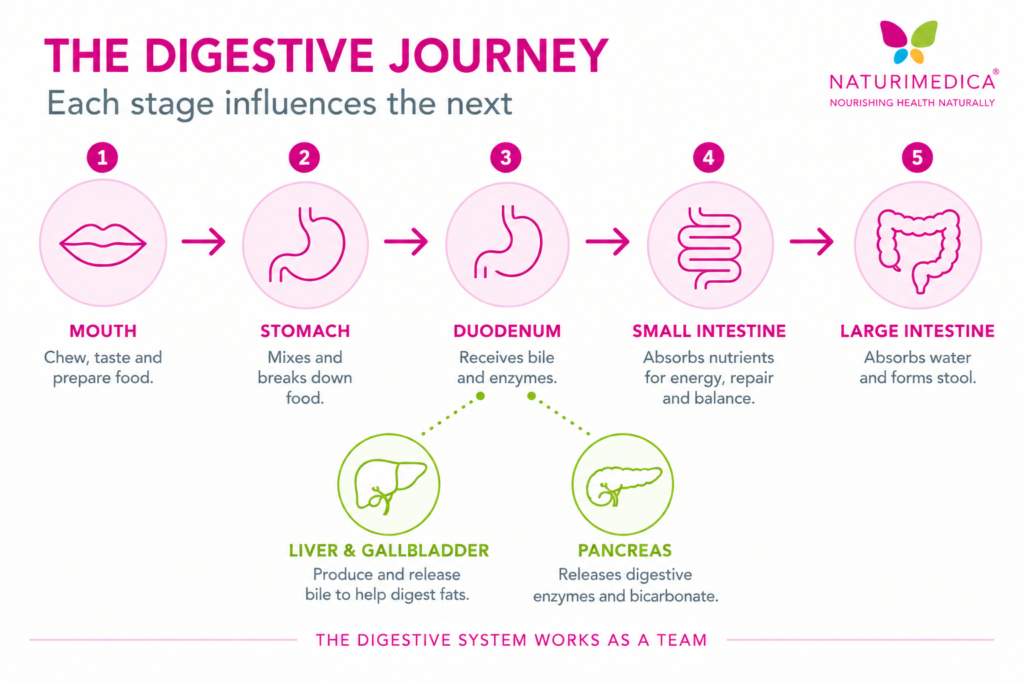
Putting It All Together: Digestion Is a Team Effort
Following food from mouth to anus reveals an important principle: no part of the digestive system works alone. Each stage prepares for and influences the next. This is why supporting digestive health is not simply about taking probiotics, adding fibre or avoiding foods that cause symptoms. These approaches may have a place, but a whole-person view asks broader questions:
- Is food being prepared and digested effectively?
- Are digestive secretions arriving where and when they are needed?
- Is motility working well?
- Are nutrients being absorbed?
- What is eventually reaching the microbiome?
Food choices and eating habits matter, but so do nervous-system state, movement, hydration, sleep and circadian rhythms, because digestion is part of the wider physiology of the whole person.
Understanding the digestive journey gives us a more useful place to begin:
Look at the whole journey, and when problems appear downstream, remember to look upstream too.
Clinical Pearl: Hydration Supports Digestion
Water is needed throughout the digestive process, contributing to saliva and digestive fluids and helping maintain normal stool consistency and elimination. Water is absorbed throughout the intestinal tract, with the small intestine playing a major role.
Good hydration supports digestion from beginning to end, not just bowel regularity.
Frequently Asked Questions
Digestion begins before and in the mouth, not in the stomach. The sight, smell and anticipation of food help prepare the digestive system for a meal. Once you begin eating, chewing mechanically breaks food down while saliva moistens it and salivary amylase begins carbohydrate digestion.
Most nutrient absorption occurs in the small intestine, particularly the jejunum and ileum. Its extensive surface of villi and microvilli allows digested nutrients to cross the intestinal lining and enter the blood or lymph. The ileum also has specialised roles, including absorption of vitamin B12 and reabsorption of bile acids.
They perform different but complementary jobs. Stomach acid creates the acidic environment needed for gastric digestion, particularly of protein. Bile emulsifies dietary fats, while pancreatic enzymes digest proteins, carbohydrates and fats. Pancreatic bicarbonate also helps neutralise acidic chyme entering the duodenum so that intestinal digestion can continue effectively.
Yes. In clinical practice, symptoms experienced further downstream can have contributing factors much earlier in the digestive journey. Chewing, stomach function, gastric emptying, bile delivery, pancreatic enzymes, intestinal motility and nutrient absorption can all influence what eventually reaches the colon. This is why digestive symptoms are best considered in the context of the whole digestive process.
Start with the foundations: eat slowly and chew well, allow time to relax around meals, eat a varied whole-food diet, include appropriate healthy fats, stay well hydrated and move regularly. Persistent pain, reflux, unexplained changes in bowel habits, signs of malabsorption or other ongoing digestive symptoms should be properly investigated rather than continually self-treated.
Conclusion: Support the Whole Digestive Journey
Healthy digestion is not the work of one organ, one enzyme or one group of gut microbes. It depends on a coordinated sequence, with each stage preparing the way for the next.
Understanding that sequence helps us look beyond individual symptoms and connect the dots between how we eat, stomach function, digestive secretions, nutrient absorption, the microbiome and elimination. It also gives us a more meaningful place to begin.
Rather than automatically reaching for another supplement or focusing only on where a symptom appears, we can ask which part of the digestive journey may need attention and what may be influencing it.
This is the whole-person perspective at the heart of the Naturimedica approach:
See the Whole Person | Build Strong Foundations | Live Well.
Continue Your Digestive Health Journey
Next, learn why acid reflux (heartburn) happens and what you can do about it. Our digestive articles series comprises:
- Article #1: Your Digestive System: Following the Journey of Food Through the Gut – You are here
- Article #2 – Acid Reflux: Why It Happens and What You Can Do About it
- Article #3 – Stomach Acid: Why It Matters for Digestion and Health
Next Steps
Ready to Put This Into Practice?
The Digestive Health Guide & Workbook takes the next step, helping you identify your own digestive patterns, strengthen the foundations of healthy digestion and decide where to begin. It includes practical tools, self-checks, a 14-Day Digestive Foundations Reset and simple food-based recipes.
Want personalised support?
If you’re unsure how this article content applies to your gut and microbiome health, personalised support can help clarify the next step. I offer online consultations Australia-wide where we look at gut health, hormones, sleep and metabolic function as an integrated system.
Book Consultation Online
If you don’t live in Australia, you’re warmly invited to explore the many educational resources available on this website, including articles, health guides and free downloads, which have been created to help people better understand their health and make informed decisions wherever they may live.
Learn about our wholistic, systems approach to care in The Naturimedica Way and about Online Consultations.
I hope you found this first article in the digestive health series helpful and practical.
I look forward to supporting you in achieving greater balance, energy and wellbeing.
Best of Health
Joanna Sochan
Wholistic Health and Lifestyle Therapist
Integrative health support combining clinical evidence, systems-based thinking and traditional naturopathic wisdom for lasting health and wellbeing
Related Articles and Resources
- The Digestive Health Guide and Workbook
- Support Your Digestion and the Microbiome by Eating 30 Plant Foods Per Week
- Digestive First Aid: Fast Relief For Bloating, Indigestion, Reflux, Diarrhoea and Constipation
- Gut Health and Lifestyle Factors: Key Elements
- IBS and Bloating: Causes, Symptoms and Natural Support
References and Sources
Where applicable, content is informed by peer-reviewed research, clinical literature, and traditional naturopathic practice knowledge.
- National Institute of Diabetes and Digestive and Kidney Diseases (NIDDK). Your Digestive System & How It Works. National Institutes of Health. NIDDK: Your Digestive System & How It Works
- Power ML, Schulkin J. Anticipatory physiological regulation in feeding biology: Cephalic phase responses. Appetite. 2008;50(2–3):194–206. doi:10.1016/j.appet.2007.10.006. Full text: PubMed Central
- Martinsen TC, Fossmark R, Waldum HL. The Phylogeny and Biological Function of Gastric Juice: Microbiological Consequences of Removing Gastric Acid. International Journal of Molecular Sciences. 2019;20(23):6031. doi:10.3390/ijms20236031. Full text: PubMed Central
- Reshetnyak VI. Physiological and molecular biochemical mechanisms of bile formation. World Journal of Gastroenterology. 2013;19(42):7341–7360. doi:10.3748/wjg.v19.i42.7341. Full text: PubMed Central
- Dawson PA, Karpen SJ. Intestinal transport and metabolism of bile acids. Journal of Lipid Research. 2015;56(6):1085–1099. doi:10.1194/jlr.R054114. Full text: PubMed Central
- Ishiguro H, Yamamoto A, Nakakuki M, et al. Physiology and pathophysiology of bicarbonate secretion by pancreatic duct epithelium. Nagoya Journal of Medical Science. 2012;74(1–2):1–18. PMID:22515107. PubMed record and full-text access
- Suzuki T. Regulation of intestinal epithelial permeability by tight junctions. Cellular and Molecular Life Sciences. 2013;70(4):631–659. doi:10.1007/s00018-012-1070-x. PubMed record and full-text access
- Kashyap P, Moayyedi P, Quigley EMM, Simren M, Vanner S. Critical appraisal of the SIBO hypothesis and breath testing: A clinical practice update endorsed by the European Society of Neurogastroenterology and Motility (ESNM) and the American Neurogastroenterology and Motility Society (ANMS). Neurogastroenterology & Motility. 2024;36(6):e14817. doi:10.1111/nmo.14817. PubMed record and full-text access
- den Besten G, van Eunen K, Groen AK, Venema K, Reijngoud DJ, Bakker BM. The role of short-chain fatty acids in the interplay between diet, gut microbiota, and host energy metabolism. Journal of Lipid Research. 2013;54(9):2325–2340. doi:10.1194/jlr.R036012. Full text: PubMed Central
- National Institute of Diabetes and Digestive and Kidney Diseases (NIDDK). Exocrine Pancreatic Insufficiency. National Institutes of Health. NIDDK: Exocrine Pancreatic Insufficiency
Disclaimer: This content is for informational and educational purposes only and is not intended to diagnose, treat, cure, or prevent any disease. It is not a substitute for professional medical advice, diagnosis, or treatment. Always consult a qualified healthcare provider before making any changes to your health regimen, particularly if you are taking prescription or over-the-counter medications or have a medical condition.
Bio: Joanna Sochan is a Wholistic Natural Therapist and founder of Naturimedica Wholistic Wellcare. She has over 15 years of clinical experience working with complex health presentations, with a focus on gut health, food sensitivities, women’s hormone health (including perimenopause and menopause), metabolic health, weight regulation, and senior health. She works with clients Australia-wide and online, and also develops therapeutic programs, eCourses, and educational resources designed to support long-term, sustainable wellbeing. View full bio.
Leave A Comment