

Sleep is one of the foundations of good health, and good sleep after 40 can be more challenging to achieve for many people. It has multidimensional functions: healing, integrating and restoring, helping to replenish the foundations of body, mind and wellbeing each day.
Sleep, like breathing, is a natural biological process closely regulated by the brain and our circadian timing system. While you sleep, your brain and body remain remarkably active. It supports functions across the brain, immune function, metabolism, hormones and physical repair and recovery, including recovery from illness.
Yet when sleep becomes difficult, we often focus almost entirely on bedtime.
- Should I take magnesium?
- Should I stop using my phone at night?
- Should I go to bed earlier?
- Would melatonin help?
These can all be useful questions, but they begin too late in the story.
Your sleep is influenced by what happens throughout the day: when you see light, when you move and eat, how much caffeine or alcohol you consume, how your nervous system responds to stress, and whether your internal body clock receives clear signals of day and night.
Sleep is also connected with your hormones, metabolism, gut health, immune function and other aspects of your health. This is why, at Naturimedica, we don’t look at poor sleep as an isolated symptom.
We connect the dots and ask: What is interfering with your body’s ability to sleep well? Understanding that question gives you a much more useful starting point than searching for the perfect sleep remedy. This is the wholistic approach we take at Naturimedica: looking beyond bedtime to see the whole person, connect the dots and understand how the whole 24-hour day can influence sleep.
A note about scope: This article focuses on understanding sleep from a whole-person, systems-based perspective and on the factors that commonly support or disrupt healthy sleep. It does not explore sleep physiology, sleep architecture or individual sleep stages in depth. Suggested further reading on these topics is included in the references.
Quick Summary
- Healthy sleep is about more than getting a certain number of hours. Quality, continuity, timing, regularity and how restored you feel also matter.
- Sleep is influenced by interconnected factors, including circadian rhythm, nervous-system activity, hormones, metabolism, nutrition, physical health and your environment.
- Difficulty falling asleep, waking repeatedly, waking too early and sleeping for long enough but still feeling exhausted are different sleep patterns that may have different contributing factors.
- Sleep often changes during perimenopause, menopause and later life, but poor sleep should not automatically be dismissed as an inevitable part of ageing.
- Strengthening the foundations of sleep is a meaningful place to begin. Persistent or unexplained sleep problems may need further investigation.
Explore the Sleep & Circadian Knowledge Hub →
What Does Healthy Sleep Actually Look Like?
Healthy Sleep Is More Than Hours in Bed. Most of us think about sleep in terms of hours. “Did I get my eight hours?”
Sleep duration matters, but it is only one part of healthy sleep. You can spend eight or nine hours in bed and still wake feeling exhausted if your sleep is repeatedly interrupted or poor in quality. Conversely, becoming overly focused on achieving a precise number of hours can create unnecessary anxiety around sleep.
A more useful picture includes several dimensions:
| Sleep Factor | What it means |
|---|---|
| Continuity | Being able to sleep without frequent or prolonged awakenings |
| Daytime function | Feeling reasonably refreshed, alert and able to function during the day |
| Duration | Getting enough total sleep for your individual need |
| Quality | Sleep that feels sufficiently deep and restorative |
| Regularity | Keeping reasonably consistent sleep and wake times |
Sleep factors are listed alphabetically rather than in order of importance
Brief awakenings during the night are normal. Most people move through different stages of sleep and wake briefly without necessarily remembering it. The more useful questions are: Can you return to sleep reasonably easily? and How do you feel and function the following day?
Why Sleep Matters to Your Whole-Body Health
A poor night’s sleep is usually obvious the following morning. You may feel tired, irritable, hungry, foggy or simply less capable of dealing with the day. But sleep also participates in much broader physiological regulation.
| Area | How sleep is connected |
|---|---|
| Brain and cognition | Supports attention, learning, memory and cognitive performance |
| Healthy ageing | Good sleep forms part of the broader foundations that support metabolic, cardiovascular, cognitive and emotional health over time |
| Hormones and metabolism | Interacts with appetite regulation, glucose metabolism, stress hormones and other hormonal systems |
| Immune and inflammatory function | Sleep and immune regulation influence each other, while illness and inflammation can also disrupt sleep. |
| Mood and emotional wellbeing | Sleep influences emotional regulation, while anxiety, low mood and stress can make sleep more difficult |
| Physical repair and recovery | Supports recovery from daily physical activity and normal tissue repair processes |
Systems are listed alphabetically. The table is not a ranking of importance
The relationship also works in both directions. For example:
- Poor sleep can affect metabolic regulation. Metabolic problems can coexist with and contribute to poor sleep.
- Stress can interfere with sleep. Poor sleep can reduce your resilience to stress the following day.
- Hormonal changes can disturb sleep. Repeated sleep disruption can make an already difficult menopausal transition feel considerably harder.
This two-way relationship is central to understanding sleep from a whole-person perspective.
Sleep doesn’t sit outside the rest of your health. It both influences and is influenced by the systems around it.
Sleep After 40: Why Does It Change?
Many people notice that sleep changes as they move through their 40s, 50s and beyond.
Perhaps you used to fall asleep easily but now lie awake longer. Perhaps you still fall asleep quickly but wake several times during the night. Or you may be getting roughly the same number of hours yet no longer feel as deeply rested.
There isn’t one explanation for this.
Sleep itself changes gradually with age, but midlife can also bring changes in hormones, stress, responsibilities, physical health, metabolism and lifestyle. Several of these may be happening at the same time. This is why poor sleep after 40 should neither be dismissed as “just ageing” nor automatically blamed on one hormone.
A better starting question is: What changed when your sleep changed?
Sleep Changes With Age
Sleep architecture changes gradually across adulthood.
Compared with younger adults, older adults tend to spend less time in deep sleep, may wake more frequently during the night and can experience changes in sleep timing.
Circadian timing can also shift with age. Some people begin to feel sleepy earlier in the evening and wake earlier in the morning. This does not mean that poor sleep is inevitable.
There is an important difference between normal changes in sleep across the lifespan and persistent sleep disruption that affects your health, energy or ability to function during the day. Age may change the context. It doesn’t explain everything.
Perimenopause, Menopause and Sleep
For women, the menopausal transition adds another important layer. Changes in estrogen and progesterone occur alongside changes in temperature regulation, mood, stress response and other physiological processes that can influence sleep. Sometimes the connection is obvious:
Hot flush → Wake → Cool down → Try to return to sleep
Night sweats can repeatedly fragment sleep even when falling asleep was never a problem. But menopausal sleep disruption is not limited to hot flushes. Women may also experience:
- Changes in sleep quality and continuity
- Increased difficulty falling or staying asleep
- Mood changes, anxiety or increased mental arousal
- Changes in urinary symptoms that contribute to night waking
- Changes in metabolic health and body composition
- Greater vulnerability to some sleep disorders
These factors can also interact. A hot flush may wake you, but once awake, an active mind may keep you awake. Repeated poor sleep can then reduce stress resilience and affect daytime choices, creating a wider cycle of sleep disruption. And suddenly a hormonal trigger has become part of a much wider sleep cycle. This is exactly why a whole-person perspective matters.
Browse our Menopause Knowledge Hub for articles, guides and downloads. Learn more about Menopausal Symptoms and Systems in our comprehensive guide.
Progesterone, Estrogen and Sleep
Hormones do not work as isolated switches.
Progesterone and estrogen interact with the brain, nervous system, temperature regulation and other processes relevant to sleep. During perimenopause, hormone levels can fluctuate considerably rather than declining in a smooth, predictable way, which may contribute to changing or unpredictable sleep patterns.
Later, declining estrogen may contribute to vasomotor symptoms such as hot flushes and night sweats, while broader menopausal changes can influence mood, metabolic health and other factors that indirectly affect sleep.
The important point is not to reduce sleep to “low progesterone causes insomnia” or “low estrogen causes night waking.” Hormones may be an important part of the picture, but they are still part of a system.
Ask what changed when your sleep changed.
If your sleep changed around the same time as your menstrual cycle, hot flushes, temperature regulation, mood or other menopausal symptoms changed, that timing is useful information.
It’s Not Always “Just Menopause”
There is another reason to avoid blaming every midlife sleep problem on hormones. Other factors can appear or become more important during the same years. These may include:
- Alcohol becoming more disruptive to sleep
- Chronic stress or caring responsibilities
- Changes in physical activity
- Pain or musculoskeletal problems
- Reflux or digestive symptoms
- Medication effects
- Restless legs
- Sleep-disordered breathing, including sleep apnoea
- Changes in metabolic health
- Circadian changes and reduced daytime light exposure
Sleep apnoea deserves particular attention after menopause. While loud snoring, breathing pauses and daytime sleepiness are important signs, women may also present with less obvious symptoms such as fragmented sleep, fatigue, morning headaches, mood changes or insomnia-like complaints.
If you consistently wake exhausted despite enough time in bed, particularly alongside snoring, gasping or morning headaches, sleep-disordered breathing is worth investigating. We’ll discuss it in more detail later on.
Sleep often changes after 40, and menopause can be an important contributor. But age and hormones should provide context, not become automatic explanations for every sleep problem.
The Naturimedica Sleep Blueprint
By now, one theme should be becoming clear. Sleep doesn’t depend on one nutrient. It doesn’t depend on one hormone. It doesn’t depend on one perfect bedtime routine. And it certainly doesn’t begin when you climb into bed. Sleep emerges from many biological and lifestyle signals working together.
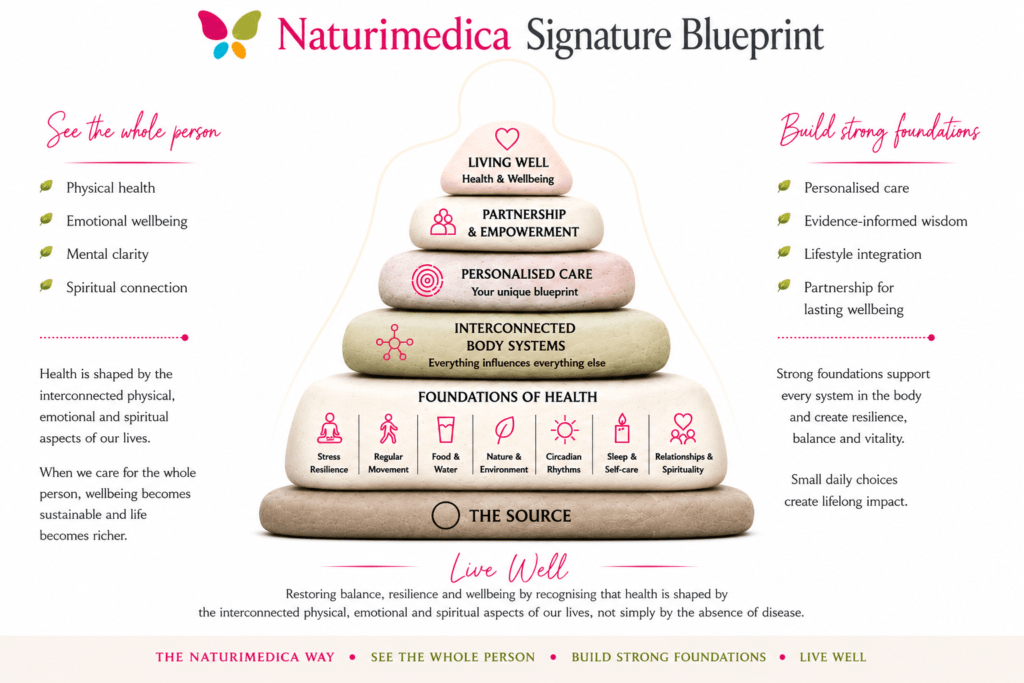
This is where The Naturimedica Way helps us make sense of the bigger picture. Rather than beginning with: “What can I take for sleep?”, we begin by looking at the whole person.
See the Whole Person
Imagine two women who both wake at 3 a.m. On the surface, they have the same sleep problem. But one wakes hot and sweating during perimenopause.
The other drinks two glasses of wine most evenings, falls asleep quickly and then wakes several hours later feeling restless.
A third woman may also wake at 3 a.m. because pain makes it difficult to remain comfortable.
And a fourth may be experiencing fragmented sleep because of sleep-disordered breathing.
Same symptom. Different story.
This is why symptoms are starting points rather than complete explanations. At Naturimedica, we look at how sleep fits into the wider picture:
- Circadian rhythm and light exposure
- Food and hydration
- Gut and digestive health
- Hormonal health
- Immune and inflammatory activity
- Metabolic health
- Movement and physical health
- Nervous-system activity and stress
- Sleep environment
- Daily routines and rhythms
The aim is not to investigate everything. It is to identify which connections are most relevant to you.
Build Strong Foundations
Before adding complexity, look at the foundations. The Foundation layer of the Naturimedica Signature Blueprint includes seven interconnected foundations:
- Circadian rhythms
- Food and hydration
- Nature and environment
- Regular movement
- Relationships and spirituality
- Self-care rituals
- Stress resilience
Notice how many of these occur during the day. That is important.
Morning light can influence your biological timing many hours later. Movement during the day can support sleep pressure and overall health. Food and meal timing provide metabolic signals. Stress accumulated during the day may still be present when you turn off the light. Relationships, emotional wellbeing and your environment can either support or challenge your ability to settle.
This is why we keep returning to one simple idea: Better nights often begin with better days.
Everything Influences Everything Else
Above the Foundations layer sit the interconnected body systems:
Gut health | Hormones | Immune/inflammation | Metabolism | Nervous system | Sleep
In reality, they don’t operate as separate boxes. Think again about a woman experiencing night sweats:
Hormonal change → temperature disruption → awakening → nervous-system activation → difficulty returning to sleep → daytime fatigue → reduced movement → increased caffeine → poorer sleep the following night
Or consider chronic digestive discomfort:
Late meal → reflux → night waking → fragmented sleep → fatigue → altered appetite → poorer food choices → digestive symptoms
These examples are deliberately simple, but they illustrate the principle:
Everything influences everything else.
This doesn’t mean every health problem has a complicated hidden cause. Often the simplest explanation is the right place to begin. But when an obvious solution isn’t working, looking at the connections can help us see more clearly where the problem may be coming from.
Personalised Care Comes After Understanding the Pattern
The next layer of the Signature Blueprint includes tools such as:
Nutrition | Lifestyle strategies | Herbal medicine | Targeted support | Testing
Notice where they sit. After the foundations and after understanding the interconnected systems. That order is deliberate.
Testing, herbs, nutrients and supplements can all be useful, but targeted support makes more sense when there is a reason for using it. For example, someone whose sleep is being disrupted by late caffeine exposure needs a different strategy from someone with severe menopausal night sweats or suspected sleep apnoea.
This is why the goal isn’t to collect more sleep remedies. It is to make sense of your pattern first and then choose support with purpose.
Partnership and Empowerment
At the top of the Naturimedica Signature Blueprint is partnership and empowerment. Understanding your own patterns gives you useful information to work with. Ask:
- What helps?
- What makes things worse?
- What changed?
- What keeps repeating?
- What deserves investigation?
You don’t need to become your own sleep specialist. But becoming a better observer of your own health can help you choose sensible next steps and have more useful conversations with healthcare professionals when support is needed.
The Naturimedica Way
See the Whole Person
Look beyond the sleep symptom and consider the wider pattern.
Build Strong Foundations
Support the biological and lifestyle foundations that allow healthy sleep to occur.
Live Well
Use what you learn to build sustainable habits that support not only sleep, but your wider health and wellbeing.
Learn more about The Naturimedica Way →
The Systems That Influence Your Sleep
Now that we have the whole picture, we can look more closely at the major systems that influence sleep. The aim isn’t to assume that every system needs attention. It is to understand what each system contributes and recognise which connections may matter most in your own sleep pattern. We will begin with one of the strongest biological influences on sleep:
Circadian Rhythm: When Your Body Expects to Sleep
Your body doesn’t determine when to sleep based only on how sleepy you feel. It also has an internal timing system that helps organise periods of wakefulness and sleep across approximately 24 hours. This is your circadian rhythm. Light is one of its most powerful environmental signals.
Bright light during the morning and daytime helps reinforce the biological message: This is day. Be awake and active.
As evening approaches and light levels fall, the message changes: Day is ending. Prepare for night.
Melatonin participates in this process as a biological timing signal. Its evening rise helps communicate that biological night is approaching, but melatonin is only one part of a much larger circadian system.
This is why sleep can become more difficult when the signals reaching your body are inconsistent.
- A dim indoor day followed by a brightly lit evening
- Very different wake times across the week
- Little outdoor light
- Late-night screens and stimulation
- Meals, exercise and activity occurring at irregular times
The body receives a less distinct contrast between day and night.
Read our key practical circadian resource Your 24-Hour Circadian Guide and Workbook. What you’ll find inside: a Circadian Self-Check, clear WHAT → WHY → SO WHAT → HOW explanations, practical morning-to-night strategies, Circadian Journey check-ins, guidance on light, caffeine, hydration, meal timing, movement and sleep, a 7-Day Circadian Reset, references and further reading, plus the Safe & Sensible Sun Exposure reference section.
Your circadian rhythm responds to patterns.
Give your body a clear day and a clear night.
We will return to the practical implications of this in Your Sleep Is Built During the Day.
For a deeper explanation of circadian biology, light exposure and biological timing, see the Circadian Rhythm Health Guide → For more on melatonin, sunlight and the light-dark cycle, see the Melatonin, Sunlight & Circadian Rhythm Guide →
Stress and the Nervous System: Tired but Wired
One of the most common descriptions of poor sleep is: “I’m exhausted, but my brain won’t switch off.”
This apparent contradiction makes sense when we distinguish between being tired and being ready for sleep. You can be physically and mentally exhausted after a demanding day while your nervous system remains alert.
Deadlines, difficult conversations, caregiving, constant notifications, worry and simply trying to fit too much into the day can all maintain a state of physiological and mental activation.
Then bedtime arrives. The lights go out, external distractions disappear and suddenly there is space to think. Tomorrow’s list appears. The conversation from this afternoon gets replayed. You remember something you forgot to do. And then another thought appears:
“I have to get to sleep. I’m going to be exhausted tomorrow.” Now sleep itself has become another source of stress.
Stress Doesn’t Begin at Bedtime
This is why an evening relaxation technique can be helpful but may not solve the whole problem. If your nervous system has been receiving signals of urgency for twelve hours, asking it to become completely calm in the five minutes between closing your laptop and climbing into bed is a big request.
A better approach is to look at how activation and recovery are distributed throughout the day. Are there natural pauses?
- Do you move?
- Do you spend any time outside?
- Are meals eaten sitting down or in front of a screen while working?
- Does work have a finishing point?
- Is there a transition between daytime responsibilities and evening rest?
This doesn’t mean creating a stress-free life. It means giving your nervous system opportunities to move between activation and recovery, rather than expecting all recovery to happen overnight.
If you are consistently “tired but wired”, don’t look only at your bedtime routine. Look at the pace of the day that came before it.
When Worry About Sleep Becomes Part of the Problem
After several poor nights, it is understandable to become concerned about sleep.
- You may begin checking the clock
- Calculating how many hours remain before morning
- Going to bed unusually early “just in case”
- Staying in bed longer in an attempt to catch up
- Watching your sleep score first thing in the morning
The intention is to improve sleep, but increasing attention and effort around sleep can sometimes increase arousal instead.
Sleep is unusual in this respect: You can create the conditions for it, but you cannot force it. This becomes particularly important when insomnia is persistent. Later in this article, we will look at why persistent insomnia may require more than standard sleep-hygiene advice and where approaches such as cognitive behavioural therapy for insomnia (CBT-I) fit.
Hormones: More Than Hot Flushes
We have already looked at the menopausal transition, so we don’t need to repeat that discussion here. From a systems perspective, what matters is how hormonal changes interact with other processes involved in sleep:
Temperature regulation → nervous-system activity → mood → sleep continuity → daytime energy
A woman may describe her problem as insomnia, but looking more closely, the pattern may be:
Night sweat → awakening → increased alertness → difficulty returning to sleep
The question then changes from “How do we make her sleep?” to “What is repeatedly disrupting her sleep?”. That is a much more useful question.
The same principle applies beyond menopause. Thyroid, stress-related, hormonal and metabolic changes may also be relevant when they occur alongside a changing sleep pattern. The aim is not to blame every poor night on hormones. It is to recognise when the sleep pattern occurs alongside other changes that deserve attention.
For more information about hormonal changes after 40, see the Menopause, Hormones & Whole-Body Health After 40 guide and the Menopause Knowledge Hub →
Metabolism and Blood Glucose: A Two-Way Relationship
Sleep and metabolic health influence each other. Repeated inadequate or disrupted sleep can affect insulin sensitivity, glucose regulation, appetite and food choices.
For example, conditions associated with insulin resistance and changes in body composition can also occur alongside sleep-disordered breathing. Hunger, thirst or urinary symptoms may disturb sleep in some people. What and when we eat can also influence comfort, digestion and our daily metabolic rhythms. But this is an area where simple explanations can become misleading.
Does Low Blood Sugar Cause 3 a.m. Waking?
Sometimes you will hear: “If you wake between 2 and 4 a.m., your blood sugar has dropped and cortisol wakes you up.”
That is not something we can determine from the clock. Glucose and hormonal regulation continue throughout the night, but waking at a particular time does not diagnose nocturnal hypoglycaemia or insulin resistance.
If you regularly wake hungry, shaky, sweaty or otherwise symptomatic, particularly alongside known glucose-regulation problems, that deserves appropriate investigation. But for most people, repeatedly eating a bedtime snack simply because they wake at 3 a.m. is not a good substitute for understanding the actual pattern.
For a deeper look at this relationship, see Sleep and Metabolic Function →
Clock time is a clue, not a diagnosis.
Look at the awakening in the context of your symptoms, nutrition, metabolic health, alcohol intake, stress, hormones and overall sleep pattern.
We return to the nutrition connection later in this article.
Gut Health and Digestion: When Your Gut Keeps You Awake
Sometimes the gut-sleep connection is very straightforward. It is difficult to sleep comfortably when you have:
- Abdominal pain
- Bloating
- Reflux or heartburn
- Urgency or diarrhoea
- Uncomfortable fullness after a late or large meal
In these situations, improving sleep may begin by addressing the digestive problem. But the relationship between the gut and sleep extends further. The digestive system follows daily rhythms of its own, and the gut communicates continuously with the brain through neural, hormonal, immune and metabolic pathways.
Sleep disruption can influence digestive function and eating behaviour, while persistent gut symptoms can make restorative sleep more difficult. We don’t need to turn every episode of bloating into a “gut-brain axis” problem. Start with the obvious questions:
- Am I comfortable when I go to bed?
- Does the timing or size of my evening meal matter?
- Is reflux waking me?
- Are persistent digestive symptoms being properly addressed?
If the answer points clearly towards digestion, treating the sleep symptom alone misses the problem. For a deeper exploration of digestive health and the gut microbiome, see the Gut Health & Microbiome Foundational Guide→
Immune Function, Inflammation and Pain
Sleep and immune function also have a two-way relationship.
Most of us have experienced this directly. When you are fighting an infection, you may feel unusually sleepy or fatigued. At the same time, congestion, coughing, fever, discomfort or pain can make good-quality sleep difficult.
Persistent inflammation and pain can create a similar problem. Pain may make it difficult to get comfortable, wake you when you move and make returning to sleep harder. Then fragmented sleep can reduce pain tolerance and make the following day harder. Again, a cycle develops:
Pain → fragmented sleep → fatigue and greater pain sensitivity → poorer sleep
In this situation, another sleep supplement may not address the main problem.
Sometimes the sleep problem is actually a pain, breathing, digestive, hormonal or other health problem that is disturbing sleep. Identifying what repeatedly wakes or activates you can be more useful than adding another sleep remedy.
Your Sleep Is Built During the Day
By now, we have looked at circadian rhythm, nervous-system activity, hormones, metabolism, gut health, immune function and pain. But what does this mean in everyday life? It brings us back to one of the simplest ideas in this article:
Better nights often begin with better days.
Sleep is the night-time end of a 24-hour cycle. What you do after waking helps establish the biological and behavioural signals that eventually lead you back towards sleep. This does not mean living according to a rigid timetable. It means creating enough contrast between day and night that your body receives reasonably clear signals about when to be awake, active and engaged, and when to begin winding down.
Morning: Set the Clock
One of the most useful things you can do for your circadian rhythm happens shortly after waking: See natural outdoor light. Morning light helps reinforce the timing of your internal body clock and supports the daily rhythm that eventually contributes to evening sleepiness and melatonin timing. You don’t need to stare at the sun. You can:
- Go outside
- Have your morning drink outdoors
- Walk the dog
- Water or walk around the garden
- Take a short walk before starting work
The amount of time required varies with season, weather, latitude and individual circumstances. Outdoor light is generally much brighter than typical indoor lighting, even on cloudy days. The principle matters more than creating another perfect morning protocol:
Let your body know that the day has begun.
For a deeper explanation of morning light and circadian timing, see the Circadian Rhythm Health Guide →
Daytime: Give Your Body a Clear Day
A sleep-supportive day contains more than light. Your body also responds to movement, food, social interaction, mental activity and other regular signals. These three are prioritised because they provide broad daytime signals supporting circadian, physical and metabolic health.
1. Get daylight – Spend some time outside during the day rather than experiencing most daylight through a window.
2. Move regularly – Regular physical activity supports health in many ways and can contribute to better sleep. This doesn’t require punishing exercise. Walking, resistance training, gardening, cycling, swimming and other forms of movement all count.
3. Eat nourishing meals – Regular, balanced meals provide energy and the nutrients required for normal nervous-system, hormonal and metabolic function. We will look at sleep nutrition shortly.
The objective isn’t to construct a perfect day. It is to create a day that actually looks and feels like daytime to your biology.
Evening: Turn Down the Day
The transition into sleep begins before you get into bed. As evening approaches, your body benefits from a gradual reduction in the signals associated with daytime activity. That may mean:
- Finishing demanding work
- Lowering the intensity of household lighting
- Reducing highly stimulating activities
- Allowing time to digest dinner comfortably
- Creating a familiar transition towards rest
The transition does not have to involve an elaborate two-hour wellness ritual. It could be as simple as:
Cooking finished → lights lower → tomorrow organised → shower → book → bed
What matters is the repeated signal: The active part of the day is ending.
What About Screens?
Screens deserve attention, but they are not the only reason people sleep poorly. Phones, tablets and computers can affect the evening in several ways:
- Blue light exposure
- Mental stimulation
- Work continuing into the night
- Social media and emotional activation
- Losing track of time
So the question isn’t simply: “Is blue light bad?” A more useful question is: “What is this device doing to my evening?”
If you use a tablet to read quietly for twenty minutes, that is a different behavioural context from answering work emails, scrolling upsetting news or watching short-form videos for two hours. Light still matters. But content, timing and behaviour matter too.
Night: Let the Bedroom Do Its Job
By bedtime, the objective is simple. Create an environment that supports sleep rather than competes with it. The main considerations are:
- Darkness
- Quiet
- Comfort
- A comfortable, sufficiently cool temperature
These are deliberately prioritised because they are the basic environmental conditions most directly relevant to sleep, rather than being listed alphabetically. A bedroom does not need to look like a luxury sleep retreat. It needs to work:
- If streetlights shine directly through the window, address the light
- If noise repeatedly wakes you, look for a practical solution
- If you are too hot, consider bedding, clothing, room temperature and, where relevant, menopausal night sweats
- And if your bed is also your office, television room and social-media headquarters, creating a clearer boundary may help strengthen its association with sleep
A Simple 24-Hour Sleep Rhythm
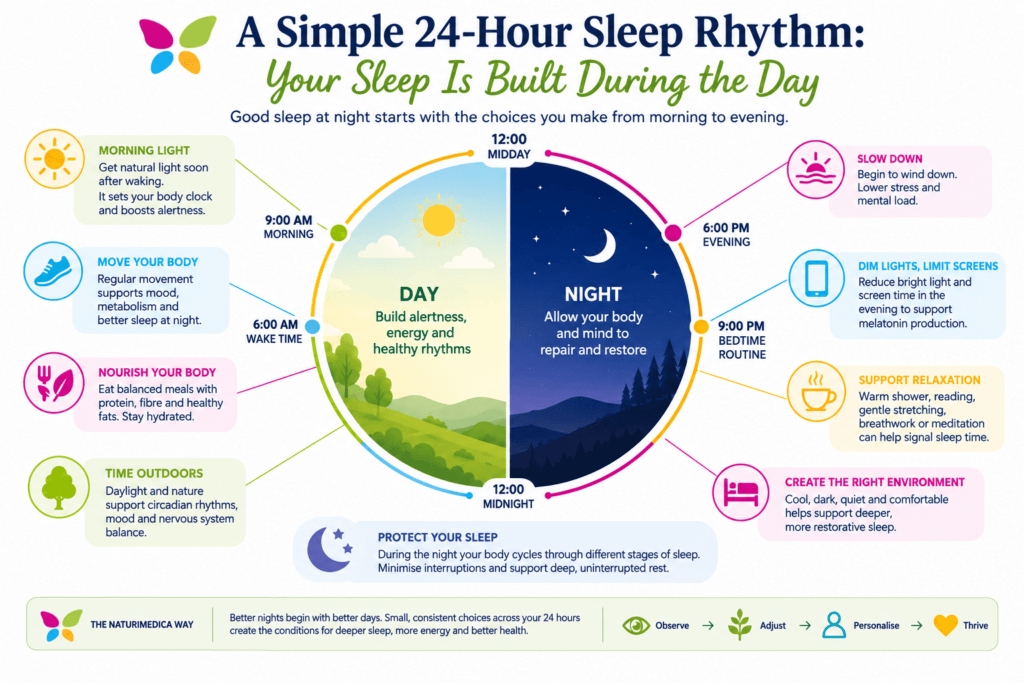
MORNING
Natural light → Wake at a reasonably consistent time → Move
↓
DAYTIME
Daylight → Activity → Nourishing food → Engagement
↓
EVENING
Lower light → Finish demanding activity → Digest → Wind down
↓
NIGHT
Dark → Quiet → Comfortable → Sleep
The purpose of this rhythm is not perfection. Some days will be busy. Dinner will occasionally be late. You will sometimes stay up for a celebration, watch a film or have a poor night’s sleep.
Healthy sleep doesn’t require living in a laboratory. What matters is the overall pattern you return to most of the time.
If your sleep feels chaotic, don’t begin by changing ten things. Start by making day and night more distinct. Morning light and a reasonably consistent wake time are often meaningful places to begin.
For an in-depth exploration of light and darkness signals and their importance for overall health, read out guide and workbook Daily Light & Darkness Routine: A Circadian Light Guide for Better Sleep, Energy & Hormone Health.
Lifestyle and Environment: The Conditions Around Your Sleep
Sleep does not happen in isolation from the way we live.
How much we move, how much time we spend outdoors, our work patterns, medications and substances we use, and the environment in which we spend our days and nights can all influence sleep.
Some of these factors have direct effects on sleep and circadian rhythms. Others influence sleep indirectly through stress, physical health, metabolism, breathing or nervous-system activity. The aim is not to create another list of sleep rules. It is to notice whether your lifestyle is working with your biology or continually asking your body to compensate.
Movement, Nature and Outdoor Living
Movement can offer additional benefits when it takes you outdoors. A walk, gardening or other outdoor activity can combine several sleep-supportive influences at once: natural light, physical activity, time in nature and a clearer contrast between the indoor and outdoor day.
Modern lifestyles can involve long periods indoors under relatively dim daytime light, followed by bright artificial light and screens at night. Regular outdoor time helps restore some of that lost day-night contrast.
Grounding or earthing, such as walking barefoot on grass or sand, is also used in some integrative health approaches. Early research has explored possible effects on sleep, stress and physiological regulation, but the evidence remains limited. For those who enjoy it, spending time barefoot outdoors can still be a simple way to combine contact with nature, movement and time away from the indoor environment.
Rather than adding another item to your health routine, look for activities that provide several benefits at once. A morning walk outdoors gives you light, movement, nature exposure and a clear signal that the day has begun.
Smoking, Recreational Drugs and Other Substances
Substances that alter nervous-system activity can also alter sleep. Nicotine is a stimulant and may make falling asleep or maintaining sleep more difficult. Recreational drugs, including cannabis and stimulants, can affect sleep timing, sleep quality and normal sleep patterns. Some substances may initially feel relaxing or sedating without necessarily producing more restorative sleep.
The same principle we applied to alcohol is useful here: Feeling sedated is not the same as sleeping well. If a substance is regularly being used to help you relax or sleep, it is worth asking whether it may also be contributing to the sleep problem it is intended to solve.
Medications Can Affect Sleep Too
Prescription and over-the-counter medicines can sometimes influence sleep, alertness, restless legs, breathing, urinary frequency or other factors that affect the night.
The effect may depend on the medication, dose and timing, and sometimes changing when a medicine is taken can make a difference. If your sleep changed after starting or changing a medication, discuss this with your doctor or pharmacist.
Do not stop or alter prescribed medication without appropriate professional advice.
Shift Work: When Your Schedule and Body Clock Disagree
Shift work presents a particular challenge because work may require you to be awake when your circadian system is promoting sleep and to sleep when your biology is promoting wakefulness. Night shifts, rotating rosters and frequent changes in sleep timing can therefore make maintaining a stable sleep-wake rhythm difficult.
Not everyone has the option of changing their working hours. In these situations, the goal is not a perfect circadian routine but to use light exposure, sleep timing, meals, movement and the sleep environment strategically to support the best rhythm possible within the realities of the work schedule.
For more detail on biological timing and circadian disruption, see the Circadian Rhythm Health Guide →
Electromagnetic Fields and the Sleep Environment
Our exposure to human-made electromagnetic fields has increased considerably through mobile phones, Wi-Fi, wireless devices, electrical appliances and telecommunications infrastructure. Research has explored whether radiofrequency and other non-ionising electromagnetic fields may influence sleep, melatonin and other biological processes. Some studies have reported biological effects, while findings across the broader research base remain inconsistent and their clinical significance needs further investigation.
Some people also report symptoms they associate with electromagnetic exposure, sometimes described as electromagnetic hypersensitivity or intolerance. This remains an evolving area of research. Reducing unnecessary electrical and wireless devices around the sleeping area may be a reasonable precaution for those who wish to minimise exposure, while also reducing other recognised sleep disruptors such as light, notifications and technology use in the bedroom.
Look at the Environment as a Whole
You do not need to optimise every aspect of your environment before you can sleep well. Instead, look for the factors that are most relevant to you:
- Perhaps you spend almost the entire day indoors
- Perhaps your work schedule constantly changes
- Perhaps nicotine or another substance has become part of your evening routine
- Perhaps a medication coincided with the beginning of your sleep problem
- Perhaps your bedroom has gradually accumulated phones, chargers, screens, lights and other devices that don’t need to be there
The question is not: “Is my lifestyle perfect for sleep?”. It is: “Is there an obvious environmental or lifestyle factor making good sleep harder than it needs to be?”
Address the most meaningful one first.
Food, Nutrition and Sleep
Sleep nutrition can quickly become a list of foods, supplements and claims about what you should eat before bed. We are going to start somewhere simpler. Good sleep nutrition begins with good nutrition.
Your brain and nervous system need amino acids, fatty acids, vitamins, minerals and adequate energy to function normally. Your metabolic health matters. Your digestive comfort matters. And what you eat throughout the day is generally more important than finding one magical sleep-promoting food at 9 p.m.
The first question therefore isn’t: “What should I eat before bed?” It is: “Am I nourishing myself well during the day?”
I often say this to my clients: Eat healthy foods you like and also enjoy what you eat.
Start With Balanced Meals
A balanced meal does not need to be complicated. For most people, a useful starting point is to combine:
| Meal Component | What to include | Examples | Why it matters |
|---|---|---|---|
| Protein | Include a quality protein source at each main meal. | Eggs, fish, red meat, poultry, nuts, seeds, yoghurt, legumes. | Provides amino acids (body’s building blocks) and helps make meals satisfying |
| Healthy fats | Include naturally occurring healthy fats. | Avocado, eggs, extra virgin olive oil, nuts, oily fish and seeds. | Supports satiety and provides essential fatty acids and fat-soluble nutrients. |
| Plant foods | Make vegetables, salad, soups, herbs and other colourful plants a generous part of the meal. | Cruciferous vegetables, herbs, leafy greens, mushrooms, seasonal vegetables and salad vegetables. | Provides fibre, vitamins, minerals and diverse plant compounds. |
| Quality Carbohydrates | Include an amount appropriate for your activity, appetite and metabolic health. | Buckwheat, fruit, legumes, beans, oats, quinoa, rice and root vegetables. | Provide energy and can contribute to a satisfying, balanced meal. |
Meal components are deliberately ordered to emphasise protein, healthy fats and plant foods as practical starting points when building a balanced meal. A simple visual guide for many people is:
½ plate vegetables or salad + ¼ plate protein + ¼ plate quality carbohydrate + healthy fat
This is a starting point rather than a rigid formula. Your needs may differ according to appetite, activity, metabolic health and individual circumstances.
When you’re putting a meal together, start with one simple question: Where are my protein, good fats and plants?
Meal Timing Matters Too
Your digestive and metabolic systems also follow daily rhythms, but this doesn’t mean everyone needs to eat according to an identical timetable. But regularly eating very large meals immediately before bed may make sleep more difficult, particularly if you experience reflux, bloating or discomfort.
For many people, allowing enough time to digest the evening meal comfortably before lying down is a sensible starting point. At the other extreme, going to bed genuinely hungry can also make settling difficult for some people.
The goal is to find a meal pattern that supports nourishment, digestive comfort and your daily rhythm.
What About Foods That May Support Sleep?
Some foods have attracted research interest because they contain nutrients or compounds involved in sleep physiology.
Kiwi fruit, tart cherries, goji berries, milk, nuts, seeds, honey, bananas and other foods are often discussed in this context. Some small clinical studies have reported improvements in aspects of sleep following particular foods, but this does not turn them into natural sleeping tablets.
A kiwi fruit may be a nutritious addition to your evening. But: A kiwi cannot compensate for five coffees, chronic stress, little daylight and a bottle of wine with dinner. Food works within the wider pattern. That is the perspective to keep.
Explore more foods that may help with better sleep in our practical guide See the Whole Person: Make Sense of Your Sleep →
Caffeine: Look Beyond the Bedtime Coffee
Caffeine promotes alertness, which is exactly why we use it.
The difficulty is that its effects can persist for many hours. People also vary considerably in how quickly they metabolise caffeine and how sensitive they are to it. So: “I can drink coffee after dinner and still fall asleep” doesn’t necessarily tell us that caffeine has no effect on sleep quality. Caffeine may be found in:
- Coffee
- Energy drinks
- Some soft drinks
- Tea
- Chocolate and cacao products
- Some medicines and supplements
If sleep is a problem, rather than debating whether caffeine affects you, a simple experiment can provide more useful information: Move caffeine earlier in the day and observe what happens. As a practical starting point, keep caffeine to the morning where possible. If you are particularly sensitive to caffeine, even late-morning intake may affect your sleep. This is a perfect example of:
Do → Observe → Adjust
Read about the pros and cons of drinking coffee from a medical perspective.
Alcohol: Sedation Is Not the Same as Sleep
Alcohol is another common source of confusion. A drink may make you feel relaxed and help you fall asleep more quickly. But falling asleep quickly is not the same as sleeping well.
Alcohol can contribute to more fragmented sleep later in the night and may worsen snoring and sleep-disordered breathing in susceptible people. It can also interact with temperature regulation, urinary frequency and other factors that disturb sleep. This can create a familiar pattern:
Wine → Relaxed → Fall asleep quickly → Wake several hours later → Restless second half of the night
If you regularly wake during the night, alcohol is worth investigating even if you don’t consider your intake excessive. Again, you don’t have to guess. Observe your own pattern.
What About Sleep Nutrients and Supplements?
Magnesium, glycine, tryptophan, L-theanine, inositol and several other nutrients or compounds are commonly promoted for sleep. Some have plausible physiological roles and varying degrees of clinical evidence. But a long supplement list doesn’t belong at the centre of a whole-person sleep strategy. The first questions remain:
- Is my overall nutrition adequate?
- Is there a reason this particular nutrient may be useful for me?
- What am I hoping it will change?
This is also why we favour introducing targeted support one thing at a time. If you begin magnesium, glycine, melatonin and several herbs on the same night and your sleep changes, you have learned very little about which intervention helped, did nothing or caused an unwanted effect.
For a deeper exploration of food, meal timing and sleep-related nutrients, see Sleep & Nutrition: How Food, Nutrients and Metabolic Health Influence Sleep →
The Naturimedica Sleep Companion Guide provides a practical nutrient and herbal toolkit for readers who want to explore targeted support after strengthening the foundations.
When Good Sleep Habits Aren’t Enough
There is a point at which another sleep tip is not the answer. You may already:
- Get morning light
- Exercise regularly
- Eat well
- Limit caffeine and alcohol
- Have a dark, comfortable bedroom
- Keep reasonably consistent sleep and wake times
And still not sleep well. This does not necessarily mean you are doing something wrong. It may mean that something else needs attention.
Persistent Insomnia Is More Than an Occasional Bad Night
Almost everyone experiences poor sleep sometimes. Stress, travel, illness, grief, hormonal changes or an unusually busy period can temporarily disrupt sleep.
Persistent insomnia is different. It typically involves ongoing difficulty falling asleep, staying asleep or returning to sleep after waking, despite having an adequate opportunity to sleep, with consequences for daytime wellbeing or function. Over time, the original trigger may no longer be the only factor maintaining the problem. For example:
Stress causes poor sleep → concern about sleep increases → more time and effort are devoted to trying to sleep → bedtime becomes associated with alertness and frustration → insomnia continues
At this point, simply adding another sleep-hygiene rule may not address the mechanisms maintaining the insomnia.
CBT-I: When Sleep Needs More Than Sleep Hygiene
Cognitive behavioural therapy for insomnia, usually called CBT-I, is a structured treatment for persistent insomnia. It is not simply: “Think positively and relax.” CBT-I uses several behavioural and cognitive strategies to help restore healthier relationships between sleep, wakefulness, the bed and expectations about sleep. Depending on the individual and program, this may include approaches addressing:
- Behaviours that unintentionally perpetuate insomnia
- Time spent awake in bed
- Irregular sleep patterns
- Sleep-related thoughts, worry and expectations
- Strategies addressing arousal and the relationship between bed, wakefulness and sleep
CBT-I is widely recommended as a first-line treatment for chronic insomnia. This distinction matters: Sleep hygiene supports the foundations of sleep. CBT-I treats persistent insomnia more specifically. The two are not interchangeable.
Sleep Apnoea: When Breathing Disrupts Sleep
Obstructive sleep apnoea occurs when the upper airway repeatedly narrows or closes during sleep, disrupting normal breathing. These episodes can fragment sleep repeatedly, sometimes without the person being consciously aware of waking. Possible signs include:
- Breathing pauses noticed by another person
- Gasping or choking during sleep
- Loud or persistent snoring
- Morning headaches or dry mouth
- Significant daytime sleepiness or fatigue
- Unrefreshing sleep despite enough time in bed
The classic picture is not present in everyone. As we discussed earlier, women may sometimes present with fatigue, fragmented sleep, mood changes or insomnia-like symptoms rather than recognising a breathing problem. If sleep-disordered breathing is suspected, supplements and bedtime routines are not substitutes for appropriate assessment.
Restless Legs: When You Can’t Keep Your Legs Still
Restless legs syndrome produces an uncomfortable urge to move the legs, usually when resting and often worse during the evening or night. People may describe sensations such as:
- Aching
- Crawling or creeping
- Pulling
- Tingling
- An uncomfortable feeling that is difficult to describe
Movement typically provides at least temporary relief. This pattern is different from simply feeling restless because you cannot sleep. Iron status and several medical or medication-related factors may be relevant in some people, so persistent symptoms deserve appropriate assessment rather than random supplementation.
For more information, see our article about Restless Legs Syndrome and natural approaches to support it.
Pain, Reflux, Nocturia and Other Sleep Disruptors
Sometimes the cause of repeated waking is much more tangible:
- Pain wakes you when you roll over
- Reflux wakes you after a late meal
- You repeatedly need to urinate
- Nasal obstruction makes breathing difficult
- A medication increases alertness or affects sleep timing
In these situations, improving sleep may depend on addressing the condition disturbing sleep. This brings us back to the question from earlier: Is sleep the problem, or is something else disrupting your sleep?
Do not drive or operate machinery if you are struggling to remain awake.
Severe daytime sleepiness can affect reaction time, concentration and safety.
Professional support does not necessarily mean medication. Depending on the pattern, useful next steps might include medical assessment, sleep testing, CBT-I, investigation of contributing health conditions, review of medications or targeted support for menopausal symptoms.
The goal is the same: Understand what is interfering with sleep before deciding how best to treat it.
How to Improve Your Sleep: Where to Begin
By this point, you may have recognised several things you could change. That doesn’t mean you should change all of them tomorrow. A long list of sleep rules can quickly turn sleep into another health project to manage. Instead, use a simple sequence.
Step 1: Identify Your Sleep Pattern
Ask: What does my sleep problem actually look like?
- Difficulty falling asleep?
- Repeated waking?
- Early waking?
- Light or restless sleep?
- Enough hours but still exhausted?
Start with the pattern rather than the remedy.
Step 2: Look for the Most Relevant Connections
Ask: What seems to be happening around my poor sleep? Look at:
- Circadian timing and light
- Digestion or physical discomfort
- Hormonal changes
- Metabolic health
- Nervous-system activation and stress
- Nutrition, caffeine and alcohol
- Pain or health conditions
- Sleep environment
You are not trying to find everything that could affect sleep. You are looking for the two or three connections that make the most sense in your situation.
Step 3: Strengthen the Foundations
Start with the obvious before adding complexity. For many people, useful foundations include:
- Get natural light during the morning and daytime
- Spend regular time outdoors and in nature
- Keep a reasonably consistent wake time
- Move regularly during the day
- Eat nourishing meals and review caffeine and alcohol
- Create a clear transition from active day to quieter evening
You may not need all six. Choose what is most relevant to your pattern.
Step 4: Change One Thing at a Time
This is one of the key principles in the entire article. If you change six things at once and sleep improves, you don’t know why. If you feel worse, you don’t know why either. When practical:
Change one meaningful variable → Observe → Adjust
This doesn’t mean you must conduct a scientific experiment on yourself. It simply means giving yourself enough clarity to learn from what you do.
Step 5: Know When to Investigate
If you have strengthened the obvious foundations and sleep remains poor, don’t assume you simply haven’t found the right supplement yet. Return to the bigger picture:
- Is there a symptom or pattern that needs investigation?
- Could hormones, pain, breathing, digestion, medication or another health condition be involved?
- Has persistent insomnia developed?
Sometimes the most useful next step is not another thing to do at home. It is asking a better question. Remember: Improving sleep doesn’t begin with doing everything.
Identify the pattern → Look for connections → Strengthen the foundations → Change one thing → Observe → Investigate when needed.
Key Takeaways
- Healthy sleep is about more than hours. Quality, continuity, timing, regularity and how you feel and function the next day all matter.
- Sleep problems can look similar but have different causes. Difficulty falling asleep, repeated waking, early waking and waking unrefreshed are different patterns. Start by identifying what your sleep problem actually looks like.
- Sleep is connected to your whole-body health. Circadian rhythms, nervous-system activity, hormones, metabolism, digestion, immune and inflammatory activity, pain, nutrition and your environment can all influence sleep.
- Sleep often changes after 40, but poor sleep should not automatically be blamed on age or menopause. Hormonal changes may be important, while other contributors such as stress, sleep apnoea, medications, pain, restless legs or metabolic health may also deserve attention.
- Better nights often begin with better days. Morning and daytime light, regular movement, nourishing meals, time outdoors and a clearer transition from active day to quieter evening help create the conditions for healthy sleep.
- More sleep remedies are not always the answer. Start with strong foundations, then use nutrients, herbs, testing or other targeted support when there is a reason for doing so.
- Change one meaningful thing at a time. Observe what happens and adjust. This makes it easier to understand what genuinely helps your sleep.
- Persistent or unexplained sleep problems deserve investigation. If good sleep foundations are already in place but sleep remains poor, ask what may be disrupting sleep rather than simply searching for another supplement or bedtime routine.
Identify the pattern → Look for connections → Strengthen the foundations → Change one meaningful thing → Observe → Investigate when needed.
Want Help Putting This Into Practice?
The Naturimedica Sleep Companion Guide takes the next step. Rather than repeating the science, it helps you work through:
- Your sleep pattern
- Your morning, daytime and evening rhythm
- Food and sleep-supportive nutrition
- Nutrients and traditional herbal support
- The factors most relevant to your sleep
- Your personal sleep plan
- A printable 7-Day Sleep Foundations Reset
The aim is not to create a perfect sleep routine. It is to help you choose a meaningful place to begin.
Want a simple place to begin? Download free 7-Day Sleep Foundations Reset →
Want to go deeper? Get our holistic Sleep Companion Guide →
Frequently Asked Questions
Sleep can change with age as circadian timing, sleep patterns and other aspects of physiology change. For women, perimenopause and menopause can add another layer through fluctuating and declining hormones, hot flushes, night sweats, mood changes and other symptoms. However, persistent poor sleep should not automatically be attributed to ageing or menopause. Stress, medications, pain, restless legs, sleep apnoea, metabolic health, lifestyle and other factors may also contribute.
Begin by identifying your sleep pattern and strengthening the foundations that support healthy sleep. Useful starting points include getting natural light during the morning and daytime, keeping a reasonably consistent wake time, moving regularly, eating nourishing meals, reviewing caffeine and alcohol, spending time outdoors and creating a clear transition into evening.
Rather than changing everything at once, choose one meaningful change, observe what happens and adjust from there.
Night waking can have many causes. Menopausal symptoms, stress and nervous-system activation, alcohol, caffeine, pain, reflux, urinary symptoms, medications, restless legs and sleep-disordered breathing are some possibilities. Occasional waking is normal. What matters is whether waking happens repeatedly, whether you can return to sleep reasonably easily and how you feel and function the following day.
Waking at 2 or 3 a.m. does not point to one specific cause. Sleep naturally becomes lighter at different points during the night, making it easier for factors such as temperature changes, stress, alcohol, pain, reflux, urinary symptoms or environmental disturbance to wake you. Blood-glucose regulation may be relevant for some people, particularly when other symptoms or metabolic concerns are present, but clock time alone cannot diagnose the cause.
Perimenopause and menopause can affect sleep in several ways. Hot flushes and night sweats may cause direct awakenings, while hormonal changes can also interact with mood, temperature regulation, metabolism and nervous-system activity.
Sleep apnoea also becomes increasingly important to consider after menopause. If sleep changed around the same time as your menstrual cycle, temperature regulation, mood or other menopausal symptoms changed, that timing is useful information.
Yes. Being able to fall asleep after coffee does not necessarily mean caffeine is having no effect on your sleep. Caffeine can influence sleep quality and duration, and sensitivity varies considerably between people. As a practical starting point, keep caffeine to the morning where possible. Then observe whether your sleep changes. People who are particularly sensitive may need an earlier cutoff.
Alcohol can make you feel relaxed or sleepy and may make falling asleep easier, but sedation is not the same as restorative sleep. Alcohol can disrupt sleep later in the night and alter normal sleep architecture. If you regularly wake several hours after drinking alcohol, reduce or remove it for a period and observe whether your sleep pattern changes.
Consider professional assessment if poor sleep persists despite reasonable sleep foundations, significantly affects daytime function, or is accompanied by symptoms such as loud snoring, gasping or choking during sleep, severe daytime sleepiness, persistent restless legs, significant pain, breathing difficulties or unexplained exhaustion despite adequate time in bed. Persistent insomnia may also benefit from targeted treatment such as cognitive behavioural therapy for insomnia (CBT-I). The goal is to understand what is interfering with sleep before deciding how best to treat it.
Next Steps
If you’d like personalised support to make sense of persistent sleep challenges applying natural and lifestyle solutions, I offer online naturopathic consultations for Australia-based clients where we look at sleep, gut health, hormones and metabolism and the wider health picture together. I also offer a complimentary 20-minute introductory discussion to review your circumstances and determine whether we’re the right fit to work together.
Learn more about Online Naturopathic Consultations → and about our wholistic, systems approach to care in The Naturimedica Way →
Book Consultation Online
If you don’t live in Australia, you’re warmly invited to explore the many educational resources available on this website, including articles, health guides and free downloads, which have been created to help people better understand their health and make informed decisions wherever they may live.
I hope you found this article helpful and will apply some of the strategies listed here to achieve better sleep.
I look forward to supporting you in achieving greater balance, energy and wellbeing.
Best of Health
Joanna Sochan
Wholistic Health and Lifestyle Therapist
Integrative health support combining clinical evidence, systems-based thinking and traditional naturopathic wisdom for lasting health and wellbeing
References and Sources
Where applicable, content is informed by peer-reviewed research, clinical literature, and traditional naturopathic practice knowledge.
Arab A, Karimi E, Garaulet M, Scheer FAJL. Dietary patterns and insomnia symptoms: a systematic review and meta-analysis. Sleep Medicine Reviews. 2024;75:101936. doi:10.1016/j.smrv.2024.101936
Bio Concepts. Sleep, Health & Consciousness: A Physician’s Guide. Samvat R, Osiecki H. Bio Concepts. ISBN 9781875239474. Sleep, Health & Consciousness
Brown TM, et al. Recommendations for daytime, evening, and nighttime indoor light exposure to best support physiology, sleep, and wakefulness in healthy adults. PLoS Biology. 2022. https://doi.org/10.1371/journal.pbio.3001571
Cheah KL, Norhayati MN, Yaacob LH, Abdul Rahman R. Effect of Ashwagandha (Withania somnifera) extract on sleep: a systematic review and meta-analysis. PLoS ONE. 2021;16(9):e0257843. doi:10.1371/journal.pone.0257843
Connor, J. R., Boyer, P. J., Menzies, S. L., Dellinger, B., Allen, R. P., Ondo, W. G., & Earley, C. J. (2003). Neuropathological examination suggests impaired brain iron acquisition in restless legs. Neurology, 61(3), 304-309. https://www.neurology.org/doi/10.1212/01.WNL.0000078887.16593.12
Drake C, Roehrs T, Shambroom J, Roth T. Caffeine effects on sleep taken 0, 3, or 6 hours before going to bed.Journal of Clinical Sleep Medicine. 2013;9(11):1195–1200. doi:10.5664/jcsm.3170
Fregolente LG, et al. The gut-sleep connection: a scoping review into microbiome alterations in sleep-wake and circadian disorders. Sleep Medicine. 2026. doi: 10.1016/j.sleep.2026.109136
Gardiner C, et al. The effect of alcohol on subsequent sleep in healthy adults: A systematic review and meta-analysis. Sleep Medicine Reviews. 2025;80:102030. doi: 10.1016/j.smrv.2024.102030
Godos J, Grosso G, Castellano S, Galvano F, Caraci F, Ferri R. Association between diet and sleep quality: a systematic review. Sleep Medicine Reviews. 2021;57:101430. doi:10.1016/j.smrv.2021.101430
Harris R, Kavaliotis E, Drummond SPA, Wolkow AP. Sleep, mental health and physical health in new shift workers transitioning to shift work: systematic review and meta-analysis. Sleep Medicine Reviews. 2024;75:101927. doi:10.1016/j.smrv.2024.101927
Healthdirect Australia. Insomnia. Healthdirect: Insomnia
Kim TW, Jeong JH, Hong SC. The impact of sleep and circadian disturbance on hormones and metabolism.International Journal of Endocrinology. 2015;2015:591729. doi:10.1155/2015/591729
Lin HH, Tsai PS, Fang SC, Liu JF. Effect of kiwifruit consumption on sleep quality in adults with sleep problems.Asia Pacific Journal of Clinical Nutrition. 2011;20(2):169–174. PubMed: PMID 21669584
Mao F, Hoepel SJW, Shahisavandi M, Luik AI, El Marroun H. Recreational cannabis use and sleep in the general population: a systematic review and meta-analysis. Sleep Medicine Reviews. 2025;84:102189.
Runge N, et al. The bidirectional relationship between sleep problems and chronic musculoskeletal pain: a systematic review with meta-analysis. Pain. 2024;165(11):2455–2467. doi: 10.1097/j.pain.0000000000003279
Shinjyo N, Waddell G, Green J. Valerian root in treating sleep problems and associated disorders: a systematic review and meta-analysis. Journal of Evidence-Based Integrative Medicine. 2020;25:2515690X20967323. doi:10.1177/2515690X20967323
Sleep Foundation. How Much Sleep Do Adults Need? Sleep Foundation: How Much Sleep Do Adults Need?
Stalder T, et al. The cortisol awakening response: regulation and functional significance. Endocrine Reviews.2025;46(1):43–59. doi:10.1210/endrev/bnae024
Troìa L, Garassino M, Volpicelli AI, Fornara A, Libretti A, Surico D, Remorgida V. Sleep disturbance and perimenopause: a narrative review. Journal of Clinical Medicine. 2025;14(5):1479. doi:10.3390/jcm14051479
Wang Y, Liu H, Zhou B, et al. Menopause and obstructive sleep apnea: revealing an independent mediating role of visceral fat beyond body mass index. BMC Endocrine Disorders. 2025;25:21. https://link.springer.com/article/10.1186/s12902-025-01850-2
Watson NF, Badr MS, Belenky G, et al. Recommended amount of sleep for a healthy adult: a joint consensus statement of the American Academy of Sleep Medicine and Sleep Research Society. Journal of Clinical Sleep Medicine. 2015;11(6):591–592. doi:10.5664/jcsm.4758
Winkelman JW, Berkowski JA, DelRosso LM, et al. Treatment of restless legs syndrome and periodic limb movement disorder: an American Academy of Sleep Medicine clinical practice guideline. Journal of Clinical Sleep Medicine. 2025;21(1):137–152. doi:10.5664/jcsm.11390
World Health Organization. Electromagnetic fields. WHO: Electromagnetic Fields
World Health Organization. Radiation: Electromagnetic fields. Questions and answers. WHO: Electromagnetic Fields Q&A
Related Articles & Resources
- Sleep and Circadian Knowledge Hub
- Gut Health and Microbiome Knowledge Hub
- Nutrition Knowledge Hub
- Sleep and metabolic function
Disclaimer: This content is for informational and educational purposes only and is not intended to diagnose, treat, cure, or prevent any disease. It is not a substitute for professional medical advice, diagnosis, or treatment. Always consult a qualified healthcare provider before making any changes to your health regimen, particularly if you are taking prescription or over-the-counter medications or have a medical condition.
Bio: Joanna Sochan is a Wholistic Natural Therapist and founder of Naturimedica Wholistic Wellcare. She has over 15 years of clinical experience working with complex health presentations, with a focus on gut health, food sensitivities, women’s hormone health (including perimenopause and menopause), metabolic health, weight regulation, and senior health. She works with clients Australia-wide and online, and also develops therapeutic programs, eCourses, and educational resources designed to support long-term, sustainable wellbeing. View full bio.
Leave A Comment