

Many women reach their 40s or 50s with a puzzling sense that the rules have changed.
They may be eating much as they always have. They may still exercise, prepare healthy meals and generally look after themselves. Yet weight begins to settle differently around the middle. Maintaining muscle seems harder. Energy may feel less predictable. Blood glucose, cholesterol or blood pressure that once attracted little attention may begin to shift.
It can leave an understandable question: Why can the same woman, eating and living much as she always has, find that her body responds differently at 45, 50 or 55 than it did at 35?
The answer is not simply that metabolism “slows down” with age. Nor can every change be blamed on menopause. What changes is the metabolic terrain in which food, movement, sleep, stress and everyday life are taking place.
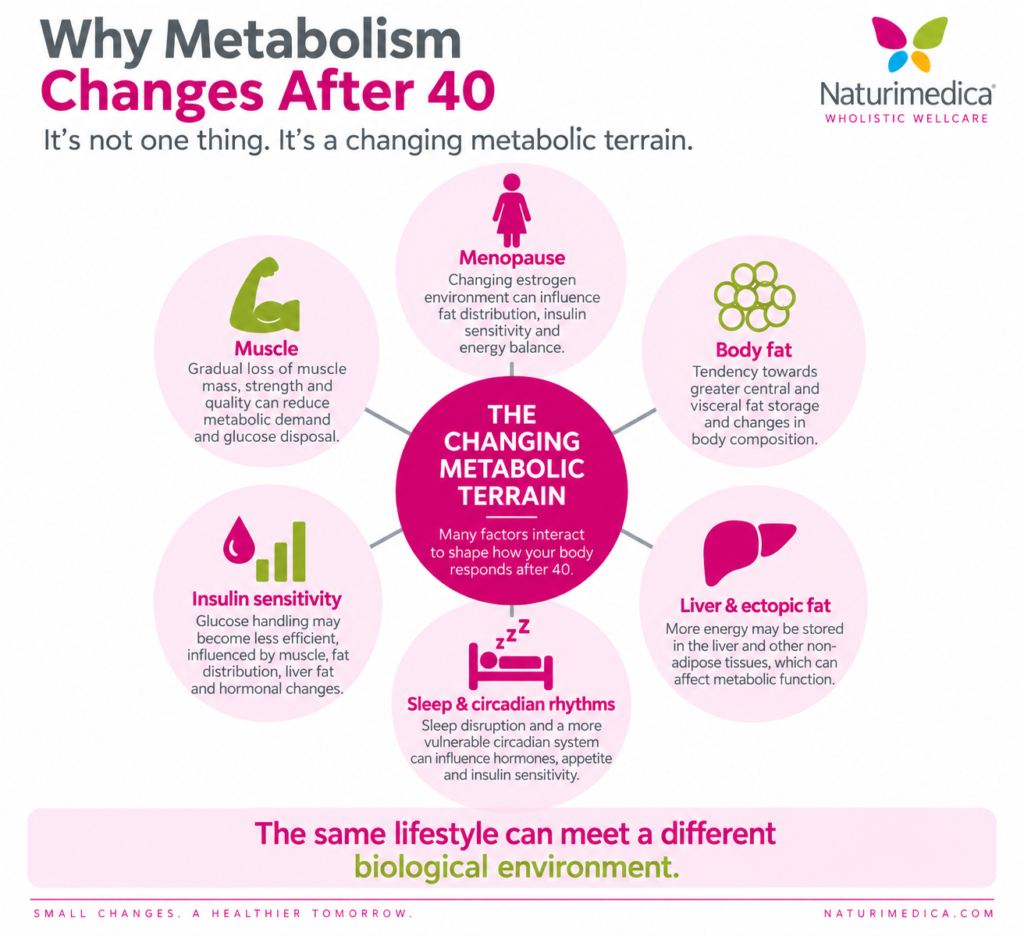
Skeletal muscle changes with age and activity. The menopause transition alters estrogen signalling and influences where body fat tends to be stored. Insulin sensitivity and glucose regulation can shift. Adipose tissue itself is metabolically active, communicating with other tissues rather than simply storing excess energy. Fat may increasingly accumulate around abdominal organs or in tissues such as the liver. Sleep, circadian rhythms and recovery can also become more vulnerable during midlife.
These changes overlap and influence one another. That is why metabolic health after 40 makes more sense when we stop looking for one culprit and start connecting the dots.
The encouraging part is that a changing metabolic environment is not the same thing as a fixed metabolic destiny. Some aspects of ageing and menopause cannot, and need not, be reversed. But skeletal muscle remains responsive to use. Insulin sensitivity can change. Body composition can change. Mitochondria adapt to demand. Sleep and circadian rhythms can be supported. Food still provides metabolic information as well as energy.
The goal therefore isn’t to make a 55-year-old body behave exactly as it did at 35. It is to understand what has changed, protect what remains adaptable and build the conditions for metabolic resilience in the biology you have now.
Quick Summary
- Metabolic health can change after 40 even when your lifestyle has not changed dramatically. This is not simply because your metabolism has “slowed down.”
- Ageing, the menopause transition, changes in muscle mass and function, shifts in body fat distribution, insulin sensitivity, liver fat, sleep and circadian rhythms can all alter the metabolic terrain in which your body manages energy.
- Muscle is particularly important because it creates metabolic demand and is a major site for glucose use and storage. At the same time, declining estrogen can influence where fat is stored, with a greater tendency towards abdominal and visceral fat accumulation.
- These changes do not mean metabolic decline is inevitable. Muscle, movement, sleep, biological timing, food quality and eating patterns remain powerful signals to the metabolic system.
The goal after 40 is not to recreate younger biology. It is to protect metabolic capacity, adaptability and resilience as biology changes.
Key Definitions
Metabolic health: How effectively the body senses, uses, stores and regulates energy while maintaining healthy communication between tissues and organs.
Metabolic resilience: The capacity to respond and adapt appropriately to changing demands, including eating, fasting, movement, rest, stress and ageing.
Visceral fat: Fat stored deep within the abdomen around internal organs. Higher levels are more strongly associated with metabolic risk than subcutaneous fat stored beneath the skin.
Ectopic fat: Fat accumulating outside the body’s primary adipose storage compartments, including in tissues such as the liver, skeletal muscle and pancreas. Its metabolic significance depends on the tissue, amount, location and how the stored fat is handled.
Insulin sensitivity: How effectively cells and tissues respond to insulin and manage glucose and other nutrients.
Body composition: The relative amounts and distribution of tissues such as muscle, fat and bone. It can change even when body weight remains relatively stable.
Metabolic health doesn’t suddenly fail at 40
There is no metabolic switch that flips on a particular birthday. The changes associated with midlife develop over years, and they do not occur at the same rate or to the same degree in every woman. Genetics, previous health, physical activity, muscle mass, nutrition, sleep, stress, medications, illness and the menopause transition can all influence the trajectory.
This matters because the familiar phrase “your metabolism slows down as you age” compresses several different processes into one explanation. Total daily energy expenditure can change across adulthood, but energy expenditure is only one part of metabolic health.
Interestingly, large-scale research published in Science in 2021 found that daily energy expenditure, when adjusted for body composition, remains relatively stable on average between the ages of 20 and 60. This challenges the popular assumption that metabolism inevitably slows during midlife and reinforces the importance of looking at changes in body composition, physical activity and metabolic regulation rather than energy expenditure alone.
What may also change is:
- How much metabolically active muscle you carry
- How frequently and strongly that muscle is used
- Where fat is stored
- How tissues respond to insulin
- How effectively glucose is taken up and stored
- How liver and adipose tissue handle incoming energy
- The hormonal environment in which these processes occur
- Sleep, circadian timing and recovery
- The body’s capacity to adapt when energy availability and demand change
In other words, the important question is not simply: Am I burning fewer calories?
A more useful question is: Has the system that receives, stores, uses and responds to energy changed? For many women after 40, the answer is yes.
Ageing and menopause overlap, but they are not the same thing
One reason this subject becomes confusing is that several biological transitions occur at roughly the same stage of life.
Chronological ageing continues whether menopause occurs or not. Muscle and physical capacity can change with age. People may become less active without necessarily noticing it. Sleep may change. Health conditions and medications become more common.
At the same time, women experience a distinct reproductive transition. During perimenopause, ovarian hormone production becomes increasingly variable. Eventually, menopause marks the end of menstrual cycles, accompanied by a substantial and lasting change in the estrogen environment.
Research following women through the menopause transition suggests that ageing and menopause contribute differently to changes in weight and body composition. Overall weight gain across midlife cannot simply be attributed to menopause, while the menopause transition appears particularly relevant to changes in body composition and the tendency for fat to accumulate more centrally.
That distinction is important. It moves us away from two unhelpful extremes: “It’s all menopause” and “It’s just ageing.” The real biology is more interconnected.
The wider whole-body effects of this transition are explored in our Menopause, Hormones & Whole-Body Health After 40 guide.
Estrogen has metabolic roles beyond reproduction
Estrogen is often discussed primarily as a reproductive hormone, but estrogen receptors are found in many metabolically important tissues, including the brain, skeletal muscle, liver and adipose tissue. Through these tissues, estrogen signalling participates in processes involving energy balance, glucose regulation, insulin action and fat distribution.
As the hormonal environment changes through menopause, the metabolic consequences therefore extend beyond periods, hot flushes or reproductive function. This does not mean that declining estrogen single-handedly causes insulin resistance, abdominal weight gain or metabolic disease. Those outcomes are influenced by many interacting factors.
It means that one important regulator within the metabolic network has changed. And because metabolism is a network, changing one part can alter the conditions in which other parts operate.
The same input can therefore produce a different response
This brings us back to our opening question. Imagine a woman who has eaten a broadly similar diet for many years. At 35, she carries more muscle, exercises regularly, sleeps reasonably well and has good insulin sensitivity. Much of the glucose arriving after a meal has metabolically active tissue available to receive and use it.
Twenty years later, her diet may not look dramatically different. But perhaps she now carries somewhat less muscle. She sits more during the working day. Her estrogen environment has changed. Sleep has become more fragmented. Fat distribution has shifted towards the abdomen. Her tissues may not respond to insulin in precisely the same way.
The food is not necessarily different. The metabolic context receiving it is.
This is why simply telling women after 40 to “eat less and move more” misses so much of the physiology. Energy balance still matters. Food quantity still matters. Physical activity still matters. But the body managing those inputs is not static.
The more useful task is to understand which parts of the metabolic terrain have changed and which of them remain responsive to support. And one of the most important places to begin is skeletal muscle.
Muscle: the metabolic tissue we gradually lose
Muscle is easy to think of primarily in terms of strength, appearance or mobility. Metabolically, it is much more important than that.
Skeletal muscle is a large, responsive tissue that uses energy, stores glycogen, takes up glucose, oxidises fatty acids and communicates with other parts of the body. When muscle contracts, its energy requirements can increase dramatically. As we explored in the previous article on metabolic flexibility, movement creates metabolic demand.
That makes muscle one of the most important links between physical activity and metabolic health. After 40, protecting that link becomes increasingly important.
Muscle mass and function can decline with age
Age-related loss of skeletal muscle does not begin suddenly in old age.
Across adulthood, muscle mass, strength and power can gradually decline, particularly when muscle is not regularly challenged. The rate varies considerably between individuals and is influenced by physical activity, resistance exercise, protein and overall nutrition, illness, hormonal factors and other aspects of health.
This means ageing does not simply equal inevitable rapid muscle loss. But it does mean that maintaining muscle increasingly requires a reason for the body to keep it. Muscle is metabolically expensive tissue. Regular loading, contraction and adequate nutritional support provide signals that help preserve its structure and function. Without those signals, gradual loss becomes easier.
Less muscle can mean less metabolic capacity
Why does this matter beyond strength? Because muscle provides somewhere for energy to go.
After a carbohydrate-containing meal, skeletal muscle is an important destination for glucose. It can use glucose immediately or store it as glycogen for later activity. During movement and exercise, that stored energy can be drawn upon. Muscle contraction also increases energy demand and stimulates glucose uptake through mechanisms that are not identical to insulin signalling.
So when active muscle is maintained, the body retains a substantial metabolic sink for incoming fuel. If muscle mass and muscle use decline together, something important changes: There is less tissue creating demand for energy and potentially less capacity available to receive, store and use it.
This does not mean that losing a small amount of muscle automatically causes metabolic disease. It means that muscle is part of the body’s metabolic infrastructure, and allowing that infrastructure to shrink gradually can change how the whole system handles energy.
Muscle quality matters too
The story is not simply about kilograms of lean mass. Strength, muscle composition, mitochondrial function, insulin responsiveness and how frequently muscle is actually used all matter.
A person can have substantial muscle but spend most of the day asking very little of it. This is why metabolic health cannot be reduced to an exercise session followed by many hours of complete inactivity. Planned exercise is valuable, but so is repeatedly creating demand through ordinary movement.
Walking. Carrying. Climbing stairs. Standing up. Gardening. Resistance training. Moving after meals. These are not merely ways of “burning calories.” They are signals telling metabolically active tissue that energy is required.
Menopause may make preserving muscle more important, not less
The menopause transition occurs against this background of age-related changes in muscle.
Changes in estrogen signalling may influence muscle physiology, while sleep disruption, reduced activity, injuries or competing demands during midlife can make maintaining strength and muscle more difficult for some women.
The practical implication is not that women should become anxious about inevitable muscle loss. It is almost the opposite. Muscle remains trainable.
Even later in life, skeletal muscle retains the capacity to respond to resistance exercise and appropriate nutrition. That makes preserving and building muscle one of the most meaningful modifiable components of metabolic health as we age.
Clinical Pearl
After 40, muscle deserves to be thought of as metabolic infrastructure, not simply body composition.
Preserving it helps maintain strength and independence, but it also helps preserve the body’s capacity to receive, store and use energy.
Body fat changes in amount, location and behaviour
Body fat is another area where the simple story of “calories in, calories out” can obscure important biology.
Adipose tissue certainly stores energy. When more energy arrives than the body currently needs, storing some of that energy as triglycerides in adipose tissue is normal and protective physiology. But adipose tissue is not an inert storage depot.
It is a living endocrine and immune tissue that releases hormones, fatty acids and signalling molecules and communicates with the brain, liver, muscle, pancreas and immune system. This means that metabolic health is influenced not only by how much fat we carry, but also by where it is stored, how well adipose tissue can accommodate incoming energy and how that tissue is functioning.
These distinctions become increasingly relevant after menopause.
Where fat is stored matters
Broadly, body fat can be stored in several different locations.
- Subcutaneous fat sits beneath the skin and accounts for much of the fat stored around areas such as the hips and thighs.
- Visceral fat is stored deeper within the abdomen around internal organs.
- Ectopic fat describes fat accumulating in tissues that are not primarily designed for large-scale fat storage, including the liver, skeletal muscle, pancreas and around the heart.
These fat depots are not metabolically identical.
Subcutaneous adipose tissue, particularly in the lower body, can provide a relatively safe place to store excess energy. Visceral adipose tissue tends to be more metabolically active and is more strongly associated with insulin resistance, inflammation and cardiometabolic risk. Ectopic fat can be particularly important because it signals that energy is increasingly being stored outside the body’s primary adipose storage compartments.
This gives us another way to think about metabolic health: Healthy energy storage is not simply about storing less. It is also about being able to store energy safely.
Menopause can shift fat towards the abdomen
Many women notice that their body shape changes through midlife even when the change on the scales is relatively modest. This observation has biological support.
Across the menopause transition, changes in the hormonal environment are associated with a tendency towards greater central and visceral fat accumulation, while chronological ageing also contributes to overall changes in weight and body composition.
The familiar shift from carrying more fat around the hips and thighs towards carrying more around the abdomen is therefore not simply cosmetic. It represents a change in where energy is being stored.
Estrogen signalling appears to be one influence on this distribution. As the estrogen environment changes, adipose tissue biology and regional fat storage can change with it. Again, this is not a one-hormone explanation. Genetics, energy intake, activity, muscle mass, sleep, stress, medications and other aspects of health all contribute. Women also vary enormously in how their body composition changes through menopause.
But the overall pattern helps explain why waist circumference and body composition can sometimes provide useful information that body weight alone cannot.
Adipose tissue has a storage limit
There is another important piece of this story. Adipose tissue needs to be able to expand and remodel as energy is stored. When subcutaneous adipose tissue can accommodate incoming energy effectively, much of that energy can remain stored within specialised fat cells. But storage capacity is not unlimited.
As adipose tissue expands, fat cells may enlarge and tissue function can become altered. In susceptible individuals, more fatty acids may circulate and fat may increasingly accumulate in visceral and ectopic locations. This is sometimes described as adipose tissue expandability or limited adipose storage capacity.
It helps explain an observation that otherwise seems contradictory: Two people with the same body weight or BMI can have very different metabolic health.
One may store a greater proportion of fat subcutaneously while maintaining relatively good insulin sensitivity. Another may carry less total fat but have more visceral or liver fat and greater metabolic disturbance. This is one reason body size alone cannot tell us how well someone’s metabolism is functioning.
Fat is also communicating
As adipose tissue changes, so does its communication with the rest of the metabolic network.
Adipose tissue produces a range of signalling molecules, including adipokines such as leptin and adiponectin, as well as inflammatory mediators released by fat cells and other cells within the tissue.
- Leptin helps communicate information about longer-term energy stores to the brain and participates in appetite and energy regulation.
- Adiponectin is associated with insulin sensitivity and fatty-acid metabolism, and its levels often decline as visceral adiposity and metabolic dysfunction increase.
Meanwhile, enlarged or dysfunctional adipose tissue can attract immune cells and produce more pro-inflammatory signalling. So increasing visceral adiposity is not merely extra stored energy sitting around the waist. It can change the information being exchanged between tissues.
This brings us directly back to the systems view from the cornerstone article: Everything influences everything else.
Adipose tissue affects insulin sensitivity. Insulin influences fat storage and mobilisation. Muscle creates energy demand. The liver helps regulate circulating glucose and fats. The brain receives hormonal and nutrient signals about energy availability. Inflammation can alter signalling across several of these tissues.
Metabolic health emerges from the conversation between them.
Insulin sensitivity and glucose regulation can shift
Insulin often becomes the central character in discussions about metabolic health after 40. It is important, but it needs to be kept in perspective. Insulin is not the problem. It is an essential hormone that helps coordinate what happens when nutrients become available. Among its many roles, insulin helps facilitate glucose uptake in insulin-responsive tissues, supports glycogen formation, influences fat storage and suppresses inappropriate release of stored fuel when energy is already available.
The issue is not whether insulin rises. After eating, it is supposed to. The more useful question is: How effectively are tissues responding to the insulin signal?
When more insulin is needed to produce the same response
When tissues become less sensitive to insulin, the pancreas may initially compensate by producing more of it.
For some time, blood glucose can therefore remain within the normal range even though the metabolic system is working harder to maintain it. This is one reason fasting glucose alone does not always reveal the earliest changes in glucose regulation.
Over time, if insulin resistance progresses and pancreatic beta cells can no longer compensate adequately, glucose levels may begin to rise more consistently. But insulin resistance does not occur in isolation. Skeletal muscle, liver and adipose tissue each contribute differently.
- In muscle, reduced insulin sensitivity can make insulin-stimulated glucose uptake less effective.
- In the liver, insulin resistance can impair normal regulation of hepatic glucose production and lipid metabolism.
- In adipose tissue, impaired insulin action can alter the regulation of fatty-acid storage and release.
Once again, metabolic dysfunction is better understood as a network problem than as the failure of one hormone.
Muscle and insulin sensitivity meet again
This is where our earlier discussion of muscle becomes even more important. Skeletal muscle is a major destination for glucose after meals. When muscle contracts regularly, it creates demand for energy. Exercise can also increase insulin sensitivity during recovery, helping muscle replenish glycogen more effectively.
If muscle mass declines while daily movement also decreases, both the amount of metabolically active tissue and the demand being placed upon it may fall.
At the same time, increasing visceral or ectopic fat can contribute to impaired insulin signalling. These changes can reinforce one another. Less muscle and less movement can mean less demand. Reduced insulin sensitivity can make incoming glucose harder to manage.
Greater adiposity can alter metabolic and inflammatory signalling. And if energy continues to arrive without sufficient demand or safe storage capacity, more of it may be redirected towards tissues such as the liver.
This is not a single broken pathway. It is a gradual change in the relationship between availability, demand, storage and signalling.
Menopause adds another layer
The menopause transition can influence this relationship through changes in body composition, fat distribution and estrogen signalling. Estrogen receptors are present in tissues involved in glucose and lipid metabolism, and experimental and human evidence supports a role for estrogen signalling in insulin action and energy homeostasis.
But here again we need to resist oversimplification. Not every postmenopausal woman becomes insulin resistant. Not every increase in insulin resistance during midlife is caused by estrogen loss. And menopause does not erase the effects of movement, muscle, diet, sleep or genetics.
A more useful interpretation is that the hormonal environment has changed one part of the metabolic context. For some women, that may mean there is less room for the lifestyle that once kept everything comfortably within range. The same meal may now arrive in a body carrying less muscle, more visceral fat, poorer sleep and somewhat lower insulin sensitivity.
That is very different from saying: “Carbohydrates suddenly became bad after menopause.” They didn’t. The body’s capacity to manage incoming fuel may simply have changed.
Clinical Pearl
A changing glucose response after 40 does not automatically mean that carbohydrate is the problem.
It may be telling us to look more broadly at muscle, movement, insulin sensitivity, body composition, sleep, meal pattern and the overall metabolic environment receiving that carbohydrate.
The liver and ectopic fat matter more than the scales reveal
The liver sits at the centre of metabolic traffic. After food is digested and absorbed, many nutrients travel from the gut directly to the liver through the portal circulation, while most long-chain dietary fats initially enter the lymphatic circulation. The liver plays a central role in coordinating what happens next.
It stores and releases glucose, produces and packages lipids, processes amino acids, responds to insulin and glucagon, and continually adjusts its activity according to whether the body is fed, fasting, resting or active.
In a metabolically flexible system, these processes are highly responsive. But when energy availability repeatedly exceeds immediate demand and safe storage capacity, the liver can begin accumulating fat.
Fatty liver is a metabolic signal
When excess fat accumulates in the liver in association with cardiometabolic risk factors, it may be classified as metabolic dysfunction-associated steatotic liver disease, or MASLD. Importantly, someone can develop excess liver fat without looking markedly overweight.
Conversely, a person living in a larger body may not necessarily have the same degree of liver fat or metabolic dysfunction. This is another reason the scales provide only one piece of information.
The liver can accumulate fat through several routes, including fatty acids released from adipose tissue, fat arriving from the diet and the liver’s own conversion of excess carbohydrate into fatty acids through de novo lipogenesis.
As liver fat increases, hepatic insulin sensitivity can deteriorate. The liver may become less responsive to insulin’s signal to restrain glucose production, while lipid handling can also change. This can contribute to higher circulating glucose and triglycerides and reinforce wider insulin resistance.
The significance is not that liver fat is always the original cause. It is that the liver can become another participant in a metabolic feedback loop.
Ectopic fat tells us something about storage
Liver fat also illustrates a broader principle. Adipose tissue is the body’s specialised energy-storage organ. The liver is not. Neither are skeletal muscle, pancreas or heart.
When substantial amounts of lipid begin accumulating within or around these tissues, it can indicate that the relationship between energy availability, storage capacity and demand has changed.
This is why ectopic fat can sometimes tell us more about metabolic risk than total body weight. It also explains why meaningful improvements in metabolic health do not always require achieving an arbitrarily “ideal” body weight. Changes in physical activity, insulin sensitivity, liver fat, visceral fat, fitness and muscle can all matter even when the number on the scales changes relatively little.
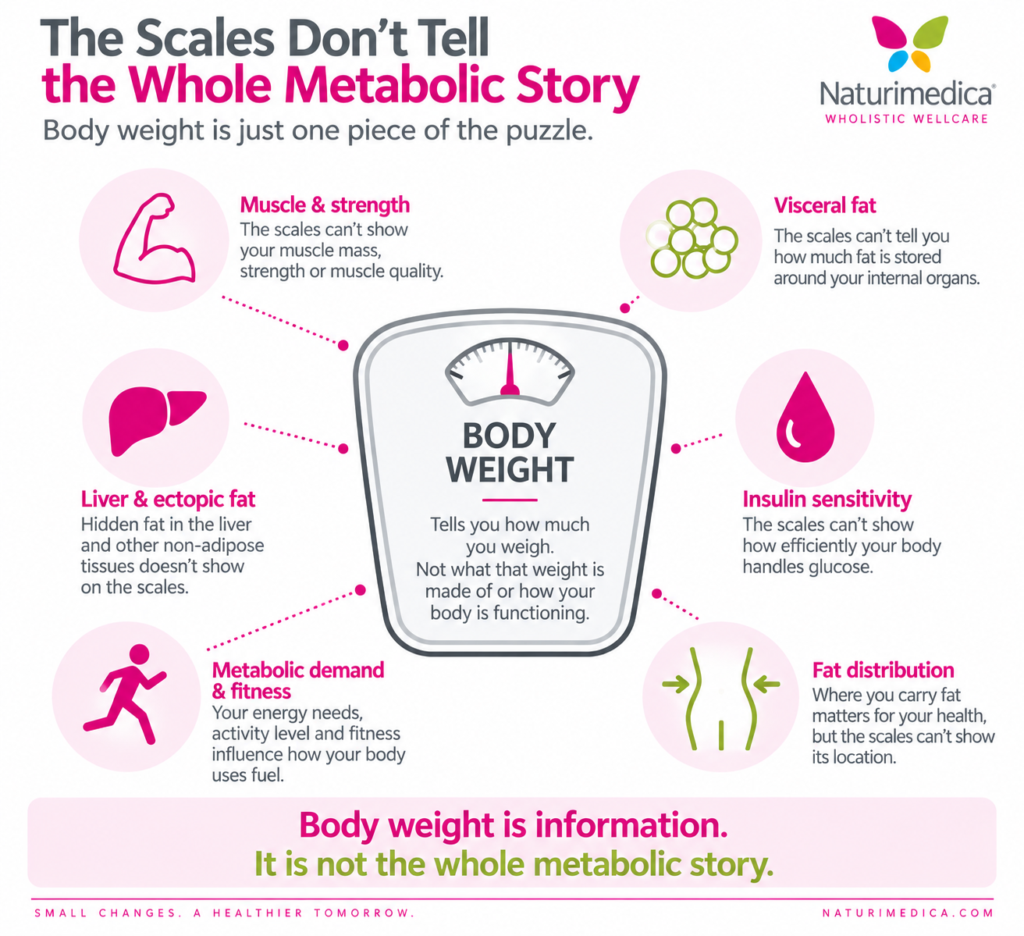
The scales tell you how much you weigh.
They cannot tell you how much muscle you have, where your body fat is stored, how much fat is in your liver, how sensitive your tissues are to insulin or how much metabolic demand your muscles create.
Body weight is information. It is not the whole metabolic story.
Inflammation: consequence, contributor and communicator
Inflammation is another word that can become so broad that it loses meaning. Acute inflammation is essential biology. It helps us respond to infection, injury and tissue repair.
The metabolic concern is different: persistent, low-grade inflammatory signalling that can accompany dysfunctional adipose tissue, insulin resistance and other chronic metabolic disturbances. This is sometimes called metaflammation.
As visceral adipose tissue expands and becomes dysfunctional, immune cells within the tissue can increase and inflammatory signalling can change. These signals do not remain confined to fat tissue. They can influence insulin signalling, vascular function, liver metabolism and other parts of the metabolic network.
At the same time, metabolic dysfunction itself can promote inflammatory processes. So which comes first?
Often, that is the wrong question. Inflammation can be both a contributor to and a consequence of metabolic dysfunction. That makes it another communication pathway within the system rather than a separate enemy that needs to be “eliminated.”
Menopause, ageing and inflammation overlap
Ageing itself is associated with changes in immune regulation and a tendency towards greater low-grade inflammatory activity in some people. Menopause occurs within that background. Changes in estrogen signalling, body composition and visceral adiposity may further influence inflammatory patterns, but once again there is no single universal pathway experienced identically by every woman.
This is why it is more useful to ask what may be driving inflammatory signalling in this individual than simply to label someone “inflamed.”
- Visceral adiposity may contribute.
- Poor glucose regulation may contribute.
- Sleep loss may contribute.
- Low physical activity may contribute.
- Chronic disease, infection, smoking, diet, psychological stress and many other factors may contribute.
The systems approach does not make inflammation less important. It makes the question more precise.
Why weight alone tells an incomplete story
By now, a pattern should be emerging. After 40, the number on the scales may change. But some of the most important metabolic changes can occur with or without dramatic weight gain.
A woman may remain at a similar weight while gradually losing muscle and gaining fat. Another may gain several kilograms while maintaining good glucose regulation, substantial muscle and relatively little visceral fat. Someone else may have a BMI within the conventional “healthy” range while carrying excess visceral or liver fat and showing signs of insulin resistance.
Weight cannot distinguish between these situations.
Body composition can change beneath a stable weight
Consider a simplified example. If a woman loses three kilograms of muscle over several years while gaining three kilograms of fat, the scales may barely move.
Her body weight looks stable. Her metabolic terrain does not. She now has less muscle available to create demand, store glycogen and use energy, while carrying more adipose tissue that may be stored in metabolically different locations.
This is why maintaining the same weight is not necessarily the same thing as maintaining the same metabolic health.
The reverse is also important. A woman who begins resistance training may gain or preserve lean tissue while losing visceral fat or improving insulin sensitivity, yet see surprisingly little change in total weight. If the scales are the only outcome being watched, meaningful progress can be missed.
Waist circumference adds information, but still isn’t the whole story
Because abdominal and visceral fat are metabolically relevant, waist circumference can provide useful additional information about central adiposity and cardiometabolic risk.
But it is still a proxy. It cannot directly tell us how much liver fat is present, or reveal muscle quality, fitness, insulin sensitivity or the many other components of metabolic health.
Blood pressure, glucose markers, blood lipids, liver markers, physical capacity, waist measurement, body composition where appropriate and the broader clinical picture can therefore provide a more useful view than weight alone. The purpose is not to collect endless measurements.
It is to measure what actually helps us see the whole person more clearly. And this leads to perhaps the most important question in the article. If the metabolic terrain changes after 40, what remains changeable?
What remains changeable after 40
A changing metabolic terrain does not mean that metabolism becomes fixed. Quite the opposite.
Many of the tissues we have discussed remain remarkably responsive to the signals they receive. Muscle responds to loading and contraction. Insulin sensitivity can improve. Mitochondria adapt to energy demand. Liver fat and visceral fat can change. Sleep and circadian rhythms respond to regular timing and light-dark signals. Food influences nutrient availability, satiety, muscle maintenance and glucose regulation.
The biology may be different from 20 years ago, but it is still adaptable biology. This distinction matters. If we assume that every metabolic change after 40 is simply an unavoidable consequence of ageing or menopause, we risk overlooking some of the most powerful opportunities to influence health.
At the other extreme, if we assume that every change can be completely reversed through enough discipline, we create unrealistic expectations and place responsibility entirely on the individual.
Neither reflects the biology particularly well. A more useful goal is to identify the parts of the system that remain responsive and support them consistently.
Protect muscle and create demand
If there is one theme worth carrying forward from this article, it is the importance of muscle. Muscle gives the body somewhere to put and use energy.
Regular movement asks muscle to use fuel. Resistance exercise gives the body a reason to preserve and build muscle tissue. Aerobic activity creates substantial energy demand and supports cardiorespiratory and mitochondrial fitness.
Even ordinary movement matters because it repeatedly interrupts long periods in which skeletal muscle is being asked to do very little. After 40, exercise therefore deserves to be understood as much more than a strategy for burning calories. It is a way of maintaining metabolic capacity.
Support rather than fear the fed state
Metabolic health does not require spending as much time as possible fasting. Eating is not a metabolic failure. The fed state provides amino acids, fatty acids, glucose, vitamins, minerals and other compounds the body needs for repair, energy production, hormone synthesis and tissue maintenance.
What matters is how well incoming energy can be handled. Meals built around adequate protein, minimally processed foods, plants, fibre and appropriate amounts of energy can support satiety, muscle maintenance and metabolic health.
Equally, allowing natural spaces between eating occasions gives the body opportunities to move out of the fed state and access stored energy. The objective is not to make one state superior to the other. It is to preserve the ability to move appropriately between them.
Protect sleep and biological timing
Metabolism does not operate independently of the circadian system. Glucose regulation, insulin sensitivity, appetite, hormone secretion, body temperature, activity and sleep all show daily rhythms.
Sleep disruption is also common during the menopause transition, whether because of hot flushes, night waking, sleep-disordered breathing, stress or other factors. That means sleep is not merely downtime from metabolic health work. It is part of metabolic health.
Regular sleep-wake timing, morning and daytime light, darkness at night, appropriate meal timing and daytime movement all help provide the timing information the body uses to coordinate physiology.
We explore these foundations in much greater depth in our Sleep and Circadian Health resources.
Give the system enough recovery
Metabolic resilience depends on being able to respond to challenge and then recover from it.
- Exercise is a challenge.
- Periods without food create a different metabolic state.
- Cold, heat, illness and psychological stress all create demands of various kinds.
Some challenge is useful and necessary. It is one of the ways biological systems adapt. But more challenge is not automatically more health.
A woman sleeping poorly, under substantial psychological stress, under-eating and training intensely may not need another metabolic stressor simply because fasting, high-intensity exercise or cold exposure can be beneficial in another context.
The question is always: What does this particular system need now? That is why wholistic care matters.
Look at patterns, not isolated numbers
A single elevated glucose reading, a change on the scales or an expanding waist measurement can be useful information. But metabolic health is rarely understood well through one number.
Patterns tell us more:
- How are glucose markers changing over time?
- What is happening to blood pressure and blood lipids?
- Has waist circumference changed?
- Is strength being maintained?
- How much movement is happening during the day?
- What is happening with sleep?
- Are liver markers changing?
- What medications, hormonal changes, illnesses or life circumstances might be relevant?
The purpose is not to turn everyday life into continuous metabolic surveillance. It is to connect the dots well enough to recognise where there may be a meaningful place to begin.
Metabolic resilience: ageing well rather than chasing younger biology
There is a subtle trap in much of the conversation about health after 40. Youth becomes the reference point.
The body at 30 is treated as the ideal, and every change that follows is interpreted as deterioration that should somehow be prevented, reversed or “fixed.” But healthy ageing is not the preservation of a 30-year-old metabolism indefinitely.
A 55-year-old woman has a different hormonal environment, different life history and different biological context. The goal is not to erase that reality. It is to maintain as much capacity, adaptability and resilience as possible within it.
That means:
- Protecting muscle and strength.
- Maintaining the ability to use and store energy appropriately.
- Supporting insulin sensitivity.
- Limiting excessive visceral and ectopic fat accumulation.
- Giving the circadian system clear timing signals.
- Providing enough nutrition for maintenance and repair.
- Creating regular metabolic demand through movement.
- Allowing enough recovery for adaptation to occur.
None of these requires a perfect body or a perfect lifestyle. They require the system to keep receiving useful signals often enough to respond.
The body is changing, but it is still listening
This may be the most important distinction of all. After 40, the body may not respond exactly as it did at 35. But that does not mean it has stopped responding:
- Muscle still responds to being used.
- The cardiovascular system still responds to movement.
- Insulin sensitivity can respond to exercise and changes in body composition.
- Adipose tissue and liver fat can change.
- Circadian rhythms still respond to light and darkness.
- Sleep can improve.
- Food still provides information as well as fuel.
- The metabolic system remains capable of adaptation.
So perhaps the better question is no longer: How do I get my old metabolism back? It is: How do I support the metabolism I have now so that it remains strong, adaptable and resilient for the years ahead?
That question changes the direction of care. It moves us away from punishment, restriction and chasing younger biology. It brings us back to strong foundations, appropriate challenge, recovery and the interconnected tissues that manage energy every day. And it prepares us for the practical next step.
Metabolic Health Reset Guide & Workbook turns this systems view into something personal: helping you look at your own metabolic foundations, identify where support may be most useful and choose realistic priorities without trying to change everything at once.
Because metabolic health after 40 is not about controlling every variable. It is about understanding the changing terrain, supporting what remains adaptable and building resilience for what comes next.
Key Takeaways
- Metabolic changes after 40 arise from interacting biological changes, not one failing pathway.
- Ageing and menopause overlap, but they are not the same process.
- Preserving muscle means protecting important metabolic infrastructure, not simply maintaining appearance or burning more calories.
- Where fat is stored matters. Visceral and ectopic fat provide information that body weight alone cannot.
- Changing estrogen signalling can influence body composition and fat distribution, but estrogen is not the sole explanation for midlife metabolic change.
- The body remains responsive after 40. Movement, muscle, food, sleep, circadian timing and recovery continue to provide meaningful metabolic signals.
- Healthy ageing is less about chasing younger biology and more about maintaining metabolic resilience.
- Metabolic resilience is one part of the broader picture of metabolic health after 40.
Frequently Asked Questions
Not in the simple way the phrase suggests. Ageing can affect energy expenditure, but what many people experience as a “slower metabolism” may also reflect changes in muscle, activity, body composition, insulin sensitivity, sleep, hormones and energy demand. It is more useful to think about a changing metabolic system than one metabolic rate simply becoming slower.
The menopause transition changes the hormonal environment, including estrogen signalling involved in energy balance and fat distribution. This can favour a shift from predominantly lower-body subcutaneous fat storage towards greater central and visceral fat accumulation. Ageing, activity, muscle mass, sleep, genetics and energy balance also contribute, so menopause is an important influence rather than a single cause.
Skeletal muscle is a major site of glucose uptake, glycogen storage and energy use. Contracting muscle also creates metabolic demand and can take up glucose through pathways that do not depend entirely on insulin. Maintaining muscle and using it regularly therefore helps preserve the body’s capacity to handle available energy.
Yes. Body weight does not reveal muscle mass, visceral fat, liver fat, fat distribution, insulin sensitivity or fitness. Conversely, a higher body weight does not automatically mean poor metabolic health. Weight is one useful piece of information, but it needs to be interpreted within the broader metabolic picture.
Not by itself. Changing estrogen signalling can influence insulin sensitivity, body composition and fat distribution, but chronological ageing, muscle mass, physical activity, visceral and liver fat, sleep, genetics and other factors also affect glucose regulation. Not every woman develops insulin resistance after menopause.
Yes. The metabolic system remains adaptable. Skeletal muscle responds to use, insulin sensitivity can change, fitness can improve, sleep and circadian signals can be strengthened, and visceral and liver fat can change. The aim is not to return the body to its premenopausal state, but to support the biology you have now and build resilience for the years ahead.
Continue Your Metabolic Health Learning Journey
Metabolic health is much bigger than blood sugar, body weight or insulin alone. It reflects how multiple organs, tissues and biological signals work together to sense, use, store and adapt energy.
This article is the third in Naturimedica’s three-part Metabolic Health After 40 series.
Part 1
How Metabolism Works: Understanding the Body’s Interconnected Systems
Explore metabolic health as an interconnected system involving the brain, muscle, liver, adipose tissue, hormones, circadian rhythms, mitochondria and the signals that coordinate energy throughout the body.
Part 2
Metabolic Flexibility After 40: How Your Body Senses, Uses and Adapts Energy
Discover how a healthy metabolism moves between fed and fasted states, glucose and fat, storage and mobilisation, and rest and activity, and why metabolic flexibility is ultimately a form of metabolic resilience.
Part 3 – You are here
Why Metabolic Health Changes After 40: Muscle, Menopause, Body Fat and Metabolic Resilience (this article)
Understand why the metabolic terrain can change through midlife, including the overlapping influences of ageing, menopause, muscle, body fat distribution, insulin sensitivity, liver health, sleep and circadian biology, and what remains adaptable.
Ready to Put This Into Practice?
The Metabolic Health Reset Guide and Workbook takes the next step, helping you identify your own metabolic patterns and make sense of the many connections described in this article without turning metabolic health into another complicated programme to follow.
Rather than giving you a rigid diet, exercise plan or list of metabolic rules, it helps you see your whole metabolic picture, identify the few areas that matter most for you and turn them into practical actions.
Access The Metabolic Health Reset Guide and Workbook →
If you would like individual support to make sense of your metabolic health, I offer online naturopathic consultations Australia-wide, bringing together your health history, symptoms, lifestyle, nutrition and relevant investigations to help identify meaningful priorities. Learn about our wholistic, systems approach to care in The Naturimedica Way and about Online Consultations.
Best of Health
Joanna Sochan
Wholistic Health and Lifestyle Therapist
Integrative health support combining clinical evidence, systems-based thinking and traditional naturopathic wisdom for lasting health and wellbeing
Related Articles
- Metabolic Health Hub
- Metabolic Health: A Wholistic Guide to Energy, Hormones and Healthy Ageing
- Metabolic and Hormonal Shifts in Menopause
- Sleep After 40: Make Sense of Your Sleep Guide and Workbook
References and Sources
Where applicable, content is informed by peer-reviewed research, clinical literature, and traditional naturopathic practice knowledge.
- Caputo T, Gilardi F, Desvergne B. From chronic overnutrition to metaflammation and insulin resistance: adipose tissue and liver contributions. FEBS Letters. 2017; 591(19):3061–3088. doi:10.1002/1873-3468.12742. PubMed
- Greendale GA, Sternfeld B, Huang M, et al. Changes in body composition and weight during the menopause transition. JCI Insight. 2019;4(5):e124865. doi:10.1172/jci.insight.124865. Full article – JCI Insight
- Marlatt KL, Pitynski-Miller DR, Gavin KM, et al. Body composition and cardiometabolic health across the menopause transition. Obesity (Silver Spring). 2022;30(1):14–27. doi:10.1002/oby.23289. PubMed
- Mauvais-Jarvis F, Clegg DJ, Hevener AL. The role of estrogens in control of energy balance and glucose homeostasis. Endocrine Reviews. 2013;34(3):309–338. doi:10.1210/er.2012-1055. PubMed
- Reilly SM, Saltiel AR. Adapting to obesity with adipose tissue inflammation. Nature Reviews Endocrinology.2017;13:633–643. PubMed
- Virtue S, Vidal-Puig A. Adipose tissue expandability, lipotoxicity and the metabolic syndrome: an allostatic perspective. Biochimica et Biophysica Acta. 2010. PubMed
- Johannsen DL, et al. Effect of 8 weeks of overfeeding on ectopic fat deposition and insulin sensitivity: testing the “adipose tissue expandability” hypothesis. Diabetes Care. 2014;37(10):2789–2797. PMID:25011943. PubMed
- Ectopic fat and insulin resistance: pathophysiology and effect of diet and lifestyle interventions. International Journal of Endocrinology. 2012;2012:983814. doi:10.1155/2012/983814. PubMed
- Lipid metabolism in MASLD and MASH: From mechanism to the clinic. 2024. Full article
- Pontzer H, et al. Daily energy expenditure through the human life course. Science. 2021;373(6556):808–812. doi:10.1126/science.abe5017. Full article
- Richter EA, Bilan PJ, Klip A. A comprehensive view of muscle glucose uptake: regulation by insulin, contractile activity, and exercise. Physiological Reviews. 2025. Full article – Physiological Reviews
- Sylow L, Tokarz VL, Richter EA, Klip A. The many actions of insulin in skeletal muscle, the paramount tissue determining glycemia. Cell Metabolism. 2021;33(4):758–780. PubMed
Smith RL, Soeters MR, Wüst RCI, Houtkooper RH. Metabolic flexibility as an adaptation to energy resources and requirements in health and disease. Endocrine Reviews. 2018;39(4):489–517. PubMed - Smith et al. Exercise metabolism and adaptation in skeletal muscle. Nature Reviews Molecular Cell Biology. 2023. PubMed
Disclaimer: This content is for informational and educational purposes only and is not intended to diagnose, treat, cure, or prevent any disease. It is not a substitute for professional medical advice, diagnosis, or treatment. Always consult a qualified healthcare provider before making any changes to your health regimen, particularly if you are taking prescription or over-the-counter medications or have a medical condition.
Bio: Joanna Sochan is a Wholistic Natural Therapist and founder of Naturimedica Wholistic Wellcare. She has over 15 years of clinical experience working with complex health presentations, with a focus on gut health, food sensitivities, women’s hormone health (including perimenopause and menopause), metabolic health, weight regulation, and circadian biology. She works with clients Australia-wide and online, and also develops therapeutic programs, eCourses, and educational resources designed to support long-term, sustainable wellbeing. View full bio.
Leave A Comment