Understanding Menopause as a Whole-Body Transition
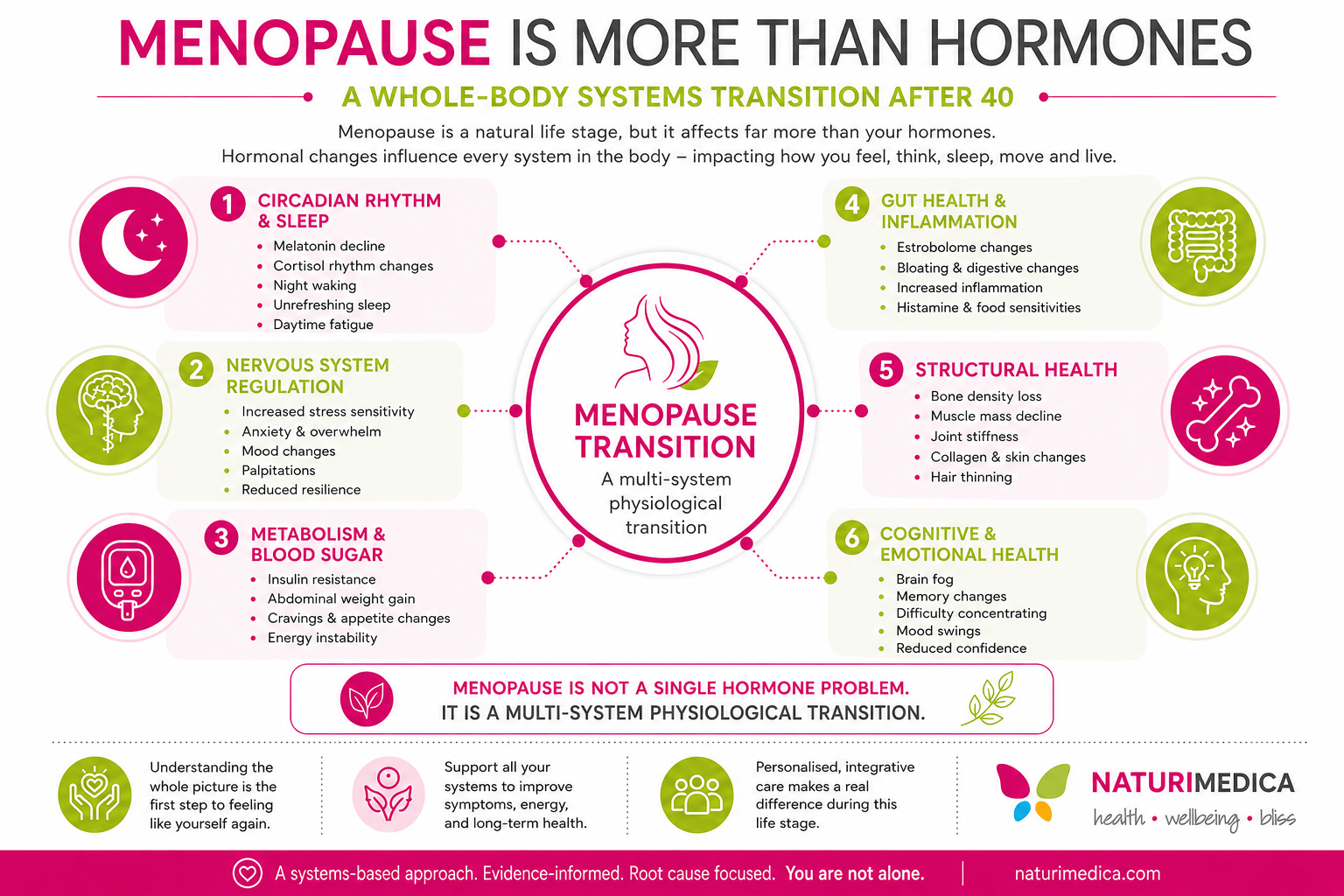
Menopause symptoms after 40 are often attributed solely to declining oestrogen and progesterone, but menopause is a far broader whole-body physiological transition involving the nervous system, metabolism, circadian rhythm, gut health, inflammation, and stress regulation.
For many women, symptoms such as anxiety, disrupted sleep, fatigue, brain fog, weight changes, and emotional sensitivity do not occur in isolation. They appear as interconnected patterns that shift over time and often feel unpredictable.
This is because menopause is not only a hormonal transition. It is a whole-body physiological recalibration involving the nervous system, circadian rhythm, metabolism, gut health, and inflammatory regulation.
Understanding this broader picture is essential for making sense of symptoms and choosing effective, supportive strategies.
Menopause is defined as the point in time when a woman has not had a menstrual period for 12 consecutive months. However, the transition leading up to this point (perimenopause) is where most symptoms occur.
The Health, Personal and Economic Impacts of Menopause
Menopause is not simply a private hormonal transition. It has significant effects on women’s physical health, emotional wellbeing, careers, relationships, and financial security. Yet despite affecting millions of women worldwide, menopause remains under-recognised, under-researched, and under-supported across healthcare systems, workplaces, research institutions, and public policy.
Many women enter perimenopause with little understanding of what is happening to their bodies. Symptoms such as brain fog, sleep disruption, anxiety, memory lapses, fatigue, and emotional overwhelm are often misinterpreted as stress, ageing, or an inability to cope with work and family pressures.
This widespread lack of education and open discussion prevents many women from seeking support or understanding the broader physiological changes occurring during menopause.
According to the Health and Economic Impacts of Menopause report by FP Analytics (2025), [1] only 20% of women globally feel well-informed about menopause, while 73% reported not seeking treatment for symptoms despite the availability of hormonal and non-hormonal treatment options.
This highlights the urgent need for broader, more individualised approaches to menopause care, including lifestyle medicine, nutrition, nervous system support, circadian health strategies, and evidence-informed natural therapies.
This is particularly important for women who cannot use hormone therapy, choose not to use it, or require additional support alongside medical treatment. The historical lack of menopause research has contributed to limited awareness of the broader health, social, and economic impacts of this transition.
Research from the Mayo Clinic has also identified substantial workplace impacts associated with menopause symptoms [2], including reduced productivity, increased absenteeism, and higher rates of workforce withdrawal, highlighting the need for more supportive healthcare and workplace environments.
Menopause is increasingly being recognised not simply as a reproductive transition, but as a multi-system physiological and societal transition with important implications for long-term health, workforce participation, and quality of life.
The Scale of the Problem
Key findings include:
- Around 80% of women report moderate to severe menopause symptoms.
- Approximately 17% of women aged 45 to 64 take extended breaks from workforce participation due to illness, with menopause recognised as a significant contributing factor.
- More than one-third of women retire before the age of 55, often during peak earning years.
- The highest rate of female suicide occurs during perimenopause between ages 45 and 49.
- One in eight women retire during menopause, while many more consider leaving the workforce due to symptom burden.
- Long-term workforce absence and early retirement are estimated to cost Australian women billions annually in lost income and retirement savings.
Additional Australian reporting suggests that while 82% of women say menopause symptoms significantly affect quality of life, many still receive little support or treatment.
Similar patterns are now being recognised internationally [1] across countries including the United States, United Kingdom, Canada, and Germany.
Menopause is not a niche women’s health issue. It is a major public health, workforce, and quality-of-life issue affecting millions of women globally during some of the most productive and demanding years of life.
Menopause as interconnected systems physiology
Menopause affects far more than reproductive hormones alone. The transition influences multiple interconnected systems throughout the body.
What Actually Changes in Hormones After 40
Hormonal changes during perimenopause and menopause are real, but they are part of a wider physiological shift.
To understand menopause properly, it helps to begin with what is actually changing inside the body. Hormonal transitions during perimenopause and menopause involve fluctuating and eventually declining levels of estrogen and progesterone, along with secondary effects on other regulatory systems. Read my article Estrogen, Progesterone and Testosterone Explained [5] for further understanding of hormonal flow.
Key physiological shifts include:
- Fluctuating estrogen levels affecting brain and tissue signalling
- Declining progesterone impacting sleep and calm regulation
- Altered cortisol rhythms influencing stress response
- Reduced melatonin production affecting sleep cycles
- Changes in insulin sensitivity affecting metabolic stability
- Shifts in inflammatory signalling across multiple systems
These changes do not occur in isolation. They interact across multiple body systems, amplifying or dampening symptoms depending on overall health status.
Progesterone often begins changing several years before menopause and may contribute to symptoms such as poor sleep, anxiety, heavier periods and worsening PMS. Learn more in our comprehensive guides to Understanding Progesterone During Perimenopause [6] and Supporting Progesterone Naturally After 40. [7]
Take my free Menopause Systems Self-check to better understand your menopause symptom patterns. [8]
Menopause symptoms are not determined solely by hormone levels. Many women with similar hormone profiles experience very different symptoms due to differences in nervous system sensitivity, metabolic health, gut microbiome composition, lifestyle and stress load.
Why Menopause Symptoms After 40 Vary So Widely
No two women experience menopause in the same way.
One of the most confusing aspects of menopause is how differently it affects each woman. Some experience mild changes, while others experience significant disruption across sleep, mood, metabolism, and cognition.
This variation is not random. It reflects differences in underlying system resilience, including stress load, metabolic health, gut microbiome diversity, sleep quality, and nervous system regulation.
This variability is influenced by:
- Stress history and nervous system resilience
- Sleep quality and circadian rhythm stability
- Gut microbiome diversity
- Blood sugar regulation
- Inflammatory burden
- Lifestyle and environmental exposures
This explains why menopause cannot be reduced to a one-size-fits-all hormonal explanation.
Menopause symptoms are not determined solely by hormone levels. They are shaped by how sensitive and resilient interconnected systems are, including the nervous system, metabolism, gut health, and circadian rhythm regulation.
The Nervous System and Menopause
One of the most overlooked contributors to menopause symptoms is the nervous system. [9] As hormonal fluctuations occur, the brain becomes more sensitive to stress signalling. This can shift the body into a more reactive state. This can result in:
- Heightened anxiety
- Increased stress reactivity
- Palpitations or “adrenaline surges”
- Emotional overwhelm
- Sensory sensitivity
- Difficulty calming the mind
This is not psychological weakness. It reflects altered stress physiology. This shift in stress sensitivity is closely connected to broader nervous system regulation during menopause, which we explore in more depth here and in the free guide: Top 5 triggers that make hot flushes worse, and natural swaps that work. [10]
Nervous system dysregulation refers to a state where the balance between sympathetic (fight-or-flight) and parasympathetic (rest-and-digest) systems becomes disrupted, resulting in increased stress reactivity and reduced recovery capacity.
Sleep, Melatonin and Circadian Rhythm Changes
Circadian rhythm and melatonin signalling also play an important role in hormonal regulation, metabolism and sleep quality. [11] Sleep disruption is one of the most common and distressing menopause symptoms after 40. This is not only hormonal, but also circadian.
While hormonal changes play a role, sleep is also strongly influenced by circadian rhythm regulation. Women may experience difficulty falling asleep, frequent night waking, early morning waking, or non-restorative sleep.
These changes are strongly influenced by circadian rhythm and hormonal regulation [12], particularly the interaction between melatonin and cortisol, including:
- Reduced melatonin production
- Altered cortisol rhythm – low in the morning and high at night
- Temperature regulation instability (hot flushes)
- Increased night-time nervous system activation
- Reduced deep sleep quality
These factors often interact, reinforcing sleep disruption over time.
Sleep disruption during menopause is often driven more by circadian misalignment and stress physiology than by hormone decline alone. Key factors include: inadequate sunlight exposure, artificial lighting during the day and at night, bright lights in the evening, blue light exposure via screens, phones and TVs and inadequate darkness at night when asleep.
Learn about why circadian rhythm as the foundation of hormonal health in my free Circadian Daily Light guide [13], or in the more in-depth the Circadian Health Guide: A step-by-step daily sunlight routine. [14]
If you’d like some practical assistance with improving your sleep quality and quantity, consider downloading a copy the See the Whole Person: Make Sense of Your Sleep [15] – our key wholistic guide to sleep.
Blood Sugar, Metabolism and Menopause Symptoms After 40
Common patterns include:
- Increased abdominal weight gain [17]
- Greater insulin resistance
- Energy instability throughout the day
- Increased cravings
- Slower metabolic recovery after stress
These changes are closely linked to sleep quality, stress load, and circadian rhythm stability.
For an in-depth discussion about metabolic health after 40 and its impact on energy, weight and hormonal balance, read my systems-based guide to metabolism. [18]
Gut Health, Inflammation and Hormones
The gut plays a central role in hormonal regulation through the microbiome and estrobolome pathways.
Changes in the gut microbiome can influence how hormones are metabolised and recycled within the body. This includes the estrobolome, a collection of gut microbes involved in estrogen metabolism.
When gut balance is disrupted, symptoms such as bloating, food sensitivities, histamine reactions, and inflammation [19] may increase. Key mechanisms include:
- Estrobolome activity influencing oestrogen recycling
- Gut inflammation affecting systemic inflammation
- Food sensitivities increasing immune activation [20]
- Histamine response [21] changes contributing to symptoms
The gut microbiome plays a key role in hormone metabolism and inflammation regulation during menopause. [22] Take my free Menopause Systems assessment [8]to identify your hormonal system imbalances.
Cognitive and Emotional Changes
Many women report changes in cognitive clarity and emotional stability during menopause. These may include brain fog, difficulty concentrating, word-finding challenges, mood fluctuations, and reduced mental resilience under stress.
These symptoms are influenced by hormonal variability, sleep disruption, metabolic instability, and nervous system stress load.
Many women experience menopause brain fog and cognitive changes that are influenced by sleep and metabolic stability.
Cognitive changes during menopause are often reversible or significantly modifiable when sleep, metabolic regulation, and stress physiology are supported together.
Environmental and Lifestyle Influences
Modern lifestyle factors can amplify menopause symptoms after 40. These include exposure to artificial light at night [23], inadequate sunlight exposure during the day, [24] chronic stress, highly processed diets, sedentary behaviour, and exposure to endocrine-disrupting chemicals.
These factors do not cause menopause but can amplify physiological sensitivity during the transition.
One of the most powerful regulators of hormonal health is circadian rhythm, melatonin and light exposure patterns. [11]
A Whole-Body Approach to Menopause Symptoms After 40
A more effective approach to menopause focuses on restoring regulation across multiple systems rather than targeting a single hormone.
The Menopause Systems Wheel below illustrates how these interconnected systems continuously influence one another during the menopause transition.
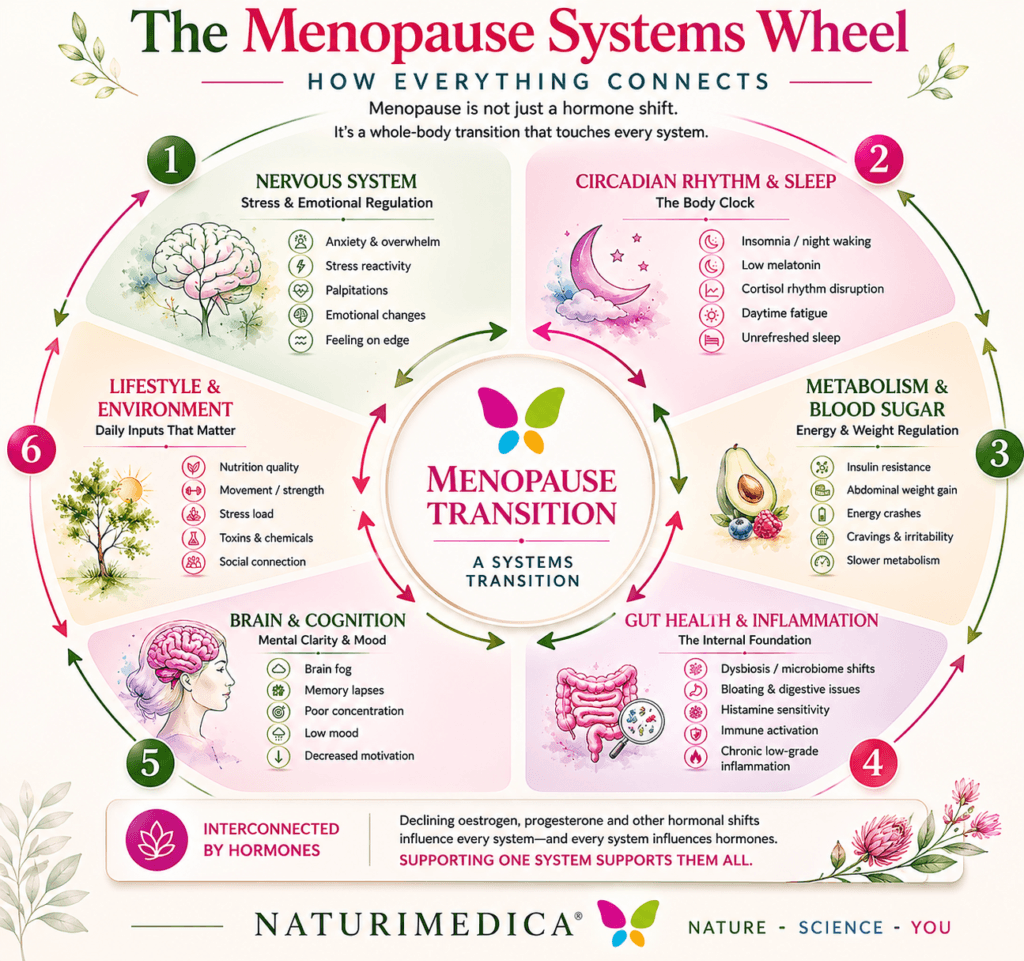
Effective support focuses on restoring regulation across multiple systems:
- Nervous system balance
- Circadian rhythm stability
- Blood sugar regulation
- Gut health support
- Strength and movement
- Stress recovery capacity
This systems-based approach creates more stable and sustainable symptom improvement patterns during hormonal transition.
Start your menopause regulation and management steps by downloading my free Menopause Systems Assessment. [8]
Natural Medicine, HRT and Integrative Care
Perimenopause and menopause symptoms are often assumed to be caused solely by declining oestrogen and progesterone (read the full progesterone guide here) [6]. However, many symptoms commonly associated with perimenopause and menopause can also overlap with other physiological imbalances and health conditions. These include thyroid dysfunction, burnout, iron deficiency, sleep disorders, chronic stress syndromes, metabolic dysfunction, heavy metals burden and histamine intolerance.
This is important because symptoms such as fatigue, anxiety, insomnia, brain fog, palpitations, weight changes, and low mood are not unique to menopause alone.
Common perimenopause and menopause-related symptom patterns include:
- Vasomotor symptoms: hot flushes, night sweats, palpitations
- Sleep disturbances: insomnia, broken sleep, early waking
- Mood and cognitive changes: brain fog, irritability, anxiety, low mood
- Metabolic symptoms: fatigue, cold intolerance, weight changes
- Reproductive changes: irregular cycles, heavy bleeding
However, some underlying conditions or physiological imbalances may contribute to, amplify, or mimic aspects of the menopause transition, including:
- Chronic stress physiology and altered cortisol regulation [25]
- Thyroid dysfunction, particularly hypothyroidism
- Nutrient deficiencies or imbalances, including iron, magnesium [26], zinc, vitamin D [27], and B vitamins
- Environmental toxicant exposure (especially heavy metals) in susceptible individuals
- Blood sugar instability and metabolic dysfunction
- Sleep disruption and circadian rhythm dysregulation
- Neurodivergence patterns such as adult ADHD, which may become more noticeable as hormonal buffering changes during perimenopause
- Reduced cellular energy production and mitochondrial function associated with chronic stress, inflammation, or metabolic strain
In many women, menopause symptoms are influenced not only by hormonal changes, but also by the resilience of interconnected systems including adrenal function, thyroid function, nervous system regulation, metabolic health, nutrient status, endocrine disruptors (e.g. heavy metals or plastics), sleep quality, and inflammatory balance.
This is one reason why a thorough clinical assessment can be valuable, particularly when symptoms are severe, rapidly worsening, unusually complex, or not responding as expected to standard interventions.
A holistic integrative approach may include:
- Nutritional and lifestyle support
- Sleep and circadian rhythm optimisation
- Pathology testing
- Nervous system regulation strategies
- Targeted natural medicine approaches
- Hormone therapy when clinically appropriate and aligned with individual preference and risk profile
- Medical assessment, where appropriate
Menopause symptoms often have multiple contributing factors. Even when hormonal changes are central to the picture, supporting sleep, stress physiology, metabolic health, nutrient status, and gut health may significantly influence symptom severity and overall wellbeing.
For some women, hormone replacement therapy (HRT) can provide significant symptom relief and quality-of-life benefits. For others, non-hormonal strategies or a combined integrative approach may be more appropriate.
The goal is not to position hormonal and non-hormonal approaches in opposition to one another, but to support informed, individualised decision-making based on symptoms, medical history, risk factors, and broader health context.
To explore these considerations in more depth, read my comprehensive guide:
The HRT Decision Guide: A Clinician’s Systems-Based Perspective for Navigating Menopause and Hormone Health [28]
In my clinical experience as well as scientific research, there is no single approach to menopause management that suits every woman. Hormonal therapy (MHT/ HRT), lifestyle medicine, nutrition, and nervous system regulation may all play roles depending on individual needs. A balanced approach considers:
- Symptom severity
- Health history
- Risk factors
- Personal preferences
- Systemic contributors to symptoms
Any approach that reduces menopause solely to hormone replacement or, conversely, dismisses hormonal changes entirely, does not reflect the complexity of human physiology. Menopause requires a systems-based understanding for effective, individualised care.
Frequently Asked Questions
A combination of hormonal changes, nervous system sensitivity, sleep and circadian disruption, metabolic shifts, and gut health factors.
Sleep is influenced not only by hormones but also by melatonin production, cortisol rhythms, circadian regulation and thermoregulation.
Yes. Many symptoms are strongly influenced by sleep quality, stress regulation, nutrition, and metabolic health.
No. Menopause involves multiple interconnected physiological systems beyond estrogen alone.
Some menopause symptoms may also be influenced by factors such as stress physiology, sleep and circadian disruption, thyroid dysfunction, metabolic health, nutrient deficiencies, gut health, or environmental exposures. In these cases, broader systems-based support may be needed alongside HRT. Learn more in our HRT Decision Guide.
Conclusion: A Systems View of Menopause
Menopause is not simply a decline in reproductive hormones. It is a coordinated shift across multiple biological systems including the nervous system, circadian rhythm, metabolism, gut health, and inflammatory regulation.
When viewed through this lens, symptoms become more understandable and less random.
More importantly, it opens the door to a wider range of supportive strategies that work with the body rather than focusing on a single mechanism. This systems-based approach integrates with gut health, circadian rhythm and nutrition strategies [29] forming a cohesive framework for understanding health after 40.
Explore the systems-based principles that guide all care at Naturimedica in The Naturimedica Way. [30]
Final Thoughts
Hormones are often discussed as though they exist in isolation, yet they are part of a far more sophisticated and interconnected system. Throughout life, the body continuously adapts to changing circumstances, developmental stages, environmental influences, and physiological demands. Puberty, the reproductive years, perimenopause, and menopause each bring distinct hormonal patterns that help guide these transitions.
From a wholistic health perspective, menopause is not simply a decline in hormones or the end of reproductive function. It represents a natural biological transition in which the body adjusts its priorities and establishes a new balance. While hormone levels and patterns change, the body’s fundamental goal remains the same: maintaining health, resilience, adaptation, and homeostasis.
Understanding hormones within this broader context encourages us to look beyond individual symptoms and appreciate the remarkable intelligence of the body as it continues to adapt, communicate, and evolve throughout every stage of life.
Next Steps: Personalised Support for Menopause and Hormonal Health
If you are experiencing ongoing or complex symptoms, a personalised approach can help identify the underlying factors that may be contributing to your health challenges.
Many symptoms are influenced by a combination of nutrition, stress physiology, circadian rhythm disruption, gut health, and hormonal patterns. Understanding these interactions is often key to making meaningful progress. A structured review can help bring clarity and focus.
Work with Me
If you would like tailored, evidence-based guidance, you are welcome to book a consultation. Together we will:
- Explore your symptoms and health history in detail
- Identify the most likely underlying drivers
- Prioritise the changes that will have the greatest impact
- Create a realistic and personalised plan you can follow
👉 Please note that I currently consult with Australia-based clients only and am unable to provide consultations to individuals located elsewhere. However, you’re warmly invited to explore the many educational resources available on this website, including articles [31], guides, eBooks, and downloads, [32]which have been created to help people better understand their health and make informed decisions wherever they may live.
For Australia-based individuals, I offer a complimentary 20-minute introductory discussion to review your circumstances and determine whether we’re the right fit to work together. Book either an initial consultation or a complimentary 20-minute call by clicking the link below.
Book Consultation Online [33]
Learn about our approach to care – The Naturimedica Way, [30]and about our Online Consultations. [34]
If You’re Still Exploring
If you are still exploring, the guides and resources on this page are designed to help you understand your symptoms and begin making meaningful changes at your own pace. Specific resources include:
- Explore the Menopause [35]Knowledge [35] Hub, [35] where you’ll find free symptom guides, self-assessment tools, the HRT Decision Guide, and evidence-informed menopause resources designed to help you navigate menopause with greater confidence.
- Menopause Symptoms and Systems Guide [36] – key resource to understand what your symptoms are indicating
- Morning Light to Better Nights Guide [37]– the practical circadian health handbook
- Sleep Better Tonight Guide [38] – a natural sleep blueprint
Bringing It All Together
This area of hormonal health is best understood as a connected system, where multiple physiological pathways influence each other. Addressing them together creates more sustainable outcomes than focusing on isolated symptoms.
Menopause is best understood as a whole-body systems transition involving hormones, sleep, metabolism, nervous system regulation, gut health, and lifestyle factors. Supporting these interconnected systems together often creates more sustainable improvements in symptoms and wellbeing.
I hope you found this article both informative and practical, and that it has encouraged you to look at hormonal health in menopause or after 40 through a broader systems lens.
I look forward to supporting you in achieving greater balance, energy and wellbeing.
Best of Health

Joanna Sochan
Wholistic Health and Lifestyle Therapist
Integrative health support combining clinical evidence, systems-based thinking and traditional naturopathic wisdom for lasting health and wellbeing
References and Sources
Where applicable, content is informed by peer-reviewed research, clinical literature, and traditional naturopathic practice knowledge.
- SWAN study (Study of Women’s Health Across the Nation) [3]
- FP Analytics: The Health and Economic Impacts of Menopause report (2025) [1]
- Mayo Clinic: Impact of menopause symptoms on women in workplace (2023) [2]
- Office for Women, Government of South Australia: Menopause awareness in the workplace (2025) [4]
- PubMed: The neuroanatomy of menopause (2025) [9]
- Nature: Years since menopause and its metabolomic signature with biological aging in women at midlife: a population-based study (2025) [16]
- Journal of Attention Disorders: Examining the Link Between ADHD Symptoms and Menopausal Experiences (2025)
- PubMed: Circadian Rhythm and Sleep Disruption: Causes, Metabolic Consequences, and Countermeasures (2016) [39]
Related Articles
- Understanding progesterone during perimenopause guide [6]
- Progesterone testing guide [40]
- How gut health influences hormone balance during menopause [41]
- Circadian rhythm and hormonal regulation after 40 [12]
- Metabolic health after 40 [18]
- Sleep after 40: Why it changes and how to sleep better [15]
- Understanding the gut-brain-hormone connection [42]
Continue Your Learning Journey
Explore our comprehensive resources (guides, articles, downloads, recipes) below:
→ Menopause Knowledge Hub [35]
→ Gut Health and Microbiome Knowledge Hub [43]
→ Sleep and Circadian Knowledge Hub [44]
→ Melatonin, Sunlight and Circadian Rhythm Guide [11]
→ Nutrition Knowledge Hub [45]
→ Herbal Medicine Knowledge Hub [46]
→ Recipes Hub [47]
Disclaimer: This content is for informational and educational purposes only and is not intended to diagnose, treat, cure, or prevent any disease. It is not a substitute for professional medical advice, diagnosis, or treatment. Always consult a qualified healthcare provider before making any changes to your health regimen, particularly if you are taking prescription or over-the-counter medications or have a medical condition.
Bio: Joanna Sochan is a Wholistic Natural Therapist and founder of Naturimedica Wholistic Wellcare. She has over 15 years of clinical experience working with complex health presentations, with a focus on gut health, food sensitivities, hormone balance (including menopause), metabolic health, weight regulation, and senior health. She works with clients Australia-wide and online, and also develops therapeutic programs, eCourses, and educational resources designed to support long-term, sustainable wellbeing. View full bio [48].