When we hear the word metabolism, most of us think about weight. We may describe someone as having a “fast” or “slow” metabolism, or start worrying about metabolic health when weight becomes harder to manage, blood sugar begins to rise or insulin resistance appears on a blood test.
These things matter. But they tell only part of a much bigger and more interesting story.
Your metabolism is not one organ, one hormone or a simple calorie-burning engine. It is an extraordinary network of processes happening throughout your body, every moment of every day. Your brain, liver, muscles, adipose tissue, gut, pancreas, hormones, nervous system and mitochondria are continually exchanging information and adjusting what they do according to what is available and what your body needs.
After you eat, nutrients need to be absorbed, distributed, used or stored. Between meals, stored energy needs to become available again. When you move, working muscles rapidly increase their demand for fuel. When you sleep, fast, experience stress or recover from it, metabolic priorities change again.
And all of this happens within biological rhythms. Your metabolism responds not only to what you eat and how much you move, but also to signals from light and darkness, sleep and waking [1], feeding and fasting, activity and rest.
Most of the time, in a healthy body, this astonishing amount of coordination happens remarkably well and without any conscious direction from us. That is worth remembering. The body is not a collection of separate parts waiting for us to manage each one individually. It is a living, adaptive system, constantly sensing its internal and external environment, communicating between tissues and adjusting to change while working to maintain the dynamic balance necessary for life.
This is the wholistic view of metabolic health we will explore in this article.
It reflects the best current evidence while recognising that metabolic science continues to evolve. We know an extraordinary amount about how the body regulates energy, yet there is still much more to discover, test and confirm about the relationships between metabolism, biological timing, mitochondria, water, light, the nervous system and our wider environment.
Understanding how metabolism works and metabolic health therefore requires us to look beyond weight, calories, glucose and insulin and begin to connect the dots.
Looking for practical metabolic health guidance? My Metabolic Health Guide, A Wholistic Guide to Energy, Hormones and Healthy Ageing [2] explores the factors influencing metabolic wellbeing and the everyday foundations that support energy, hormone balance and long-term health.
Quick Answers
What is metabolic health?
Metabolic health describes how well your body senses, uses, stores and manages energy while keeping its many metabolic systems working together and adapting as your needs and circumstances change.
It includes glucose and insulin regulation, but also muscle and mitochondrial function, liver and adipose tissue health, energy storage and use, hormonal and nervous-system signalling, biological timing and the ability to respond appropriately to changes in food availability, activity, sleep, stress and the environment.
Is metabolic health the same as having a healthy weight?
No. Body weight can provide useful information, and excess body fat, particularly visceral and ectopic fat, can increase metabolic risk. But weight alone cannot tell us how metabolically healthy someone is.
Muscle mass and quality, fat distribution, liver fat, insulin sensitivity, blood pressure, blood lipids, cardiorespiratory fitness and how effectively the body handles changing energy demands all contribute to the bigger picture. This becomes particularly relevant after 40, when body composition may change even without a dramatic change on the scales. [3]
Why can metabolic health change after 40?
Ageing gradually changes muscle, mitochondria, adipose tissue, insulin sensitivity, inflammatory regulation and other aspects of metabolic physiology. For women, the menopause transition [4] adds another layer. Research following women through menopause has shown that fat mass can increase while lean mass declines, even when overall body weight does not change at the same rate. This is one reason the scales may not reveal the whole metabolic story.
Can metabolic health improve after 40?
Yes. Ageing changes the metabolic terrain, but many important parts of the system remain responsive.
Muscle responds to being used. Insulin sensitivity can change. Circadian systems respond to light, food, activity and sleep timing. [5] Food quality and eating patterns influence metabolic signalling, while sleep, stress, fitness and the environment interact with metabolic regulation. Rather than trying to control every pathway, the aim is to create strong foundations that help the body’s own regulatory systems work well. [6]
Is insulin resistance the main cause of poor metabolic health?
Insulin resistance is an important feature of many metabolic disorders, but it is not the whole story.
Insulin works within a much larger network involving the liver, skeletal muscle, adipose tissue, pancreas, brain, nervous system, mitochondria and other hormonal signals. Circadian timing, physical activity, sleep, ageing, menopause, inflammation and environmental factors can also influence how this network functions. Looking only at insulin can therefore make a complex systems problem appear to be a single-hormone problem.
Key Definitions
Metabolic health
How effectively the body senses, uses, stores and manages energy while maintaining coordination between metabolic tissues and adapting appropriately to changing conditions.
Metabolic flexibility
The capacity to adjust fuel use and energy handling as circumstances change, for example between fed and fasted states, rest and exercise, or greater use of glucose and fat.
Insulin sensitivity
How effectively cells respond to insulin. When insulin sensitivity decreases, more insulin may be required to produce the same metabolic response. Persistent impairment is commonly described as insulin resistance.
Circadian rhythm
A biological rhythm of approximately 24 hours that helps organise physiology and behaviour in relation to recurring environmental cycles, particularly light and darkness.
Visceral and ectopic fat
Visceral fat accumulates around abdominal organs. Ectopic fat is stored in tissues not primarily designed for substantial fat storage, such as the liver, skeletal muscle or pancreas. Where fat is stored can be metabolically important, not simply how much body fat is present.
Homeostasis
The body’s continuous process of keeping internal conditions within workable physiological ranges while responding to changing circumstances. Healthy homeostasis is dynamic balance, not biological stillness.
What Does “Metabolic Health” Really Mean?
Metabolism is often described as the process by which the body converts food into energy. That is true, but it is far from complete. Metabolism encompasses the vast network of chemical and physical processes through which living cells obtain, transform, store and use energy and materials.
Some of these processes build and repair tissues. Others release energy from nutrients. Some store fuel for later use. Others mobilise those stores when energy is needed. Metabolism also supports temperature regulation, cellular maintenance, hormone production, movement, brain activity, immune function and virtually every other process required to keep us alive.
There is therefore no single “metabolism organ.” Your liver has one set of metabolic jobs. Your skeletal muscles have others, and their requirements change dramatically according to whether they are resting or working. Adipose tissue stores energy but also communicates with the rest of the body. The pancreas responds to circulating nutrients. The brain receives information about energy availability and helps coordinate responses through hormonal and nervous-system pathways.
Even individual cells continually sense their own energy state and alter their behaviour accordingly. This is why defining metabolic health only through body weight, blood glucose or insulin misses so much.
These measurements can be extremely useful. They may tell us that part of the system is struggling. But they are better thought of as windows into metabolism rather than metabolism itself.
Metabolic health requires coordination
A healthy metabolic system has several jobs to accomplish at the same time.
- It needs to know what energy and nutrients are available
- It needs to sense what the body currently requires
- It needs to decide whether fuel should be used, converted, transported or stored
- It needs to communicate between tissues
- And it needs to keep changing those responses as circumstances change
Consider an ordinary meal:
- Food enters the digestive system and is broken down into usable components
- Nutrients enter circulation
- Hormonal and nervous-system signals change
- The liver processes and distributes incoming substrates
- Insulin helps coordinate the fed-state response
- Skeletal muscle and adipose tissue alter how they take up and store nutrients
Several hours later, the situation changes again. Incoming energy has declined. The body gradually shifts towards greater use of stored fuels. Overnight, the metabolic environment changes further. When you wake, move, exercise or eat again, another series of adjustments begins.
None of these states is inherently “good” or “bad.” The remarkable feature of healthy metabolism is the ability to move appropriately between them.
Metabolic health is also about timing
There is another layer that has historically received less attention in everyday discussions about metabolism: these processes do not occur independently of biological time. The human body developed within recurring cycles of light and darkness, activity and rest, feeding and fasting.
We now know that the brain contains a central circadian clock strongly influenced by light, while metabolically active tissues including the liver, skeletal muscle, pancreas and adipose tissue also contain rhythmic biological machinery. Food intake, physical activity and sleep can help synchronise or disrupt these rhythms.
This does not mean everyone should eat, exercise and sleep at identical clock times. Clock time and biological time are not quite the same thing. The more useful concept is biological alignment: whether the body’s major timing signals are working reasonably coherently rather than repeatedly contradicting one another.
A different way to think about metabolism
Instead of asking only: How many calories am I burning? or: Is my blood sugar normal? a systems-based view asks broader questions:
- Can the body sense what is available?
- Can it respond to changing energy demand?
- Can it move appropriately between storing and using fuel?
- Are its metabolic tissues communicating effectively?
- Are these processes reasonably aligned with biological time?
- Can the system adapt while maintaining dynamic homeostasis?
This leads us to a more useful working definition:
Metabolic health is the body’s capacity to sense energy availability and demand, use and store fuels appropriately, coordinate these processes across tissues and biological time, and adapt as conditions change while maintaining dynamic homeostasis.
It sounds complex because the biology is complex. But the underlying idea is surprisingly simple:
A healthy metabolism is coordinated, responsive and adaptable.
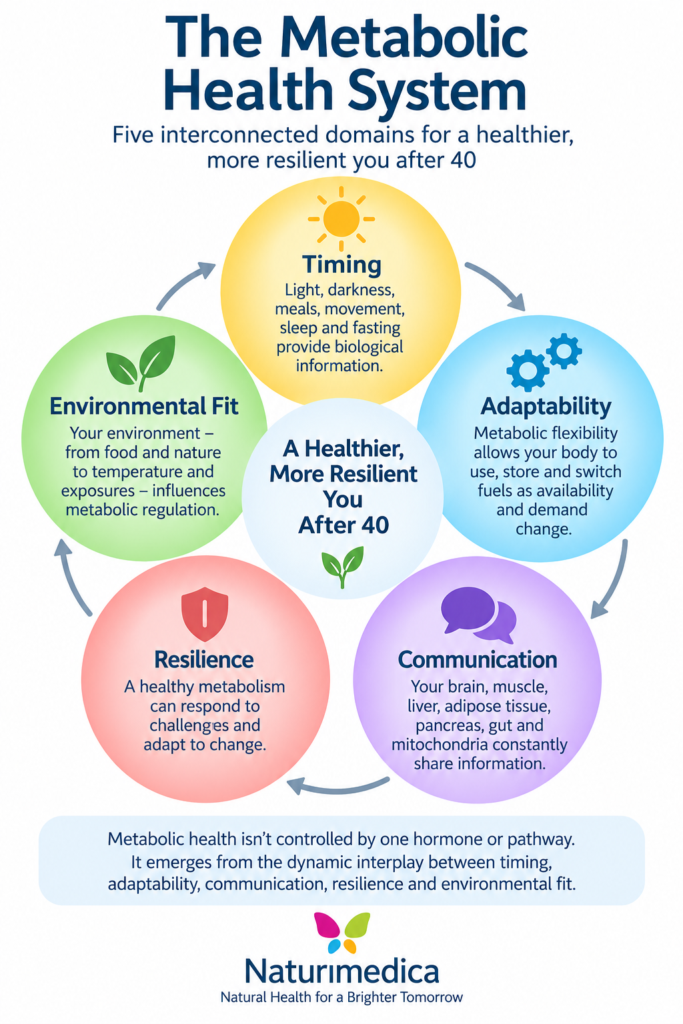
And perhaps that is one of the first reasons to marvel at the body rather than simply worry about it. Every day, thousands of metabolic adjustments take place without our awareness. Organs communicate. Cells respond. Fuel is stored and released. Internal conditions are defended while the external environment continually changes. So, answering “how metabolism works” is more complex and nuanced than it may look.
The more we understand this coordination, the harder it becomes to see metabolism as a simple calorie-burning engine. And the more clearly we can begin to see the whole person.
Metabolism Needs to Know WHEN: Timing and Biological Alignment
For much of modern nutrition [7] and metabolic medicine, attention has understandably focused on what we eat and how much. But there is another question: When is the body being asked to do the metabolic work?
Human physiology does not operate identically at every hour of the day. Processes involved in glucose regulation, insulin sensitivity, appetite, digestion, hormone secretion, energy use and cellular repair follow daily rhythms.
Deep within the brain, the suprachiasmatic nucleus, or SCN, acts as a central circadian clock [5]. It receives information about environmental light through the eyes and helps coordinate daily rhythms throughout the body.
But the story does not end in the brain. The liver, skeletal muscle, pancreas, adipose tissue, gut and other tissues have their own circadian timing systems. These peripheral clocks help organise local metabolic processes according to biological time.
Light is the dominant environmental signal for setting the central circadian clock, [8] while food intake, physical activity and sleep timing also influence metabolic rhythms. In other words, metabolic tissues need not only fuel. They also need timing information.
Clock time is not the same as biological time
This is where circadian advice can become too rigid. If timing matters, it is tempting to turn the science into rules:
- Eat at exactly this time
- Never eat after that time
- Exercise at this hour
- Sleep at that hour
But circadian biology is more sophisticated than a timetable. People differ in chronotype, sleep-wake timing, age, lifestyle and internal circadian phase. Seasons, work patterns and light exposure can alter the relationship between the clock on the wall and the clock within the body.
So when we talk about metabolic timing, we are talking about biological alignment. Consider four major signals:
- LIGHT AND DARKNESS help establish biological day and night
- FOOD AND FASTING tell metabolic tissues when nutrients are arriving and when stored energy may be required
- ACTIVITY AND REST signal changing energy demand
- SLEEP AND WAKEFULNESS are closely integrated with circadian and metabolic regulation
Healthy physiology does not require a perfectly regimented life. But problems can arise when these signals repeatedly contradict one another.
A common modern example might combine bright artificial light late at night, a large late meal, little movement, delayed sleep, insufficient rest and very little natural morning light. No single late dinner or disrupted night “breaks” metabolism. The more useful question is what happens when conflicting signals become the normal pattern.
Timing is not about obeying the clock. It is about biological alignment.
Food carries timing information too
Food provides energy and nutrients, but eating is also a biological event. The arrival of glucose, amino acids, fatty acids and other food components changes hormones, nutrient-sensing pathways, nervous-system activity, gut signalling [9] and cellular metabolism.
Meal timing can also interact with circadian biology. Leptin provides a useful example. Produced primarily by adipose tissue, leptin helps communicate information about longer-term energy availability to the brain. It participates in appetite and energy regulation but is much more than a simple “fullness hormone.” Its secretion follows a daily pattern and is influenced by feeding.
One small human experiment shifted meal times by 6.5 hours without changing light or sleep schedules. [10]The daily leptin rhythm shifted by approximately five to seven hours. The study involved only four young men, so it certainly cannot tell everyone when to eat. But it demonstrated an important principle: metabolic hormonal rhythms can respond to the timing of food.
Leptin also illustrates something even more important about metabolic communication. Signals from adipose tissue reach specialised circuits within the hypothalamus, including POMC neurons. These form part of the melanocortin system, a major neural network involved in integrating information about stored energy, nutrient availability and other signals to help regulate appetite and energy balance.
So the conversation is not simply: fat → leptin → fullness. It is closer to:
ADIPOSE TISSUE → LEPTIN → BRAIN → POMC/MELANOCORTIN SYSTEM → COORDINATED ENERGY REGULATION
And even that is a simplification of a much larger network.
More than a decade ago, [11]neurosurgeon Dr Jack Kruse [12] was among clinicians drawing attention to possible relationships between leptin, meal timing, light exposure and circadian biology. Some of these broader relationships now sit comfortably within the growing field of circadian-metabolic research, although several of the specific mechanisms and clinical recommendations he proposed remain unconfirmed.
This is a useful example of why clinical observation and independent thinking can have a place alongside formal research. Clinical experience cannot establish causation in the way controlled research can. But it can reveal patterns, generate questions and draw attention to relationships worthy of investigation. Science then has the important job of testing those ideas.
A Healthy Metabolism Can ADAPT
If biological timing helps the body know when, metabolic flexibility describes another essential ability: Can the body change what it does when circumstances change?
Life does not provide our cells with a constant supply of exactly the same fuel while asking them to perform exactly the same amount of work. We eat and then spend periods without food. We sit, walk, exercise and sleep. Sometimes energy is abundant and needs to be stored. At other times stored energy needs to become available. A working muscle may suddenly require far more fuel than it did a few minutes earlier.
A healthy metabolic system needs to respond. This ability is known as metabolic flexibility. [13]
In its simplest sense: A healthy metabolism can adjust how it acquires, stores and uses energy as circumstances change.
That means moving appropriately between fed and postabsorptive states, storage and mobilisation, rest and activity, and changing use of glucose and fatty acids. It is not about becoming permanently better at burning one particular fuel.
A healthy metabolism is not one that always burns more glucose or more fat. It is one that can use, store and switch fuels appropriately as availability, demand and biological timing change.
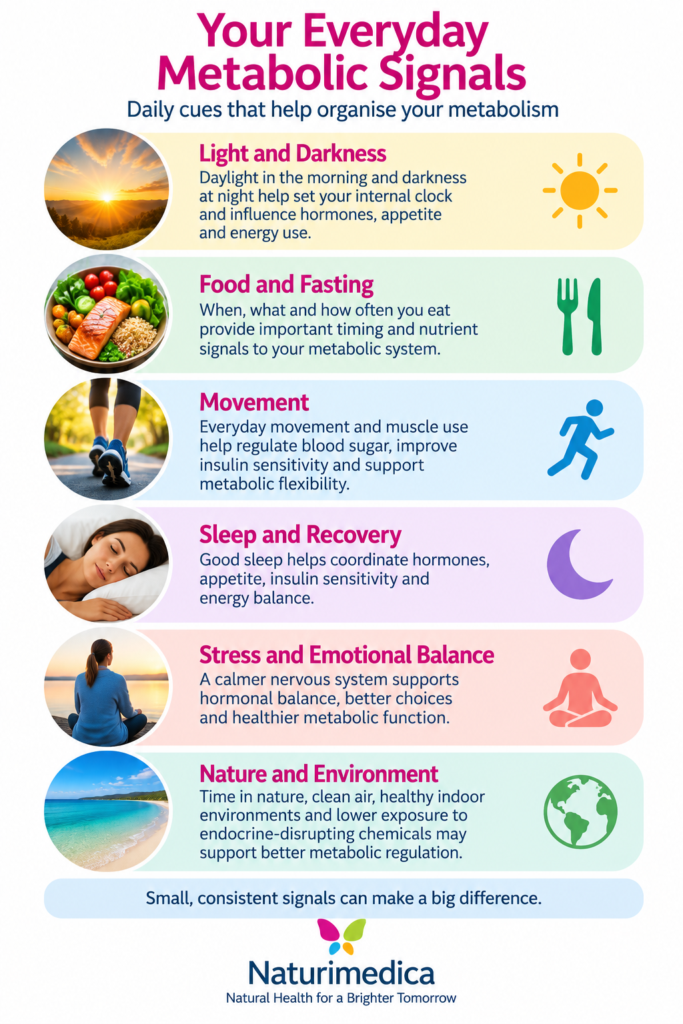
These are not rigid categories. Light does more than set circadian time. Food does more than supply substrates. Exercise affects hormones, cellular signalling and biological rhythms. But the model helps us see metabolism differently.
Movement is especially important because it creates metabolic demand. When skeletal muscle contracts, its demand for energy rises. Glucose uptake, fuel use and mitochondrial activity change. We do not merely move to expend energy. We move to change metabolic physiology. This deeper capacity for switching, responding and adapting is explored in our companion article on Metabolic Flexibility After 40 (coming soon).
For the whole-system picture, the important point is simpler: Healthy metabolism is responsive.
There Is No Single “Metabolism Organ”: Metabolism Is a Conversation
If metabolism were controlled by one organ, metabolic health would be much easier to explain. Instead, the body relies on continuous communication between tissues with different jobs.
- Skeletal muscle uses and stores fuel, responds rapidly to changing energy demand and acts as a signalling tissue
- The liver processes, transforms, stores and releases nutrients according to changing needs. It sits at a remarkable crossroads between what enters the body and what the rest of the body requires
- Adipose tissue provides specialised energy storage, but it is not simply passive stored calories. It also acts as an endocrine and immune-active organ and communicates information about energy reserves and tissue state
- The pancreas senses circulating nutrients and releases hormones including insulin and glucagon
- The brain receives hormonal, nutritional and neural information and helps coordinate appetite, behaviour, energy regulation and autonomic responses
- The gut processes incoming food while generating hormonal, neural and microbial signals
- And within cells, mitochondria continually respond to the energy requirements of the tissues in which they live
These organs are not running separate metabolic programmes. They are talking to one another.
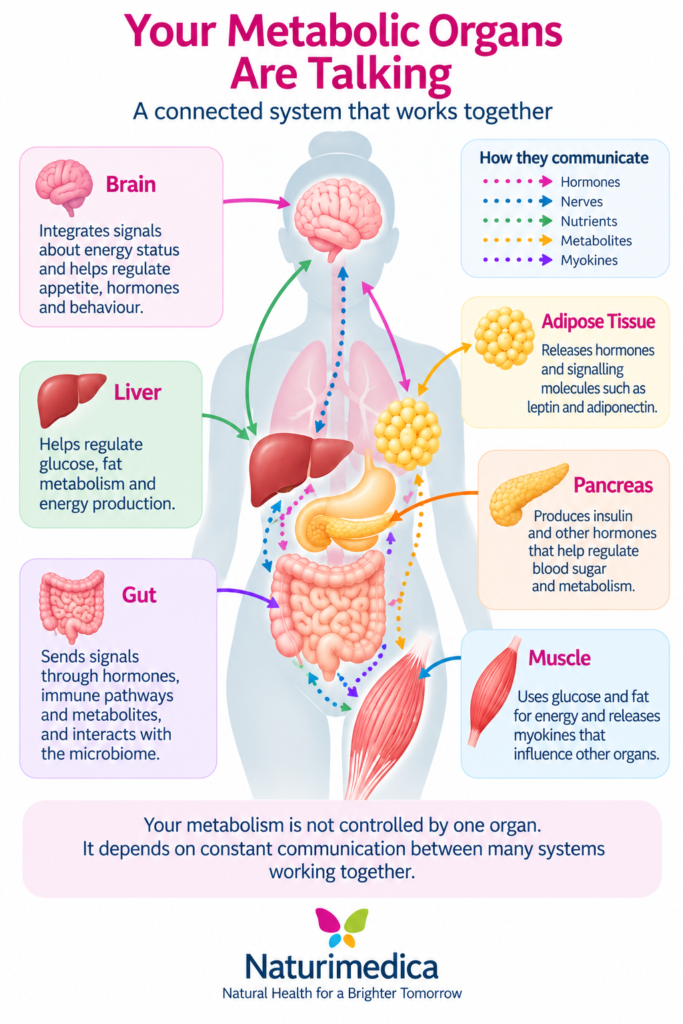
Hormones travel through the bloodstream. The nervous system carries information rapidly between the brain and peripheral organs. Nutrients and metabolites themselves act as signals. Muscle and adipose tissue release signalling molecules. The gut communicates through hormones, nerves and microbial metabolites.
This is why disturbing one part of the system can affect another. And it is why supporting one part can quite often have effects far beyond that tissue itself.
Muscle deserves much more respect
Skeletal muscle may be one of the most powerful parts of the metabolic network that we can actively influence.
It is a major destination for glucose after we eat, and contracting muscle can increase glucose uptake through pathways that are at least partly distinct from insulin signalling.
Working muscle also increases energy demand and releases signalling molecules, often collectively called myokines, that can communicate with other tissues. Muscle is therefore not simply somewhere energy is used.
It is an active metabolic and signalling organ.
This becomes particularly important after 40, when preserving muscle mass, strength and function becomes increasingly valuable.
Adipose tissue is more than stored calories
Humans need somewhere to store energy safely. Healthy adipose tissue performs that essential job. But the location, capacity and function of adipose tissue matter. Subcutaneous adipose tissue can provide a relatively safe location for energy storage. When storage capacity becomes inadequate or adipose tissue becomes dysfunctional, excess lipid may increasingly accumulate in visceral depots around abdominal organs or in tissues such as the liver, skeletal muscle and pancreas.
This leads to an important shift in thinking: The metabolic question isn’t simply how much fat someone carries. It is also where excess energy can be safely stored.
Adipose tissue also communicates. Leptin is one example. [14] Through leptin and the POMC/melanocortin system [15], information about stored energy can influence brain pathways involved in energy regulation. Body fat is not simply sitting quietly underneath the skin or around the abdomen. It is participating in the metabolic conversation.
The brain and nervous system are part of metabolism
The brain is sometimes left out of metabolic discussions, as though metabolism occurs in the body while the brain merely decides whether we feel hungry. In reality, the brain is deeply involved.
It receives hormonal information including leptin and insulin, neural signals from the gut and other organs, and information about nutrient and energy availability. Through the autonomic nervous system, the brain can directly influence metabolic organs. This creates a continuous two-way conversation:
BODY → BRAIN and BRAIN → BODY
Stress belongs in this conversation too [16]. When we perceive threat or significant demand, autonomic and hormonal responses help mobilise energy. That is useful physiology.
Cortisol is not a metabolic villain, and sympathetic activation is not inherently harmful. The concern arises when systems designed for temporary adaptation are activated too frequently, for too long or without sufficient opportunity for recovery. So rather than reducing stress physiology to:
Stress → Cortisol → Belly fat
a better question is: Can the nervous system activate appropriately when needed and recover when the demand has passed? Again, metabolic health is about adaptability.
Insulin is important, but it doesn’t work alone
Insulin is enormously important. After eating, it helps coordinate the body’s response to incoming nutrients. It influences glucose uptake, liver glucose production, glycogen storage, fat metabolism and many other processes.
Insulin resistance is therefore highly relevant to metabolic disease. But insulin is not conducting the entire metabolic orchestra by itself.
- Muscle contraction can change glucose uptake. Adipose tissue sends information through leptin and other signals
- The liver responds to insulin, glucagon, nutrients and circadian timing. The brain integrates metabolic information
- The autonomic nervous system alters organ function
- Mitochondria respond to cellular demand
- Sex hormones, thyroid hormones, cortisol and many other signals modify the metabolic environment
This is why saying: “metabolic disease is caused by insulin resistance” can be simultaneously useful and incomplete. Insulin resistance may be a major part of the picture. But the picture is larger.
A metabolic conversation we rarely notice
Pause for a moment and consider what all of this means:
- A meal arrives
- The gut senses it
- The pancreas responds
- The liver begins processing incoming nutrients
- Adipose tissue changes storage activity
- Muscle responds according to insulin, activity and energy demand
- The brain receives hormonal and neural information
- The nervous system adjusts organ activity
- Mitochondria alter energy production according to what individual cells require
Hours later, as food is no longer arriving, the conversation changes. Then we walk, sleep, wake, experience stress or eat again, and it changes once more. We rarely notice any of it. Yet this continual communication is taking place every day, throughout our lives.
Healthy metabolism is therefore not the achievement of one perfectly functioning organ. It is the remarkable ability of many specialised tissues to work together while continually adjusting to change.
Why Metabolic Health Changes After 40
If metabolism is an adaptable network, it follows that the network itself changes over a lifetime. The metabolism we have at 25 is not identical to the metabolism we have at 45, 55 or 70. That does not mean metabolism simply “slows down” at a particular birthday. Nor does it mean weight gain, insulin resistance or declining metabolic health are inevitable consequences of getting older.
A more useful idea is that the metabolic terrain changes. With age, changes can occur in skeletal muscle, adipose tissue, mitochondrial function, insulin sensitivity, inflammatory regulation, hormones, sleep, activity and recovery.
Muscle mass, strength and quality may gradually decline without sufficient stimulus. Adipose tissue can change its storage capacity and distribution. Visceral and ectopic fat may become more prominent.
For women, menopause adds another significant layer. [3] Declining and fluctuating estrogen can influence adipose distribution, skeletal muscle, insulin sensitivity, mitochondrial biology and inflammatory regulation. Menopause can also influence metabolism indirectly through sleep disturbance [17], fatigue, mood, stress and changing activity.
The result is not a single menopause pathway. It is another network effect.
The scales may not reveal the whole metabolic change
One of the most revealing examples comes from the long-running Study of Women’s Health Across the Nation, or SWAN. Researchers following women through the menopause transition found that the rate of fat gain accelerated while lean mass began to decline around the transition. [18] Yet total body weight did not show the same menopause-related acceleration.
In other words: The body could be changing metabolically even when the scales were not telling the whole story. This helps make sense of an experience many women describe: “My weight hasn’t changed that much, but my body has.”
Where fat is stored may change too, with menopause associated with increasing central and visceral fat. This matters because visceral and ectopic fat carry different metabolic implications from much of the subcutaneous fat stored underneath the skin.
Menopause therefore does not simply “slow metabolism.” A more accurate description is:
Menopause changes the metabolic environment in which muscle, adipose tissue, the brain, mitochondria and insulin signalling are operating.
But that environment remains responsive. Muscle and fitness can improve, insulin sensitivity can change, and sleep and circadian health [19] remain meaningful parts of metabolic regulation. This is why metabolic changes after 40 are better understood as a changing terrain rather than an inevitable decline.
We explore muscle, menopause, body composition, visceral fat and metabolic resilience in much greater depth in Why Metabolic Health Changes After 40. (coming soon).
Weight Matters, But It Doesn’t Tell the Whole Metabolic Story
For many people, metabolic health first becomes visible through body weight.
- Clothes fit differently
- The waist changes
- Weight becomes harder to lose
- A strategy that worked ten years ago no longer seems to produce the same result
These concerns are real and worth addressing. But body weight tells [20] us the combined mass of everything in the body. It does not tell us how much is muscle, how much fat is subcutaneous or visceral, whether fat is accumulating in the liver, how insulin-sensitive skeletal muscle is, how physically fit someone is or how effectively the wider metabolic network responds to changing demand.
This means two things can both be true: Excess body fat, particularly visceral and ectopic fat, can increase metabolic risk. And: Body weight alone cannot tell us whether someone is metabolically healthy.
A person can become stronger, improve cardiorespiratory fitness, improve insulin sensitivity and glucose regulation, reduce liver fat, sleep better and become more physically active before there is a dramatic difference on the scales.
Likewise, someone can have a BMI within the conventional healthy range while carrying excess visceral or liver fat, having low muscle mass, reduced fitness or insulin resistance.
Body weight remains relevant. But it is one piece of information among several.
The scales are measuring weight. They are not measuring metabolic resilience.
After 40, a better question may therefore be: How well is my body managing energy? Weight belongs within that picture. But it is not the picture.
Metabolism Responds to Its Environment
So far, we have looked largely inside the body at hormones, organs, mitochondria, nerves and metabolic pathways. But metabolism does not take place in isolation from the world around us.
Human biology developed within recurring cycles of light and darkness, seasons, temperature, movement, food availability, periods without food and continual contact with the natural world. Our physiology still responds to these conditions.
Modern life has brought extraordinary advantages, but it has also changed many of the signals reaching human biology. We spend much of our time indoors. Artificial light extends the biological day [21]. Food can be available every waking hour. Physical movement is often optional. Indoor temperatures vary relatively little, sleep can be interrupted by technology and social schedules, and we encounter environmental exposures [22] very different from those present during much of human history.
Metabolic health therefore cannot be understood entirely by looking at what happens inside us. We also need to consider what the body is continually responding to.
The environment provides biological information
Light is the clearest example.
- Light is not simply something that allows us to see. It is biological information
- Photons entering the eye activate specialised pathways that communicate with the brain’s circadian system
- A physical feature of the environment becomes a biological signal
Food does something similar in a different way [23]. Nutrients provide material and energy, but their arrival also activates hormonal, neural and cellular signalling pathways and creates metabolic demand.
Temperature triggers physiological responses. The environment is therefore not simply the backdrop against which metabolism happens. It is part of the information the metabolic system uses to decide how to respond.
Environmental chemicals: a growing metabolic question
Some environmental chemicals can interfere with hormonal signalling and are described as endocrine-disrupting chemicals. Researchers are also investigating a broader group of metabolic disruptors, substances capable of interfering with metabolic processes through effects on adipose biology, hormonal signalling, lipid metabolism, liver or pancreatic function and other pathways.
Human studies report associations between several classes of environmental chemicals and metabolic outcomes, while laboratory research provides plausible biological mechanisms. But scientific restraint is important.
The fact that obesity and metabolic disease have increased during a period of changing chemical exposure does not prove that one caused the other. Human exposures involve complex mixtures and interact with diet, occupation, socioeconomic conditions, genetics, activity and many other factors. [24]
So the evidence does not justify saying: “toxins are making everyone fat.”
But neither does it justify treating diet and exercise as though they operate in isolation from the environment. The sensible position is to recognise environmental metabolic disruption as a legitimate and developing field while remaining realistic about uncertainty and individual effect size.
What about electromagnetic fields?
Modern environments also expose us to electromagnetic fields from electrical systems and wireless technologies.
At a fundamental level, biology is electrical as well as chemical. Cell membranes maintain electrical potentials, ions move through channels, nerves communicate electrochemically and mitochondria depend on an electrochemical proton gradient.
That does not automatically mean everyday environmental electromagnetic exposure disrupts these processes. Research continues, but current evidence does not clearly establish ordinary modern EMF exposure as a major cause of metabolic dysfunction. [25] It belongs on the environmental map as an area of investigation but, at this stage, not at the same evidentiary level as physical inactivity, sleep disruption, circadian misalignment or established metabolic risk factors.
Curiosity does not require premature certainty.
Nature is more than a pleasant extra
Traditional naturopathic thinking has long regarded contact with the natural world as part of health rather than an optional leisure activity.
Modern research is beginning to examine parts of this relationship through studies of green and blue spaces, outdoor activity, stress physiology, mental health and cardiovascular outcomes. But going outside changes many biological inputs at once:
- We encounter natural light
- We usually move more
- Our visual and sensory environment changes
- We experience different temperatures and airflow
- Attention and stress may shift
Nature does not deliver one isolated active ingredient. It changes the environment in which the whole person is functioning. [26] There is also a deeper idea here. Human physiology developed on Earth.
- Our circadian clocks respond to its cycles
- Our light-sensing systems respond to sunlight
- Our sleep-wake rhythms are organised around day and night
- Our food ultimately comes from living systems dependent on sunlight [27], soil and water
- Our physiology responds to temperature and seasons
We are not organisms that happened to be placed into nature. We are organisms that developed within it.
That does not prove every claim made in the name of natural health. Nature can harm as well as heal, and modern medicine and technology have transformed human health in many ways, both positive and less so. But human biology remains deeply responsive to the conditions of the natural world from which it emerged.
That is both a traditional naturopathic principle and something modern biology increasingly helps us understand in finer detail.
Hydration is part of the body’s physical environment
Water belongs in this wider environmental picture too because metabolism takes place in an aqueous biological environment.
Water is present inside cells and around them. It forms most of blood plasma, transports nutrients and metabolites, participates in biochemical reactions and, together with electrolytes, helps establish the osmotic and electrochemical conditions required for cells to function. Hydration is therefore better understood as a regulated physiological balance than as a competition to drink the most water.
The body continually adjusts water and electrolytes through the kidneys, hormonal systems, thirst and other mechanisms. Food contributes fluid, metabolism itself produces water, and activity, temperature, climate, illness and diet alter requirements.
The goal is not maximal water intake. It is appropriate fluid and electrolyte balance. For Naturimedica, hydration remains a foundation [28]not because drinking more water magically accelerates metabolism, but because fluid and electrolyte balance [29] is part of the physical environment in which normal physiology occurs.
This brings us to an even wider question.
Emerging Research: Are We Looking at Metabolism Too Biochemically?
Modern biochemistry has given us an extraordinary understanding of life. We can identify hormones and receptors, map metabolic pathways, measure enzymes, sequence genes and trace how nutrients move through cells.
But living organisms are governed by physics as well as chemistry:
- Cell membranes maintain electrical potentials
- Ions move through channels
- Proteins change shape
- Mechanical forces alter cellular behaviour
- Mitochondria use electron transfer, proton gradients and membrane potential to transform energy
- Light entering the eye becomes electrical and neural information that helps synchronise circadian rhythms throughout the body
These are not speculative ideas. They are established biophysics.
What is emerging is a broader attempt to understand how these physical processes integrate with biochemical pathways in whole-body health. Research into photobiology [30] and photobiomodulation [31], for example, is exploring how particular wavelengths of light may interact with cellular chromophores, redox signalling, nitric oxide, ion channels and mitochondrial function.
Other areas are much more preliminary, including proposed roles for biophotons [32]in cellular communication and some mechanisms currently discussed within quantum biology. These idea are not all supported by the same level of evidence but they raise a worthwhile question:
Are we looking at metabolism too biochemically?
Could a fuller understanding of health require us to understand not only which molecules are present, but also the physical environment in which those molecules and cells operate?
Some integrative clinicians are already attempting to incorporate this wider biophysical perspective [33] into clinical thinking. Dr Bruce Hoffman, for example, includes circadian biology, environmental electromagnetic exposure and what he describes as physics and quantum biology within his systems-based clinical framework [34]. Dr Jack Kruse, mentioned above, has proposed connections between biophysics, circadian biology, light exposure and metabolic regulation, although several of his specific clinical hypotheses remain unconfirmed at this time.
Not every idea currently grouped under biophysics or quantum biology [35] has the same level of scientific support. But the broader principle that living systems are governed by physical as well as biochemical processes is not controversial.
Mitochondria themselves make that beautifully clear. They do not generate usable cellular energy through chemistry alone. Their function depends on electron flow, electrical potential and a proton gradient across a membrane. [36]
Life is chemical. But it is also electrical, physical, rhythmic and responsive to its environment.
How much this wider biophysical perspective will eventually change our understanding of metabolic health remains to be seen. For now, it belongs exactly where emerging science should belong: not presented as established clinical fact, but not dismissed simply because the picture is still incomplete.
Science progresses by confirming some ideas, refining others and abandoning those that do not survive careful testing. Our understanding of metabolism will continue to evolve too. The more closely we look, the less metabolism resembles a simple calorie-burning machine and the more it reveals itself as a living system continually exchanging matter, energy and information with the world around it.
What Actually Supports Metabolic Health After 40?
After exploring biological timing, adaptability, organ communication, ageing, menopause and the environment, it would be easy to assume that supporting metabolic health requires an equally complicated plan.
Fortunately, it does not. The physiology is complex. The foundations do not need to be.
Many everyday behaviours influence several parts of the metabolic network at the same time. Strong foundations are not simplistic. They are systems interventions.
1. Give the body clear light and dark signals
Natural daylight, particularly earlier in the biological day, helps anchor circadian timing. Darkness and lower light in the evening help reinforce biological night.
LIGHT → WHEN
2. Use your muscles regularly
Muscle takes up glucose, creates energy demand and communicates with other tissues. Preserving muscle mass, strength and function becomes increasingly important with age. Resistance exercise deserves a particular place after 40, alongside aerobic activity, walking and everyday movement.
Movement is not punishment for eating. It is information and demand that the metabolic system is designed to respond to.
MOVEMENT → WHAT IS NEEDED
3. Nourish the metabolic system rather than simply feeding it less
Energy intake matters, but healthy eating after 40 should not be reduced to calorie restriction. Adequate protein helps support muscle. Plants provide fibre, micronutrients and diverse compounds, while nutrient-dense meals provide the materials the body needs.
Eating rhythm matters too. There is no universal perfect meal schedule, but the body needs opportunities to move between fed and postabsorptive states rather than necessarily receiving food throughout every waking hour.
FOOD → WHAT IS AVAILABLE
4. Protect sleep and circadian alignment
Sleep is a distinct physiological state integrated with hormonal regulation, glucose metabolism, nervous-system function, appetite and cellular recovery.
Sleep duration, quality and circadian timing all matter. The goal is not perfection. It is coherence.
5. Build the capacity to activate and recover
Stress physiology is designed to help us respond. The problem is not activation. It is activation without enough recovery. A more useful goal than constantly trying to “lower cortisol” is: Build the capacity to activate when needed and recover when the demand has passed.
6. Maintain appropriate hydration and electrolyte balance
Hydration supports circulation, nutrient transport, temperature regulation and the cellular environment in which metabolism occurs. Needs vary, and more water is not automatically better. The goal is appropriate fluid and electrolyte balance.
7. Spend time in the natural world
Going outside changes multiple health inputs simultaneously: natural light, movement, sensory environment and often stress and attention. For many people, a simple question is enough: How much of my day actually happens outdoors? [37]
8. Reduce unnecessary environmental disruption
We cannot eliminate environmental exposures, nor should metabolic health become an exercise in fear. But reducing unnecessary exposure to endocrine-disrupting chemicals, excessive artificial light at night and other avoidable environmental disruptions may be worthwhile particularly where the changes are simple and practical.
The goal is not a perfectly “clean” environment. It is reducing avoidable disruption where the changes are practical, affordable and sustainable.
Start with foundations, not metabolic hacks
The metabolic-health world is full of optimisation strategies: continuous glucose monitors, fasting protocols, ketogenic diets, cold exposure, supplements, mitochondrial products, hormone programmes and wearables.
Some can be useful in the right context. None replaces the foundations.
Before asking how to optimise another pathway, ask whether you are regularly using your muscles, seeing natural daylight, sleeping adequately, eating nourishing food in a reasonably coherent rhythm, allowing your nervous system to recover, staying appropriately hydrated and spending meaningful time outside.
These questions may sound less sophisticated than measuring another biomarker. Biologically, they are not. Each influences multiple systems simultaneously.
Individualisation still matters
A systems approach does not mean everyone receives the same lifestyle prescription [38]. Someone with significant insulin resistance may need a different nutritional approach from someone who is metabolically healthy but losing muscle.
A woman struggling with severe menopausal sleep disruption may need to address sleep before adding more exercise. Someone with low appetite and low muscle mass should not automatically be encouraged to fast longer. A shift worker cannot follow exactly the same circadian strategy as someone with a regular daytime schedule. Medical conditions and medications may substantially change what is appropriate.
This is where individual assessment matters.
The foundations may be universal biological themes. How we apply them is personal.
That is the difference between principles and protocols.
Seeing Metabolic Health as a Whole
We began with the familiar picture of metabolism:
- Weight
- Calories
- Blood glucose
- Insulin
All matter. But they are not the whole story. As we widened the lens, a different picture emerged.
TIMING
Metabolism needs information about when. Light and darkness help organise biological time. [39] Feeding, activity and sleep interact with circadian rhythms. Healthy timing is less about rigid schedules and more about biological alignment.
ADAPTABILITY
Metabolism needs to respond when conditions change.
- Food arrives
- Food stops arriving
- Activity increases
- Demand falls
A healthy metabolic system adjusts how it acquires, stores and uses energy.
COMMUNICATION
There is no single metabolic organ. Muscle, liver, adipose tissue, pancreas, gut and brain continually exchange information [40] through hormones, nerves, nutrients and metabolites. Metabolism happens between systems as much as within them.
RESILIENCE
Ageing and menopause change the metabolic terrain.
- Muscle can decline
- Fat distribution can shift
- Insulin sensitivity, sleep, recovery and inflammatory regulation may change
But change is not the same as inevitable decline. The body retains an extraordinary capacity to respond to appropriate stimulus. The goal after 40 is not to recreate the metabolism of a 25-year-old. It is to protect and build metabolic resilience in the body we have now.
ENVIRONMENTAL FIT
Metabolism does not occur in isolation from the world around us. Our physiology responds to light, darkness, food, movement, temperature, sleep, stress, water and the wider environment. Some relationships are well established. Others, including aspects of environmental chemical exposure and emerging biophysical questions, are still being investigated.
A wholistic approach makes room for both established knowledge and scientific curiosity.
One definition brings it together
After all this complexity, we can return to our definition:
Metabolic health is the body’s capacity to sense energy availability and demand, use and store fuels appropriately, coordinate these processes across tissues and biological time, and adapt as conditions change while maintaining dynamic homeostasis.
Or, more simply:
Metabolic health is how well your body senses, uses, stores and manages energy, while keeping its many metabolic systems working together and adapting as your needs change.
That is why metabolic health cannot be reduced to body weight. Or insulin. Or glucose. Or calories. Each shows us something.
The whole person shows us more.
Perhaps the Most Remarkable Part Is What Usually Goes Right
After reading about so many pathways, hormones and potential disruptions, it would be easy to come away thinking that human metabolism is quite fragile.
I think the opposite conclusion is more appropriate. Consider what your body is doing while you simply sit reading this article.
- Cells are transforming energy
- Mitochondria are maintaining electrochemical gradients and continually regenerating ATP
- The brain is receiving information from throughout the body
- The liver is monitoring and managing circulating nutrients
- Adipose tissue is storing energy and sending hormonal signals
- Muscle is ready to respond when demand increases
- The pancreas is sensing the metabolic environment
- The kidneys are regulating fluid and electrolytes
- Circadian clocks throughout the body are keeping track of biological time
- The nervous system is continually adjusting organ function
- And thousands of other processes are taking place that we have not even discussed
- You are not consciously directing any of them.
Most of the time, in a healthy body, this extraordinary coordination works remarkably well. Perhaps that deserves more attention.
We tend to notice physiology when something goes wrong. We rarely marvel at the enormous amount that goes right.
The body does not work alone
None of these processes developed in isolation. Human biology evolved within rhythms of light and darkness, activity and rest, food and periods without food, water, temperature, seasons, other people and the wider living environment.
Our modern lives may look very different, but our biology still listens to many of these signals.
Perhaps supporting metabolic health is therefore less about trying to control every pathway and more about understanding the conditions the body needs in order to do what it already does extraordinarily well:
- Sense
- Communicate
- Respond
- Adapt
- Restore balance
We will continue to discover more about how these systems work. Some ideas we currently consider promising will become established. Some will need refining. Others will prove wrong. Clinical experience will continue to generate questions that formal research can investigate, while scientific discoveries will continue to change clinical practice.
That is how knowledge develops. An evidence-informed wholistic approach does not require us to choose between certainty and curiosity. It asks us to:
- Respect what is well established
- Be precise about what the evidence actually shows
- Remain curious about what is emerging
- Value clinical and traditional observations for what they can contribute
- Ask questions and stay willing to change the picture as knowledge develops
The more we discover about metabolism, the less it looks like a collection of isolated pathways and the more clearly we can see an interconnected living system, continually sensing, communicating and adapting. That is a meaningful place to begin.
See the Whole Person | Build Strong Foundations | Live Well [6]
Key Takeaways
- Metabolic health is much more than body weight, blood glucose or insulin. These are useful measures, but they represent only parts of a much larger whole-body system.
- A healthy metabolism is coordinated, responsive and adaptable. It needs to sense what is available, respond to changing demand and communicate across tissues.
- Timing matters. Circadian rhythms help coordinate metabolism across the brain and peripheral tissues. The goal is biological alignment rather than rigid clock-based rules.
- Metabolic flexibility allows the body to adjust fuel use and energy handling as food availability and physical demand change.
- Muscle is a major metabolic tissue. Using and preserving skeletal muscle becomes particularly important after 40.
- The metabolic organs communicate. Liver, adipose tissue, muscle, pancreas, gut and brain continually exchange information through hormones, nerves, nutrients and metabolites.
- Menopause and ageing change the metabolic terrain, including muscle, body composition, fat distribution and hormonal signalling, but metabolic decline is not inevitable.
- Weight matters, but it is not metabolic health. Body composition, visceral and ectopic fat, muscle, liver health, fitness and metabolic function provide information the scales cannot.
- Environment matters too. Light and darkness, movement, food timing, sleep, stress, hydration, nature and environmental exposures interact with human physiology.
- Strong foundations influence multiple systems at once. This is why movement, nourishing food, circadian health, sleep, recovery, hydration and time outdoors remain central even as metabolic science becomes increasingly sophisticated.
Frequently Asked Questions
Metabolic health describes how effectively the body senses, uses, stores and manages energy while coordinating metabolic processes across tissues and adapting to changing conditions. Blood glucose, insulin, blood lipids, blood pressure, body composition and waist circumference can provide useful information, but no single measurement captures the entire metabolic system.
There is no single perfect test. A clinical assessment may consider glucose regulation, blood pressure, blood lipids, waist circumference, body composition, liver health and other relevant markers alongside physical activity, muscle strength, fitness, sleep, nutrition, medications, medical history and individual risk factors. The aim is to build a picture rather than chase one number.
Yes. Someone can have a body weight or BMI within the conventional healthy range while carrying excess visceral or liver fat, having relatively low muscle mass, reduced fitness, insulin resistance or other metabolic risk factors. Body weight remains relevant to health, but it should be interpreted within the wider metabolic picture.
No. Insulin resistance is an important metabolic abnormality and a major feature of many metabolic disorders, but metabolic health includes a wider network involving muscle, liver, adipose tissue, the brain, nervous system, mitochondria, biological timing, hormones and environmental influences. Insulin tells us something important about the system, but not everything.
No. Ageing and menopause can change muscle, body composition, fat distribution, insulin sensitivity, sleep, inflammatory regulation and other aspects of metabolic physiology. But many of these systems remain responsive to nutrition, physical activity, muscle use, sleep, circadian signals and other aspects of lifestyle and health care. The more useful goal is not to recreate the metabolism of youth, but to preserve metabolic resilience.
Yes. Physical fitness, muscle strength, insulin sensitivity, glucose regulation, blood pressure, liver fat, sleep, dietary quality and activity can improve without dramatic weight loss. Weight may still be an important health goal for some people, but it is not the only meaningful sign of metabolic improvement.
Begin with the foundations rather than trying to optimise every metabolic pathway at once. Use your muscles regularly. Get natural daylight and support a consistent light-dark rhythm. Eat nourishing food with adequate protein and plenty of plants. Allow a reasonable rhythm between eating and periods without food. Protect sleep. Create opportunities for nervous-system recovery. Maintain appropriate hydration and spend time outside. Then individualise according to your health, metabolic markers and circumstances.
The body is complex. Supporting it does not always need to be.
Continue Your Metabolic Health Learning Journey
Metabolic health is much bigger than blood sugar, body weight or insulin alone. It reflects how multiple organs, tissues and biological signals work together to sense, use, store and adapt energy.
This article is the first in Naturimedica’s three-part Metabolic Health After 40 series.
Part 1 – You are here
How Metabolism Works: Understanding the Body’s Interconnected Systems (this article)
Explore metabolic health as an interconnected system involving the brain, muscle, liver, adipose tissue, hormones, circadian rhythms, mitochondria and the signals that coordinate energy throughout the body.
Part 2 – Coming soon
Metabolic Flexibility: How Your Body Switches Between Burning and Storing Energy
Discover how a healthy metabolism moves between fed and fasted states, glucose and fat, storage and mobilisation, and rest and activity, and why metabolic flexibility is ultimately a form of metabolic resilience.
Part 3 – Coming soon
Menopause and Metabolism: Why Your Body Changes and What You Can Do
Understand why the metabolic terrain can change through midlife, including the overlapping influences of ageing, menopause, muscle, body fat distribution, insulin sensitivity, liver health, sleep and circadian biology, and what remains adaptable.
Ready to Put This Into Practice?
The Metabolic Health Reset Guide and Workbook takes the next step, helping you identify your own metabolic patterns and make sense of the many connections described in this article without turning metabolic health into another complicated programme to follow. Rather than giving you a rigid diet, exercise plan or list of metabolic rules, it helps you see your whole metabolic picture, identify the few areas that matter most for you and turn them into practical actions.
Access The Metabolic Health Reset Guide and Workbook → [41]
Behind This Article
This article began with a question I encounter regularly in clinical practice: What actually regulates metabolic health, particularly after 40, and how do these systems influence one another?
Rather than beginning with a predetermined explanation, I went back to the biology. Together with ChatGPT, I spent considerable time mapping the scientific literature across insulin and glucose regulation, skeletal muscle, adipose tissue, liver metabolism, hormones, mitochondria, circadian biology and other emerging areas of metabolic research. I then reviewed and selected the evidence most relevant to understanding these relationships in practice.
The research file eventually grew to around 70 pages. At that point, the challenge was no longer finding enough information. It was deciding what could responsibly be left out.
Rather than compressing a complex subject until some of its most important connections disappeared, I decided to divide the material into three connected articles, each with a different job: understanding the metabolic system, understanding metabolic flexibility, and understanding how the metabolic terrain changes after 40.
The resulting series is intentionally broader than many discussions of metabolic health. It brings together current scientific evidence, clinical application and areas of particular interest in my own work, including circadian biology and biophysics, while also looking carefully at emerging research where the science is still developing.
My aim is not to make metabolism seem more complicated. It is to connect the dots clearly enough that the complexity begins to make sense.
Would You Like Help Making Sense of Your Metabolic Health?
Metabolic health rarely comes down to one number, one symptom or one pathway. Sometimes the most useful place to begin is to step back, look at the whole picture and identify which areas deserve attention first.
If you would like individual support to make sense of your metabolic health, I offer online naturopathic consultations Australia-wide [42], bringing together your health history, symptoms, lifestyle, nutrition and relevant investigations to help identify meaningful priorities. Learn about our wholistic, systems approach to care in The Naturimedica Way [6].
The aim is not to do everything at once, but to connect the dots, build strong foundations and find a practical place to begin.
Best of Health
Joanna Sochan
Wholistic Health and Lifestyle Therapist
Integrative health support combining clinical evidence, systems-based thinking and traditional naturopathic wisdom for lasting health and wellbeing
References and Sources
Where applicable, content is informed by peer-reviewed research, clinical literature, and traditional naturopathic practice knowledge.
Agius R, Pace NP, Fava S. Phenotyping obesity: A focus on metabolically healthy obesity and metabolically unhealthy normal weight [43]. Diabetes Metab Res Rev. 2024;40(2):e3725. doi:10.1002/dmrr.3725.
Goodpaster BH, Sparks LM. Metabolic flexibility in health and disease [13]. Cell Metab. 2017;25(5):1027–1036. doi:10.1016/j.cmet.2017.04.015.
Greendale GA, Sternfeld B, Huang M, Han W, Karvonen-Gutierrez C, Ruppert K, Cauley JA, Finkelstein JS, Jiang SF, Karlamangla AS. Changes in body composition and weight during the menopause transition [44]. JCI Insight.2019;4(5):e124865. doi:10.1172/jci.insight.124865.
Hamblin MR. Mechanisms and mitochondrial redox signaling in photobiomodulation [45]. Photochem Photobiol.2018;94(2):199–212. doi:10.1111/php.12864.
Imai J, Katagiri H. Regulation of systemic metabolism by the autonomic nervous system consisting of afferent and efferent innervation [46]. Int Immunol. 2022;34(2):67–79. doi:10.1093/intimm/dxab023.
Kershaw EE, Flier JS. Adipose tissue as an endocrine organ [47]. J Clin Endocrinol Metab. 2004;89(6):2548–2556. doi:10.1210/jc.2004-0395.
Lavoie O, Michael NJ, Caron A. A critical update on the leptin-melanocortin system [48]. J Neurochem. 2023;165(4):467–486. doi:10.1111/jnc.15765.
Lind PM, Lind L. Endocrine-disrupting chemicals and risk of diabetes: An evidence-based review [49]. Diabetologia.2018;61(7):1495–1502. doi:10.1007/s00125-018-4621-3.
Luo J, Wang Y, Mao J, Yuan Y, Luo P, Wang G, Zhou S. Features, functions, and associated diseases of visceral and ectopic fat: A comprehensive review [50]. Obesity (Silver Spring). 2025;33(5):825–838. doi:10.1002/oby.24239.
Marlatt KL, Pitynski-Miller DR, Gavin KM, Moreau KL, Melanson EL, Santoro N, Kohrt WM. Body composition and cardiometabolic health across the menopause transition [51]. Obesity (Silver Spring). 2022;30(1):14–27. doi:10.1002/oby.23289.
Mauvais-Jarvis F, Clegg DJ, Hevener AL. The role of estrogens in control of energy balance and glucose homeostasis [52]. Endocr Rev. 2013;34(3):309–338. doi:10.1210/er.2012-1055.
Mayeuf-Louchart A, Zecchin M, Staels B, Duez H. Circadian control of metabolism and pathological consequences of clock perturbations [53]. Biochimie. 2017;143:42–50. doi:10.1016/j.biochi.2017.07.017.
Patwary MM, Zare Sakhvidi MJ, Ashraf S, Dadvand P, Browning MHEM, Alam MA, Bell ML, James P, Astell-Burt T. Impact of green space and built environment on metabolic syndrome: A systematic review with meta-analysis [54]. Sci Total Environ. 2024;923:170977. doi:10.1016/j.scitotenv.2024.170977.
Pedersen BK, Febbraio MA. Muscle as an endocrine organ: Focus on muscle-derived interleukin-6 [55]. Physiol Rev.2008;88(4):1379–1406. doi:10.1152/physrev.90100.2007.
Ribeiro CM, Beserra BTS, Silva NG, et al. Exposure to endocrine-disrupting chemicals and anthropometric measures of obesity: A systematic review and meta-analysis [22]. BMJ Open. 2020;10(6):e033509. doi:10.1136/bmjopen-2019-033509.
Schoeller DA, Cella LK, Sinha MK, Caro JF. Entrainment of the diurnal rhythm of plasma leptin to meal timing [10]. J Clin Invest. 1997;100(7):1882–1887. doi:10.1172/JCI119717.
Sylow L, Tokarz VL, Richter EA, Klip A. The many actions of insulin in skeletal muscle, the paramount tissue determining glycemia [56]. Cell Metab. 2021;33(4):758–780. doi:10.1016/j.cmet.2021.03.020.
Yeo GSH, Chao DHM, Siegert AM, et al. The melanocortin pathway and energy homeostasis: From discovery to obesity therapy [15]. Mol Metab. 2021;48:101206. doi:10.1016/j.molmet.2021.101206.
Sources
Hoffman B. The 7 Stages to Health & Transformation [34]. Hoffman Centre for Integrative and Functional Medicine. Original source describing Hoffman’s systems-based clinical framework.
Kruse J. My Leptin Prescription [12]. Dr Jack Kruse. Published June 29, 2011. Original clinical source describing Kruse’s proposed approach to leptin sensitivity.
Disclaimer: This content is for informational and educational purposes only and is not intended to diagnose, treat, cure, or prevent any disease. It is not a substitute for professional medical advice, diagnosis, or treatment. Always consult a qualified healthcare provider before making any changes to your health regimen, particularly if you are taking prescription or over-the-counter medications or have a medical condition.
Bio: Joanna Sochan is a Wholistic Natural Therapist and founder of Naturimedica Wholistic Wellcare. She has over 15 years of clinical experience working with complex health presentations, with a focus on gut health, food sensitivities, women’s hormone health (including perimenopause and menopause), metabolic health, weight regulation, and circadian biology. She works with clients Australia-wide and online, and also develops therapeutic programs, eCourses, and educational resources designed to support long-term, sustainable wellbeing. View full bio [57].